
Ediacara Hills
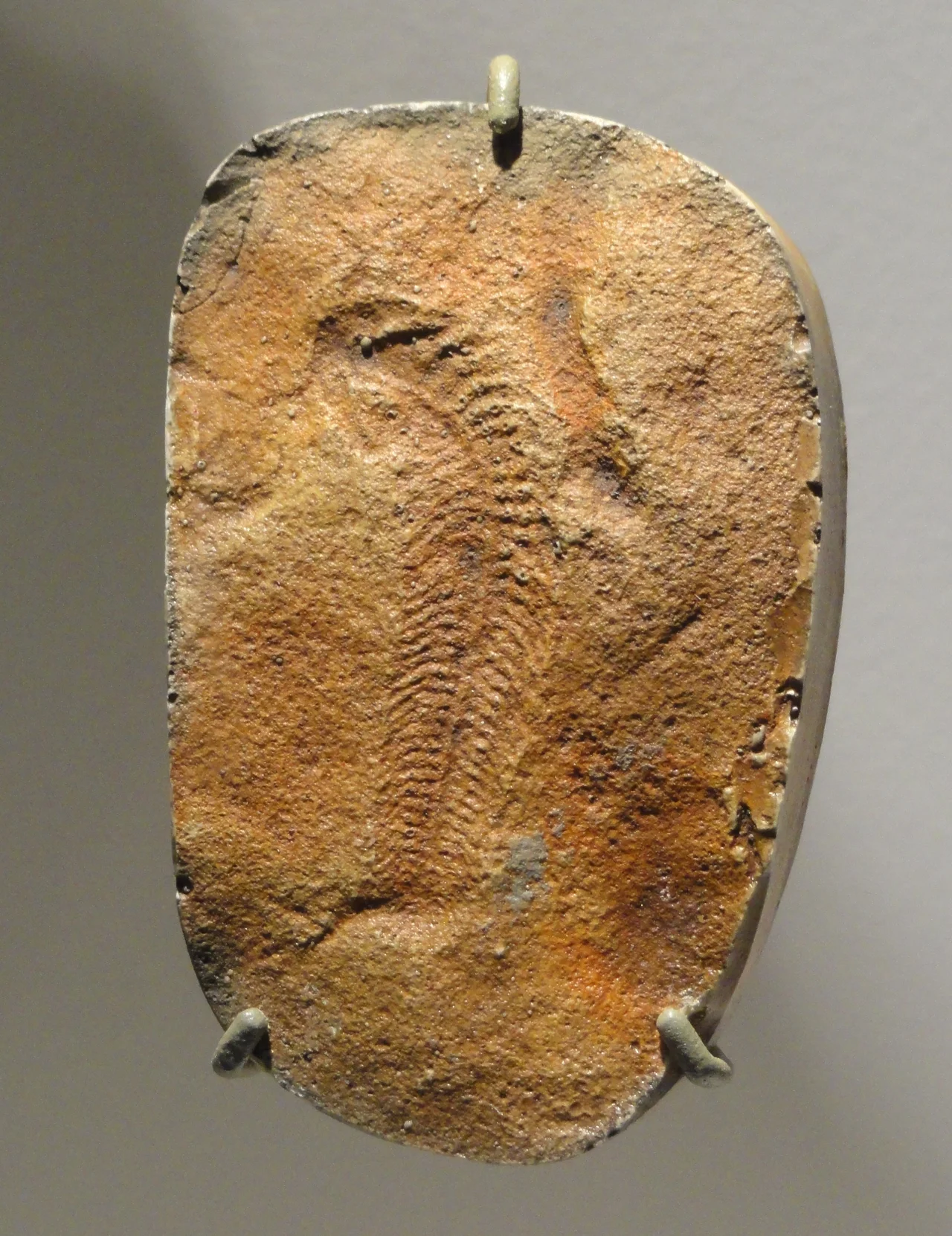
In 1946, a young geologist named Reg Sprigg stopped for lunch among a cluster of low, unremarkable hills in the Flinders Ranges, about 30 kilometres west of Beltana. He flipped over a slab of ancient sandstone and saw something pressed into the stone: the faint, medallion-like impressions of soft-bodied creatures. He had no way of knowing it yet, but he was looking at some of the oldest evidence of complex life on Earth. These quiet hills, roughly 650 kilometres north of Adelaide, would give their name to an entire chapter of the planet's history: the Ediacaran Period, the first new geological period formally recognised in 120 years.
The Slab That Rewrote Time
The fossils Sprigg found were unlike anything in the textbooks. Frond-like, disc-shaped, quilted forms, they were the remains of animals that lived more than 540 million years ago, in the dim ocean shallows of the late Precambrian, before shells, before bones, before the explosion of complex life that fills the fossil record afterward. At first, even Sprigg misjudged their age, suggesting they were early Cambrian. It took until the late 1950s for scientists to grasp the truth: these were older, far older, a window into a world that existed before almost anything we recognise as an animal. Among the creatures preserved here was Dickinsonia, a flat, ribbed oval whose very nature, plant or animal, puzzled researchers for decades. These were not creatures that fought or fled. They lay on the seafloor, drawing nourishment from the water around them, in an ocean that had no predators and no teeth, an Eden of sorts that would not last.
A Period Named for a Place
Naming a geological period is no small thing. The great divisions of deep time, the Cambrian, the Jurassic, the Cretaceous, are the scaffolding on which all of Earth's history hangs, and new ones are almost never added. Yet in 2004, the International Union of Geological Sciences ratified the Ediacaran, drawing its name and its defining reference point from these South Australian hills. It was the first new period declared since the late 19th century. That a windswept stretch of the outback should lend its name to the dawn of animal life is a remarkable thing. The biota found here is now known from sites around the world, but the Flinders Ranges is where the story was first read out of the rock.
The Name and Its Mysteries
The word 'Ediacara' itself comes from an Aboriginal language of the Flinders Ranges region, though its precise meaning is genuinely disputed. Some early sources suggested it referred to a place near water. Others argue it derives from 'Yata Takarra,' meaning hard or stony ground, a fitting description of the flat dolomite plateau at the heart of these hills. There is no settled answer, and the uncertainty is itself honest: tracing the original meaning of place names drawn from Aboriginal languages, often recorded imperfectly by outsiders, is rarely simple. What is certain is that the name predates the science, used since at least the mid-19th century, and that this Country held meaning long before any geologist arrived with a hammer.
Protecting Deep Time
Today the Ediacara Hills lie within Nilpena Ediacara National Park, and the fossil beds are protected under both Australian and South Australian heritage law. The Ediacara Fossil Site at Nilpena was added to the National Heritage List in 2007, and the nearby Ediacara Fossil Reserve has been protected since 1993. The park forms part of a larger nomination: seven separate areas across the Flinders Ranges, together telling the story of how animal life began on Earth over some 350 million years, submitted to UNESCO in 2021 for World Heritage consideration, with a completed nomination lodged in January 2026 and a decision expected in mid-2027. To walk these hills is to walk across the threshold of complex life, where the planet's long silence first gave way to something that moved, fed, and grew.
From the Air
The Ediacara Hills lie at approximately 29.80 degrees S, 138.76 degrees E, in the northern Flinders Ranges of South Australia, within Nilpena Ediacara National Park. These are low, rolling hills rather than dramatic peaks, so they read from the air as subtle folds of pale dolomite and red earth amid the broader ranges. The site sits roughly 30 kilometres west of Beltana and around 650 kilometres north of Adelaide. The nearest significant airfield is Leigh Creek Airport (YLEC), a short hop to the south, which serves the region. Recommended viewing altitude is 2,500 to 5,000 feet AGL to appreciate the geology of the ranges. Conditions are typically clear and dry; watch for afternoon thermals and turbulence over the ridgelines during warmer months.
Nearby Stories
- Birdsville Track 19 km away
- Arkaroola 30 km away
- Farina railway station 40 km away
- Beverley Uranium Mine 58 km away
- Strzelecki Creek 60 km away
- Marree Man 68 km away
- Beltana Station 70 km away
- Anna Creek Station 93 km away