_1.jpg)
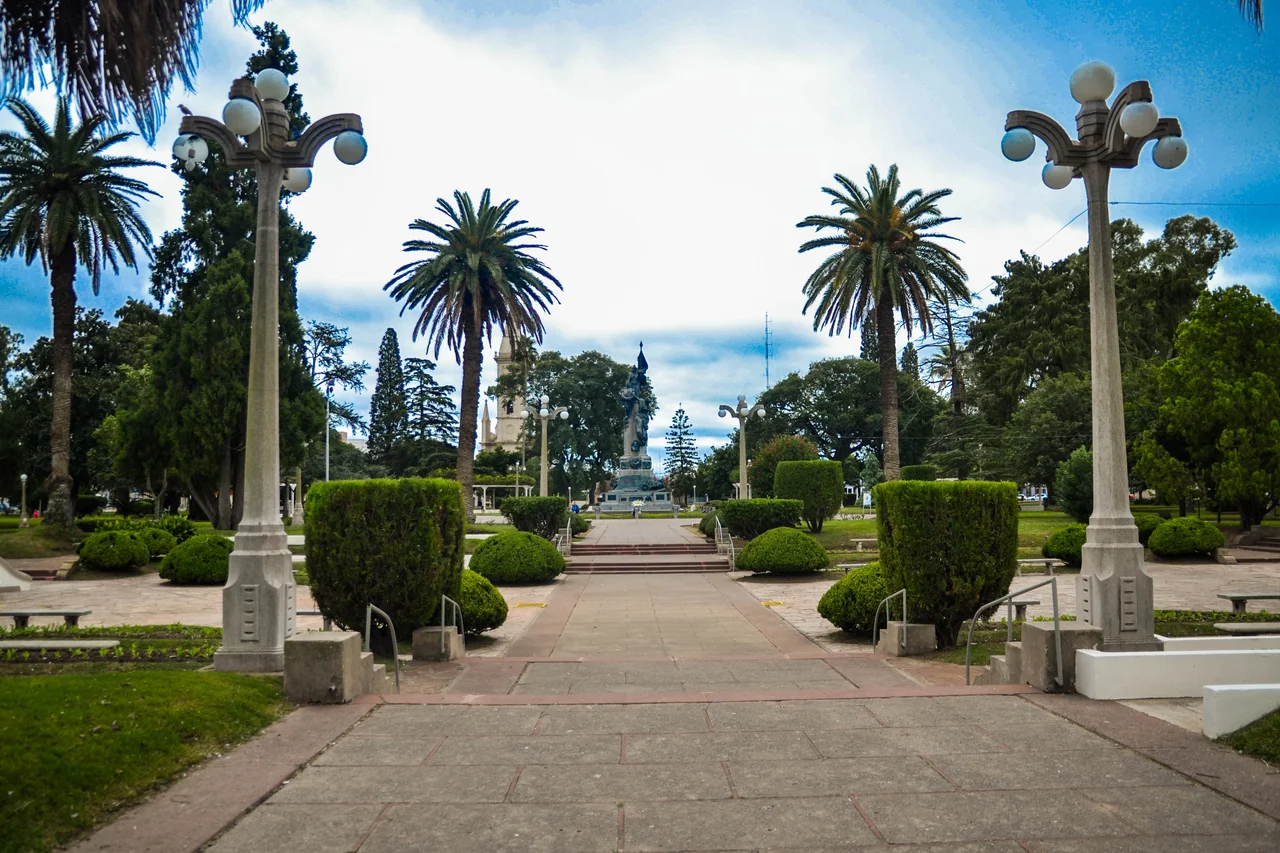
Esperanza, Santa Fe
They named it Hope. In the first weeks of 1856, two hundred immigrant families from Switzerland, Germany, France, Italy, Belgium, and Luxembourg stepped off their long journey onto the open plains of central Santa Fe and began turning grassland into farms. They called the place Colonia Esperanza, the Colony of Hope, and the name was not decoration. It was a wager. None of them knew whether the experiment would work. What they built became the first formally organized agricultural colony in Argentina, the seed from which a whole nation of immigrant farm towns would grow.
A Contract Signed Three Years Early
The colony existed on paper before a single family arrived. On 15 June 1853, the government of Santa Fe signed the Agricultural Colonization Contract with Aarón Castellanos, an entrepreneur born in Salta in 1799 who had fought in Argentina's independence struggles before turning his energy to immigration. The agreement set aside land for European settlers and authorized their recruitment. Castellanos found his families through travel agents working the Swiss cantons of Valais, Aargau, Bern, Zurich, and Vaud, the German region of Hesse, and parts of France, Belgium, and Luxembourg. They came during January and February of 1856, and on 8 September that year the town was officially founded, the feast day of the birth of the Virgin Mary, the colony's patron.
Two Languages, One Town
The settlers did not arrive as a single people, and Esperanza was laid out to acknowledge it. The colony was divided into two sections. In the eastern half settled the families who mostly spoke French and were Catholic; in the western half, those who mostly spoke German and were Protestant. It was an early experiment in something Argentina would do on a vast scale in the decades to come: gather strangers from across Europe, give them land, and let a new shared identity form out of the mixture. The languages of home lingered in the streets and the church pews, but a single town grew around them all, bound together by the common work of making a living from the soil.
The Cradle of the Colonies
Esperanza did not just survive; it became a model. After 1862 the colony thrived and expanded, and its success was copied across the province and the country, a prototype for the wave of agricultural colonies that would help build modern Argentina's economy and reshape its population. Esperanza earned a title it still carries: the cradle of agricultural colonization in Argentina. The firsts piled up. It was the third community in the province to establish a Municipal Council, in 1861, after only Rosario and Santa Fe. It became the head town of its department in 1884. And in 1892 it hosted the first Agricultural Congress of the Republic, a fitting honor for the place where organized farming colonization had begun.
Where the Nation Honors the Farmer
The country eventually made Esperanza's founding date a national symbol. In 1944 the government decreed that 8 September, the colony's founding day and the feast of its patron, would be the National Day of the Agricultural Worker. In 1979 Esperanza was named the permanent seat of the National Festival of Agriculture and the National Agricultural Worker celebration. Today the city of more than forty-six thousand sits at the heart of the country's most important dairy district, its herds built on the Holando-Argentino breed, its economy thick with the small industries that grow up around prosperous farmland. The ties to the old country endure too: Esperanza is twinned with six Swiss communes in the Valais, the mountainous region many of its first families left behind to gamble on hope.
From the Air
Esperanza lies at approximately 31.45°S, 60.93°W in central Santa Fe Province, head town of the Las Colonias Department, on the agricultural plains roughly 40 km west of the provincial capital. From the air it appears as a well-ordered grid town surrounded by the green and gold patchwork of dairy pasture and cropland, typical of the Santa Fe colonization belt. There is no major river alongside it; the landscape is flat farmland in every direction. Best viewed at 2,500–5,000 ft AGL in clear weather. Nearest airports: Sauce Viejo / Santa Fe (SAAV) just to the east and General Justo José de Urquiza / Paraná (SAAP) across the river to the east-northeast.
Nearby Stories
- Cayastá 35 km away
- Paraná, Entre Ríos 45 km away
- 1973 San Justo Tornado 54 km away
- Battle of Quebracho Herrado 69 km away
- Abadía del Niño Dios 110 km away
- Mar Chiquita Lake 113 km away
- Federación 244 km away
- Alta Gracia 275 km away