
EuroBasket 1995
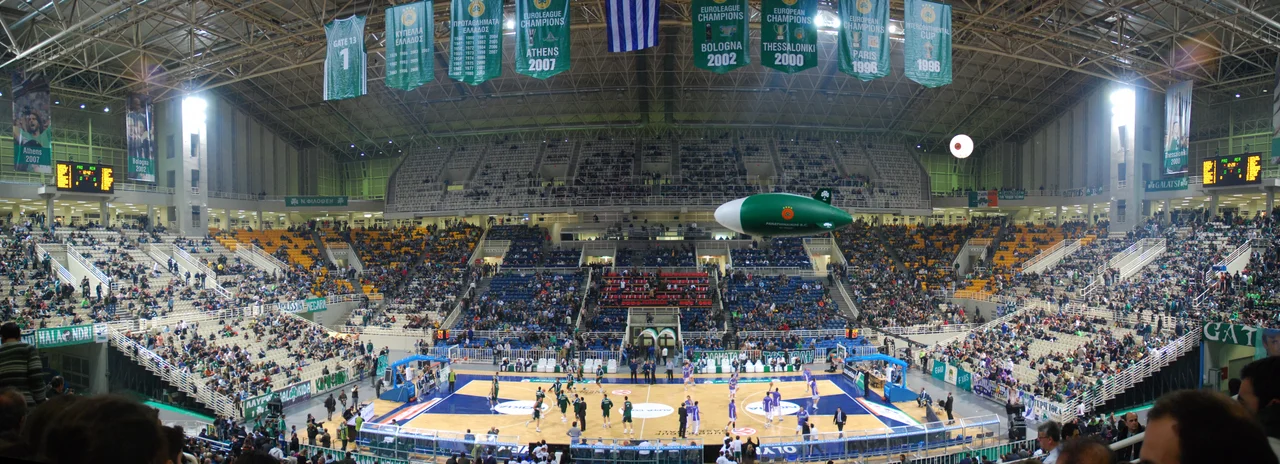
Forty-one points. Nine three-pointers out of twelve attempts. On the night of 2 July 1995, in a packed indoor arena on the edge of Athens, Aleksandar Djordjevic had the game of his life, and a continent that was tearing itself apart watched a basketball final that no one in the building would forget. EuroBasket 1995 was the 29th European championship, held across Greece from 21 June to 2 July, with all the late games played at the O.A.C.A. Olympic Indoor Hall in Athens. Fourteen nations came. Only one would leave with the title, and the way they won it became part of the story of the decade.
A Tournament in Two Halves
The format was clean. Fourteen teams split into two groups of seven, the top four from each advancing to single-elimination quarterfinals, with the final four playing for gold and bronze. More than a trophy was at stake. The top four finishers earned berths at the 1996 Summer Olympics in Atlanta, so every late-round game carried a ticket to the world's biggest stage. The official anthem, oddly, came from a Finnish power-metal band, Stratovarius, whose "Wings of Tomorrow" played over a tournament that would be remembered for anything but its soundtrack. Among the storylines was the return of Lithuania, a basketball-mad nation back at the championship and chasing a glory it had not tasted since 1939.
The Giants Meet
The final paired FR Yugoslavia, competing under that name as the country fractured around it, against Lithuania. It was a matchup of legends. Lithuania brought Sarunas Marciulionis and the towering Arvydas Sabonis, two of the finest European players ever to lace up. Yugoslavia answered with Djordjevic and Predrag Danilovic. From the opening minutes the teams traded baskets as if reluctant to let the other breathe. At halftime Lithuania led by a single point, 49 to 48. Vlade Divac had already picked up a technical foul. The game had the tension of two heavyweights who knew each other too well, neither able to land the decisive blow.
The Walkout
Then the night turned strange. In the second half, the American referee George Toliver called a technical foul on Sabonis, and the Lithuanians erupted in protest. More whistles followed, an offensive foul and another technical against Lithuania, and the team, feeling the game slipping away on the officials' calls, refused to come back onto the court after a timeout. For a few minutes the championship hung suspended, unplayed. What happened next was unusual. Djordjevic, Yugoslavia's leading scorer and the man beating Lithuania almost single-handedly, crossed to persuade Marciulionis to keep playing. The appeal worked. Five Lithuanians returned, though Sabonis and Rimas Kurtinaitis could not, having already fouled out. Yugoslavia led 93 to 89 with two minutes left, and held on to win 96 to 90.
Politics on the Podium
The basketball never fully escaped the wars surrounding it. The Greek crowd, hostile to Yugoslavia all night, kept up its protest into the ceremony, chanting that Lithuania was the real champion. The sharpest moment came at the medals. As the Yugoslav players prepared to receive their gold, the third-placed Croatian team stepped down from the podium and walked off the court rather than share it, a gesture born of the civil war then consuming the former Yugoslavia. Sport is often called an escape from politics. Here it was the opposite, a stage on which the breakup of a country played out in front of the cameras, medals and grievances tangled together.
What the Numbers Couldn't Hold
When the dust settled, the records told a split verdict. FR Yugoslavia took its first European title. Yet the tournament's Most Valuable Player award went to a man on the losing side, Lithuania's Marciulionis, a recognition that greatness is not always measured by the final score. And Djordjevic's 41-point eruption, built on nine made three-pointers, remains one of the iconic individual performances in the history of European basketball. The teams would meet again across the decade, but this night in Athens, with its brilliance, its walkout, and its empty podium step, captured a sport and a region at a singular moment in time.
From the Air
EuroBasket 1995 was contested at the O.A.C.A. Olympic Indoor Hall in the Athens Olympic Sports Complex at roughly 37.98 degrees N, 23.73 degrees E, in the Marousi area of northern Athens. The Olympic complex, later the centerpiece of the 2004 Games, is a clear landmark north of the city center. Athens International Airport (LGAV) sits about 25 to 30 km to the east-southeast. Summer skies over Attica are typically clear and bright, offering long visibility across the Athens basin.
Nearby Stories
- Great Sand Beach 5 km away
- Battle of Delium 7.7 km away
- Tower of Aliartos 9 km away
- HMHS Britannic 10 km away
- Saronic Gulf 15 km away
- Sousaki Volcano 17 km away
- Sanctuary of Apollo Maleatas 24 km away
- Skyros 66 km away