
European Capital of Culture
Melina Mercouri was an actress before she became a minister, and she never stopped thinking like one. When she took office as Greece's Minister of Culture in 1981, she brought to her desk a performer's instinct for what moves people — and a conviction that European culture was not receiving the attention it deserved. The programme she conceived with her French counterpart Jack Lang, and launched from her own city of Athens in 1985, has since passed through more than 60 cities across the continent. It began on a stage she chose herself.
The Idea That Started in Athens
Mercouri first articulated the concept in 1983. Her argument was straightforward: politics and economics dominated the European conversation, while culture — the shared inheritance of the continent — was treated as decoration. A designated city of culture, she proposed, could shift that balance for a year. It could generate investment, attract visitors, reframe how a place understood itself. Jack Lang, France's culture minister under François Mitterrand, embraced the idea. Together they brought it to the European Community.
The European City of Culture programme launched in the summer of 1985, with Athens as its inaugural title-holder. The choice was neither accidental nor merely symbolic. Athens is the city most directly associated with the origins of Western European intellectual and artistic life. Choosing it first made a statement about where the tradition began, even as the programme intended to look forward. In 1999, the title was updated to European Capital of Culture, reflecting the ambition that had grown around it.
What the Title Does to a City
A 2004 study commissioned by the European Commission — known as the Palmer report — documented what hosting the title actually produces. The findings confirmed what organizers had hoped: designation catalyses cultural investment, drives urban regeneration, and changes how a city is perceived internationally. The beneficial effects are now formally considered in the selection process. Cities do not simply receive the title; they compete for it, presenting bids assessed by an international panel of cultural experts.
For two of the designated cities each year, eligibility is limited to EU member states. From 2021 onward, a third city — selected every three years — may come from candidate countries, potential candidates, or European Economic Area states. Stavanger, Norway, designated in 2008, was an early example of this broader reach. The framework has since expanded to include cities from the Western Balkans, Eastern Partnership countries, and beyond, making the programme a soft-power instrument as well as a cultural one.
Mercouri's Athens, Then and Now
Mercouri was not simply a bureaucrat with an idea. She was the actress who starred in Never on Sunday, who had been stripped of her Greek citizenship by the military junta in 1967 and lived in exile, who campaigned internationally for the return of the Parthenon Marbles to Athens — a campaign she began in 1982 and that continues today. When she launched the European City of Culture programme from Athens in 1985, she was doing it from the shadow of the Acropolis, in the city whose cultural patrimony she had spent decades defending.
The programme she created outlasted her. Mercouri died in 1994. By then, Florence, Amsterdam, Berlin, Paris, Madrid, and a dozen other cities had carried the title. The list since has grown to include Kraków, Essen, Marseille, Valletta, Galway, Rijeka, and many more — cities of wildly different scales and histories, bound by a common designation that traces its origin to an actress from Athens who believed culture deserved a platform.
A Cascade of Culture Across Decades
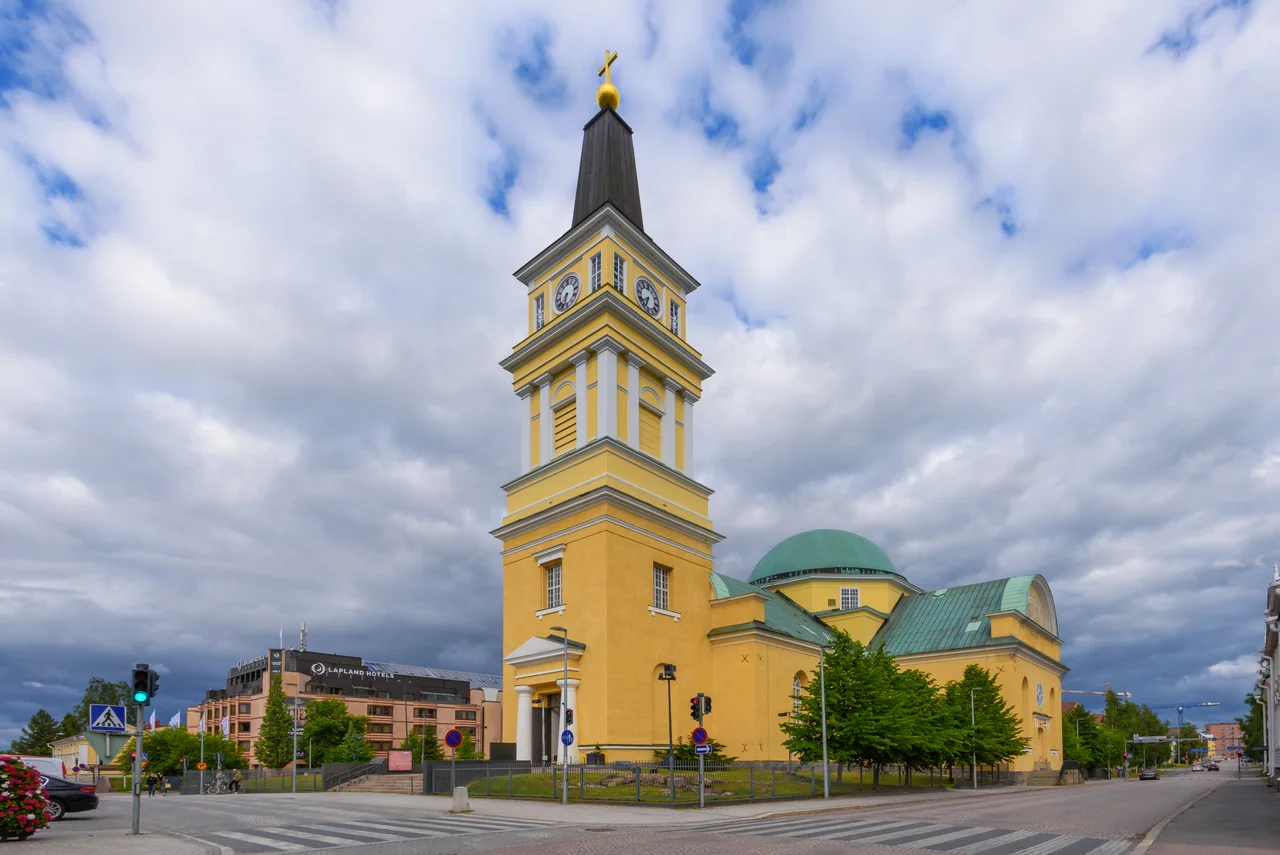
More than 60 cities have held the European Capital of Culture title since 1985. The 2026 designations — Oulu in Finland and Trenčín in Slovakia — continue a tradition that has become one of the EU's most recognizable and durable cultural initiatives. The programme has survived Brexit (which disqualified five UK cities from the 2023 competition at 11 days' notice), expanded its eligibility criteria, and maintained its core logic: that a year of focused cultural investment, when done seriously, can alter a city's trajectory.
For the cities that follow, Athens remains the original — the place where the idea was not merely announced but embodied. The programme began in a city dense with antiquity, and proposed that European culture was not a museum piece but a living project. That proposition, first tested in Athens in 1985, is the one that every subsequent Capital of Culture inherits.
From the Air
Athens, the original European Capital of Culture, sits at approximately 37.97°N, 23.72°E, at an elevation of roughly 70 metres above sea level. The Acropolis — the city's defining landmark — is visible from the air as a rocky outcrop just south of the city centre. Athens International Airport Eleftherios Venizelos (LGAV) lies 25 km to the east. Approaching from the east at 5,000 feet, the Acropolis and the broad urban basin of Attica are both clearly visible. The Saronic Gulf frames the city to the southwest.
Nearby Stories
- Parnitha 3.4 km away
- Kea (island) 7.3 km away
- Sanctuary of Apollo Maleatas 11 km away
- Sousaki Volcano 12 km away
- Battle of Leuctra 14 km away
- Great Sand Beach 18 km away
- Agios Georgios (island) 23 km away
- Skyros 84 km away