
European Cooperation for Space Standardization
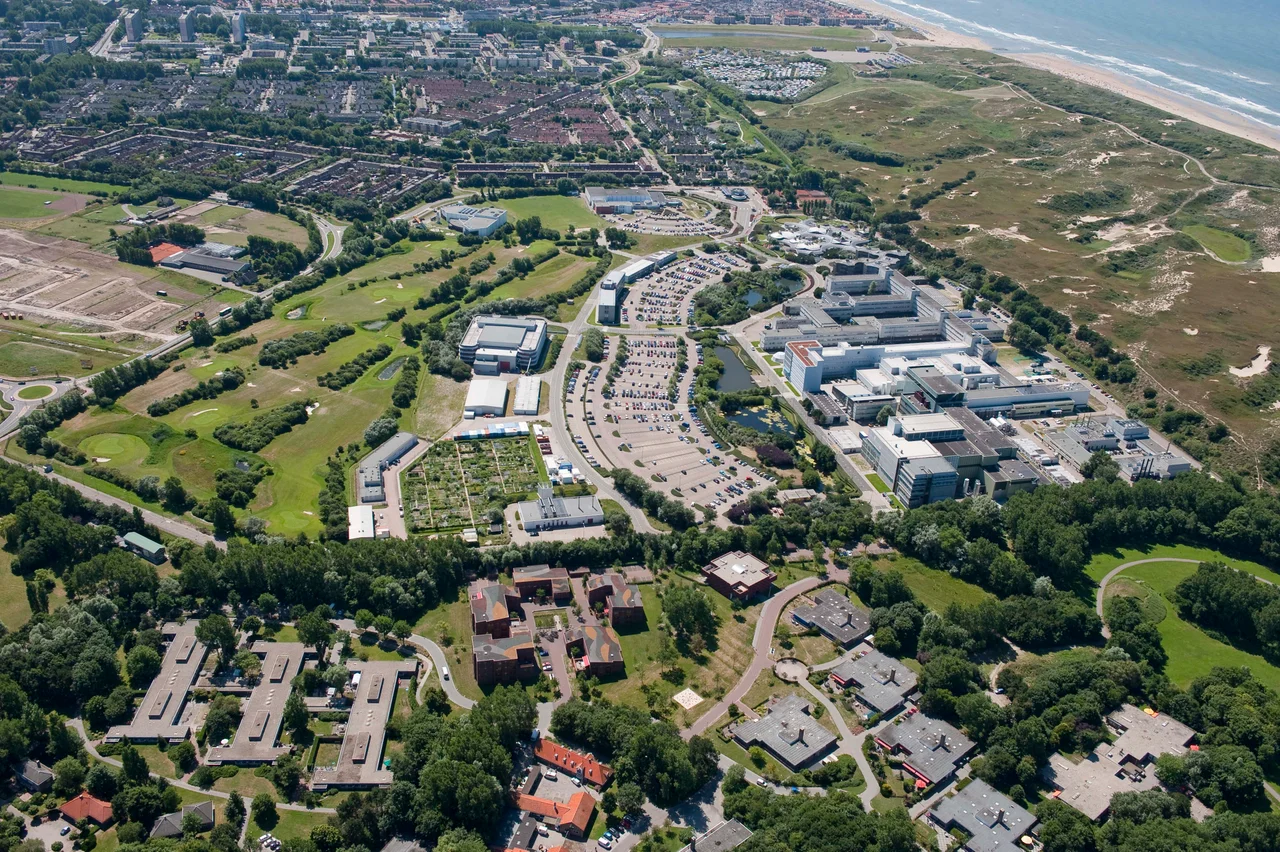
Every satellite Europe launches obeys a book written in Noordwijk, a North Sea town better known for its dunes than for its engineers. Inside the European Space Research and Technology Centre, ESA's largest facility, sits the central secretariat of the European Cooperation for Space Standardization. Its job is unglamorous and existential: write down, in 139 active documents, exactly how to build a spacecraft so that the thing reaches orbit, talks to ground stations, doesn't poison Mars, and doesn't become someone else's debris problem. Most engineers hated it at first. They came around once they realized they were also the ones writing it.
The Pink Documents
The story begins not in 1993 but in May 1977, when the European Space Agency quietly created a Board for Software Standardization and Control. Its first task was to figure out what "finished" meant in software for spacecraft. The board defined the software life cycle and gave it phases. The work was printed on pink paper, partly to make the loose-leaf binders easy to find on a crowded desk, and the documents became known across the agency simply as the pink documents. Engineers who had bristled at the idea of being told how to do their jobs started using them anyway, because the alternative was a shouting match in three languages about what "validated" meant. By 1982 a full set defined the entire software life cycle. In 1984 it was collected as ESA BSSC (84)1, the first European Software Engineering Standard. In 1987 it grew up and was reissued as PSS-05-0, Issue 1, a fully mature standard inside ESA's Procedures, Specifications and Standards system.
From PSS to ECSS
By the early 1990s, Europe's space industry was tired of building Ariane rockets to one set of rules, Earth-observation satellites to another, and military payloads to a third. Eurospace, the trade body representing companies like Airbus and what would become ArianeGroup, called for one coherent set of standards across the continent. On 23 June 1994, the ESA Council adopted resolution ESA/C/CXIII/Res.1, formally beginning the transfer from PSS to a new system: ECSS. Then came the alliances. In June 1997, ECSS engineering standards were folded into CENELEC, Europe's electrotechnical standards body. Management and product-assurance standards joined CEN, the broader European standards committee. In May 1998 ECSS struck a treaty with ISO's space subcommittee, ISO/TC20/SC14, so that two big committees would stop duplicating each other's work. By 2021 the system had produced 316 documents in total, of which 139 remained active and current.
Seven Branches and Sixty-Five Documents on Engineering Alone
An ECSS standard's name reads like a license plate: ECSS-Q-ST-70-58, say, or ECSS-E-ST-32-11. The letter after ECSS tells you the branch. P is policy, the founding document. S is the system description and tailoring rules. D handles configuration and the templates other standards must follow. M covers project management: planning, costs, risk. E is engineering, the largest branch, with 65 documents spanning systems engineering, thermal design, structural analysis, mechanisms, propulsion, communications, and ground operations. Q is product assurance: quality, dependability, safety, electronic parts, materials. The most surprising branch is U, space sustainability, opened in 2012, with one standard on space debris mitigation and one on planetary protection. The second of those is what stops a Mars rover from arriving on the surface carrying terrestrial microbes that might foul any search for native life.
Real Things Made of Pink Paper
These documents are not academic. AdaCore's Ravenscar profile, a strict subset of the Ada programming language used to write spacecraft flight software, is qualified against ECSS. The Advanced Manufacturing Research Centre in Sheffield used ECSS to certify the burst pressure of a 3D-printed nanosatellite fuel tank. Reflex Photonics qualifies its space-grade optical transceivers against ECSS radiation-dose tolerances. Surrey NanoSystems tests Vantablack, the famously dark coating, against ECSS material-process standards. A standard, on paper, is a sentence ending in "shall." In practice it is the conversation that happens at three in the morning in a clean room when a part has failed a vibration test and someone has to decide whether the mission flies.
Who Gets to Vote
ECSS is a cooperation, not an agency. Full members include ESA itself, Italy's ASI, the UK Space Agency, France's CNES, Germany's DLR, the Netherlands Space Office, the Norwegian Space Centre, and Eurospace on behalf of industry. Four companies hold voting rights through Eurospace: Airbus Defence and Space, ArianeGroup, OHB System, and Thales Alenia Space. Canada's CSA sits in as the only associate member. Observers include the European Commission, the European Defence Agency, EUMETSAT, and the parent standards bodies CEN and CENELEC. The ECSS itself does not certify anything; that is left to the customer in each contract. But when an industrial agreement says "compliant with ECSS-E-ST-32C," everyone at the table knows precisely what is being promised, in part because somewhere in Noordwijk a small office of working groups has spent twenty years deciding exactly what "32C" means.
From the Air
Located at 52.2172 degrees north, 4.4214 degrees east at the European Space Research and Technology Centre (ESTEC) in Noordwijk, on the Dutch coast just north of the dune line. Recommended viewing altitude 1500 to 3000 feet for a clear pass over the ESTEC campus; look for the distinctive low white research buildings adjacent to the Keplerlaan and the linear sweep of the Bollenstreek tulip fields immediately inland. The North Sea is two kilometres west. Nearest airports: Amsterdam Schiphol (EHAM) about 16 nautical miles east-northeast, and Rotterdam The Hague Airport (EHRD) about 17 nautical miles south. Coastal sea breezes can produce afternoon haze through July and August.
Nearby Stories
- Nexus Instituut 1.6 km away
- Delft 3.3 km away
- Egmond aan Zee Offshore Wind Farm 4.8 km away
- Dutch Language 6.4 km away
- Westfries Museum 13 km away
- HMS Cressy 14 km away
- Hollandse Kust West Offshore Wind Farm 15 km away
- Moermond Castle 34 km away