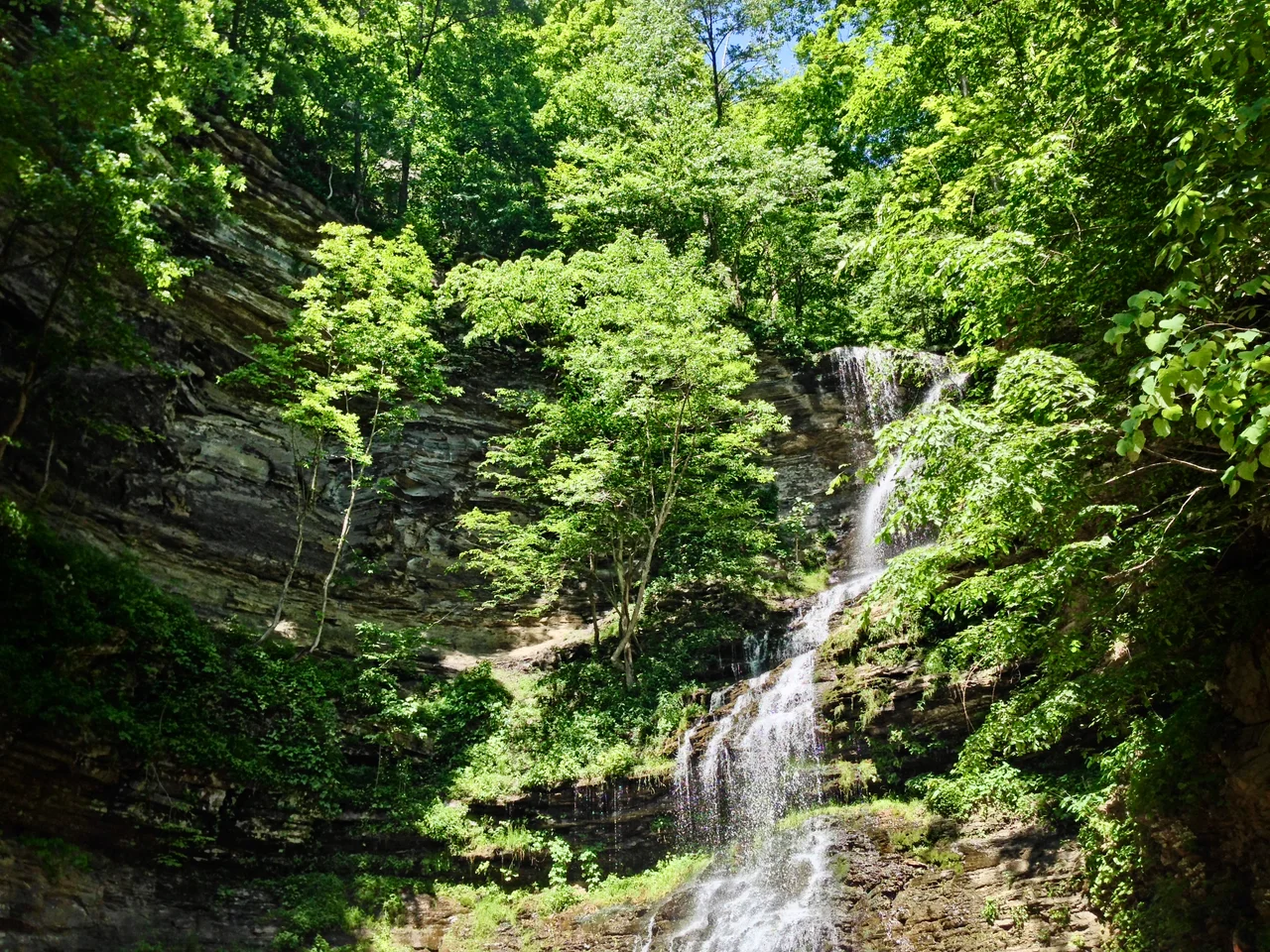

Fayette County, West Virginia
In 1831, the Virginia legislature carved out a new mountain county from pieces of four older ones and named it for the Marquis de Lafayette, the young French aristocrat whose Revolutionary War service had become legend. Fayette County's first century would belong to timber, salt boats on the Kanawha, and farms scratched out of the ridges. Its second century would belong to coal. Its third century - the one we are in now - has begun to belong to whitewater, to BASE jumpers, and to a national park designation that came through in 2020. The county seat is Fayetteville. The population, as of the 2020 census, was 40,488. The terrain has not changed much. Almost everything else has.
From Lafayette to West Virginia
Fayette County was the second Virginia county to bear the name; the first, in what is now Kentucky, lasted from 1780 to 1792. The 1831 act creating the new West Virginia version drew from Greenbrier, Kanawha, Nicholas, and Logan counties to assemble 668 square miles of high plateau, sheer gorge, and river bottom. Then in 1863, in the middle of the Civil War, Fayette became part of the brand-new state of West Virginia, one of the fifty counties Virginia lost to Union loyalists in the mountains. The internal geography reorganized itself several times over the next century: four original townships gave way to magisterial districts that multiplied to seven by the 1890s and then consolidated again in the 1970s into the three districts the county still uses - New Haven, Plateau, and Valley.
The Coal Years
Coal made Fayette County into something it had not been before: a place where outsiders came to work and stayed. Operators threw up company towns along the New River and the Gauley - Nuttallburg, Kay Moor, Thurmond, Glen Jean, Red Ash, Lochgelly - and railroads followed the coal seams up every hollow. The work was dangerous, and the disasters that came with it shaped the county's memory. On March 6, 1900, an explosion at Red Ash killed 46 miners. Other mines had their own catastrophes. The work also drew a substantial Black population to the coalfields, and Fayette County sent the first three African American members of the West Virginia House of Delegates to Charleston in the early twentieth century - a quiet political milestone in a state still working out its racial geography.
The Park and the Pivot
The coal seams thinned. The mines closed. By the 1980s, parts of the New River Gorge had been protected as a national river, and tourists began to discover what locals had always known - that the gorge is one of the great American landscapes. In December 2020, Congress redesignated the heart of it as New River Gorge National Park and Preserve, the country's 63rd national park. Gauley River National Recreation Area lies partly within the county too. Today, the Fayette County economy still has coal at its edges - a Georgia Pacific lumber mill operates near Mount Hope, an alloy plant runs at Alloy, and Mount Olive Correctional Complex remains the state's only maximum-security prison - but recreation has become a centerpiece. Whitewater rafting on the Gauley and the New, climbing in the gorge, BASE jumping on Bridge Day, hiking on the rim trails. The county has reinvented itself around the very landscape that once kept it isolated.
Famous Faces and Familiar Places
Fayette County has produced an unusual mix of names. Julia Neale Jackson, mother of Confederate general Stonewall Jackson, was born here. George Cafego was the first overall pick of the 1940 NFL draft. DJ Cheese won the first DMC World DJ Championship in 1986. Tunney Hunsaker, who took a fight against a young Cassius Clay in 1960, served as Fayetteville's police chief for years. Charlie McCoy played harmonica for everyone in Nashville and Senator Harley M. Kilgore went from Beckwith to the U.S. Senate. The county includes the cities of Mount Hope and Oak Hill, the towns of Ansted, Fayetteville, Gauley Bridge, Meadow Bridge, Pax, and Thurmond, and dozens of unincorporated communities - Clifftop, Nuttalburg, Layland, Winona, Whipple - that still carry the names of coal camps and railroad stops from another century.
From the Air
Fayette County sits in southern West Virginia centered around 38.03 N, 81.09 W, bounded by Nicholas County to the north, Greenbrier to the east, Summers to the southeast, Raleigh to the south, and Kanawha to the west. The New River Gorge runs through the heart of it. Recommended viewing altitude is 3,500 to 6,000 feet AGL for the broader landscape; lower for the bridge and the gorge itself. Key landmarks include the New River Gorge Bridge on US 19, Hawks Nest State Park overlook, Babcock State Park, and the Gauley River. Nearest airports are Raleigh County Memorial (KBKW) in Beckley and Yeager (KCRW) in Charleston.
Nearby Stories
- West Virginia State Capitol 4.7 km away
- Greenbrier County, West Virginia 13 km away
- Beckley, West Virginia 13 km away
- Clay, West Virginia 16 km away
- The Greenbrier 18 km away
- Webster Sycamore 26 km away
- Kanawha State Forest 26 km away
- Welch, West Virginia 40 km away