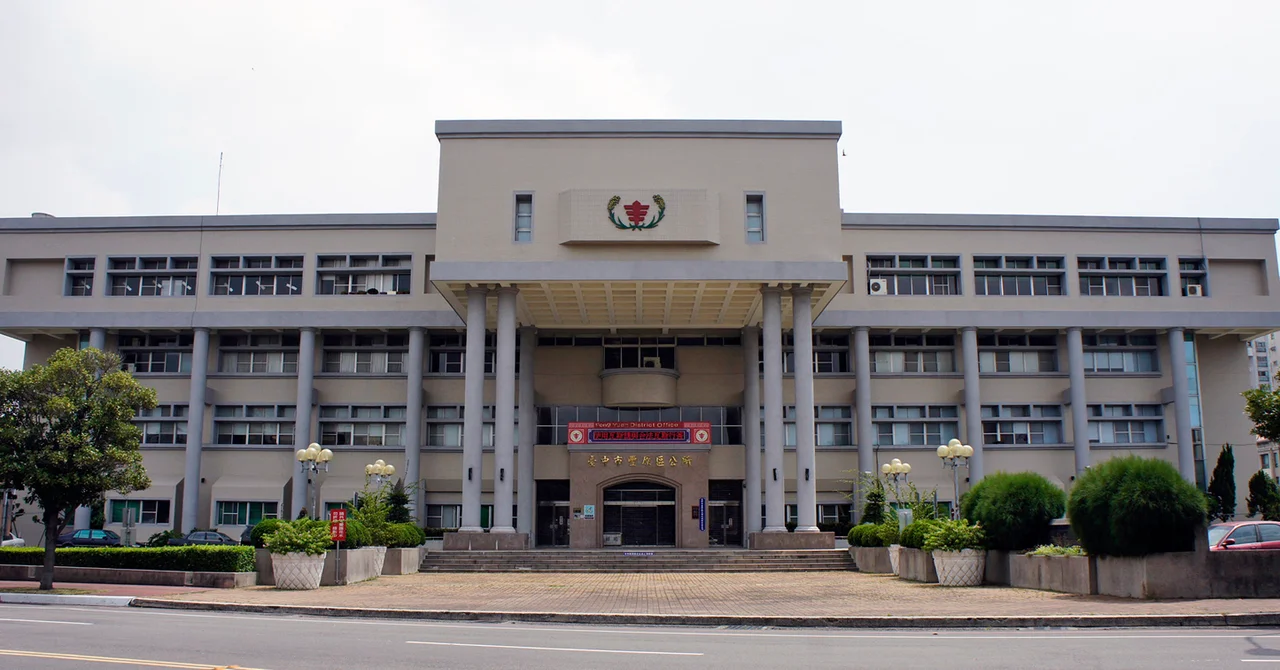

Fengyuan District
The name has changed several times, and each version reveals something about who was in charge. The Pazeh people who lived here before the Han Chinese arrived called the place Haluton. When Hokkien-speaking settlers adapted that name, it became Haloton. The Japanese colonial administration, which arrived in the late nineteenth century, transliterated it again and in 1920 officially renamed it Toyohara — meaning flourishing plain. After 1945, the Republic of China government rendered it in Mandarin as Fengyuan. The name, in all its iterations, kept circling back to the same idea: this is a place where things grow.
Before the Han Chinese Arrived
The Pazeh people, an indigenous Taiwanese group, were living in this part of the Taichung basin long before Han Chinese immigration began in the Qing dynasty period. They called the area Haluton — a name that carried meaning in their own language and would be borrowed and reshaped by each successive wave of settlers and administrators.
Before the mid-eighteenth century, the area that is now Fengyuan was Pazeh territory. Their name for the broader region, meaning 'thriving pine forest,' was transcribed into Chinese characters as 泰耶爾墩. The landscape they inhabited — the south bank of the Dajia River, a fertile plain at the edge of foothills — was one of the more productive agricultural environments in central Taiwan. That productivity would define the district for centuries.
Little Suzhou and Imperial Rice
Han Chinese immigration to the area accelerated during the Qing dynasty. The place prospered, and its prosperity attracted attention. Liu Mingchuan, a prominent Qing official who served as the first Governor of Taiwan Province in the 1880s, gave the area the nickname 'little Suzhou' — invoking the classical Chinese city famous for its gardens and refinement. The comparison was a form of praise: Fengyuan was prosperous and scenic, worth noticing.
The rice grown in this district earned a particularly elevated reputation. During the Japanese colonial period, under the name Toyohara, rice from this area was supplied to the imperial household — to Emperor Meiji, Emperor Taisho, and Emperor Hirohito — until 1953. That the imperial kitchen sourced grain from a specific district in colonial Taiwan says something both about the quality of what grew here and about the extractive logic of colonial agriculture.
The Railway and the Boom
In 1905, during Japanese rule, a station was established in the area — then called Holotun — placing it on the main rail line through western Taiwan. The combination of rail access and agricultural abundance proved decisive. Fengyuan sat at the intersection of the Western Trunk Line and the Dongshi Branch Line, making it a natural hub for commerce and transit.
After World War II, Fengyuan expanded rapidly. In 1950, it was designated the capital of Taichung County, a role it held for decades. The bakery industry that had grown alongside the rice economy flourished, and the district became known for both agricultural production and food craftsmanship. In 1976, its population justified an upgrade to county-administered city status. By 2010, Fengyuan was absorbed into the merged Taichung municipality as a district.
Night Markets, Lacquer, and Local Life
The Miaodong Night Market — established in the 1970s — remains one of Fengyuan's best-known gathering places. Full of Taiwanese street foods, it is the kind of market that grows organically around a temple and becomes a fixture of neighborhood life over generations. The temple it clusters around, as its name suggests, anchors the market geographically and socially.
The Fengyuan Museum of Lacquer Art and the Taichung Municipal City Huludun Cultural Center add institutional cultural weight to a district that has always had a strong local identity. Huludun, incidentally, refers to the old name the district carried for centuries: 'gourd,' named for a gourd-shaped pile of mud that the area's early aboriginal inhabitants found distinctive enough to name a place after. The name survived in local usage long after the official designations changed.
Notable Voices from a Flourishing Plain
Fengyuan has produced a notable range of public figures. Singer Chang Yu-sheng, one of Taiwan's most celebrated pop voices of the 1980s and early 1990s, was born here. So was Winnie Hsin, another singer whose introspective style earned her devoted listeners across the Mandarin-speaking world. Johnny Chiang, a political figure who rose to become Vice President of the Legislative Yuan in 2024, is also from Fengyuan. Baseball players and a professional golfer round out a roster that reflects the district's position as a genuine community — not just an administrative unit, but a place where people have grown up, left, and sometimes become famous.
Today, Fengyuan faces what its own observers describe as the challenge of marginalization: population and economic growth have slowed since the 2010 municipal merger, and the gravitational pull of central Taichung and its newer commercial corridors competes for attention and investment. But the rice is still planted in the valleys nearby, and the Dajia River still runs along the northern edge of the plain.
From the Air
Fengyuan District is located at approximately 24.25°N, 120.72°E in north-central Taichung, Taiwan, on the south bank of the Dajia River. Taichung International Airport (RCMQ) lies approximately 22 kilometers to the southwest. From 5,000–7,000 feet, the district is visible as a dense urban area where the Taichung basin meets the foothills of the Central Mountain Range to the east, with the Dajia River visible as a wide braided channel along the northern edge. The rail corridor of Fengyuan Station runs through the center of the district.
Nearby Stories
- Taroko National Park 4.5 km away
- Jiji, Nantou 9 km away
- Miaoli Ceramics Museum 9.2 km away
- Smangus 17 km away
- Taixi, Yunlin 23 km away
- Lintianshan Forestry Culture Park 24 km away
- Taiwan Strait 52 km away
- China Airlines Flight 611 60 km away