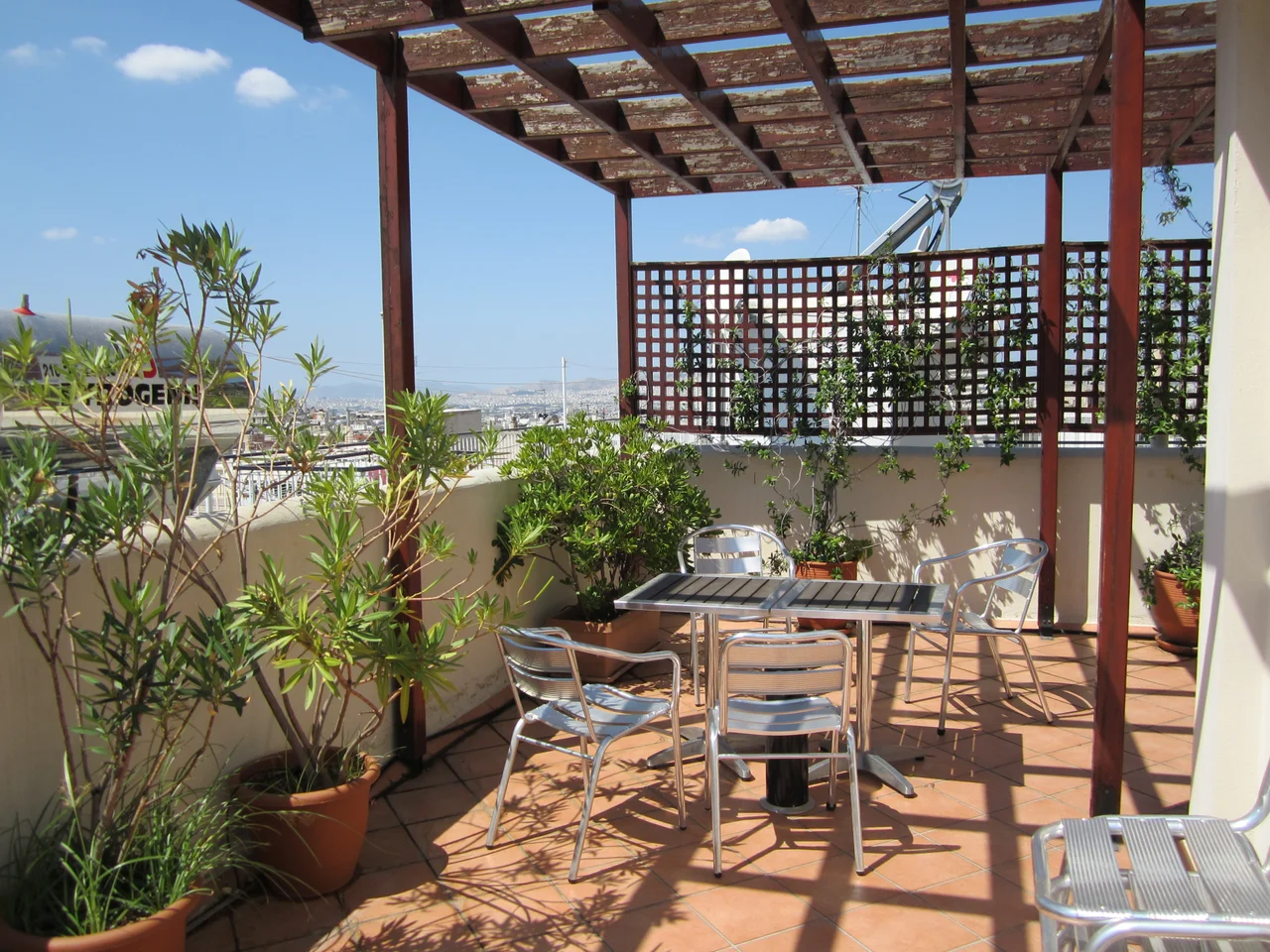

Finnish Institute at Athens
The suggestion that Finland needed an institute in Athens came from Nils Oker-Blom, the rector of the University of Helsinki, in 1982. It was not an obvious idea. Finland had been doing classical scholarship for decades through Villa Lante in Rome, and some in the field worried that a new Athens institute would drain resources from the old one. But Oker-Blom and the honorary Finnish consul in Athens, Konstantinos Lazarakis, pressed ahead. Within two years, the foundation was established, donations had been gathered from businesses and universities, and Finland joined the community of nations that have been digging into the Greek earth — and debating what they find — for over a century.
A Modest Start in Makrygianni
The Finnish Institute at Athens opened in 1984, making it the second oldest Finnish scientific institute operating abroad. Its first director, Paavo Castrén, set up shop in a modest apartment in the Makrygianni district — the same neighbourhood where the institute's main building stands today. The apartment also served as Castrén's residence. There was no dedicated library, no fieldwork programme, no permanent staff beyond the director. Finland was starting from scratch in a city where 12 other countries already had established archaeological institutes.
The Swedes helped. The Swedish Institute at Athens — one of the older foreign schools in the city — provided practical guidance in the early period, the kind of institutional knowledge about how to navigate Greek bureaucracy and archaeological permissions that only comes with experience. The Finnish institute received its formal status as a scientific (archaeological) institute on 14 May 1985, and its official opening was held at the Academy of Athens — a ceremony that marked the transition from provisional operation to recognised institution.
The Building on Zítrou Street
By 1987, the institute needed proper premises. A turn-of-the-century neoclassical townhouse at Zítrou 16, in the Makrygianni district just south of the Acropolis, was acquired. The renovation was careful and slow — several years of work on a building that required preservation as much as adaptation. The result is a structure that sits comfortably among the dense residential and institutional fabric of the neighbourhood: staff offices, a lecture hall, and a reference library inside a building whose exterior reads as nineteenth-century Athens.
Close to the Acropolis Museum, near the southern slope of the Acropolis itself, the location is not accidental. Makrygianni is where much of the institutional infrastructure of classical scholarship in Athens has settled — the foreign institutes, the Nordic Library at Athens (which opened in 1995 and which the Finnish institute helped establish), and the research apartments that bring visiting scholars to the city each year. The Koroneos building, donated to the institute in 1996 by Nikólaos G. Koronaíos and opened for use in 1999, provides 13 furnished apartments across six floors in the nearby Gkýzin district, giving the institute a permanent base for Finnish researchers, students, and artists.
What the Institute Studies
The Finnish Institute at Athens describes its purpose as research on Greek archaeology, history, language, and culture from antiquity to the present day. In practice, this encompasses an unusually broad range. Fieldwork projects have included excavations at Paliámpela in northern Greece (begun in 1999), a harbour survey at Kyllene in Elis, mapping the Greek colonial site of Naxos in Sicily, and the Salamis Urban Landscape Project on the island of Salamis off the coast of Attica.
The institute has also concentrated on epigraphic research — the study of inscriptions. The Verse Inscriptions of Roman Greece project, ongoing since 2003, is attached to a Centre of Excellence of the Academy of Finland. There is research on connections between modern Finland and Greece, including philhellenism — the admiration for ancient Greece that shaped Northern European intellectual culture in the nineteenth century. The institute publishes the series Papers and Monographs of the Finnish Institute at Athens, running since 1994, and the Friends' Association, founded in 1986, publishes a journal called Helikon.
The institute has had eleven directors since Castrén's tenure from 1984 to 1988. The current director, Petra Pakkanen, has held the position since 2021.
Nineteen Nations, One City
Athens is unusual in the world precisely because of the concentration of foreign archaeological institutes within it. Nineteen countries — including Finland — maintain permanent scientific presences here, each pursuing its own research agenda while collectively making Athens one of the most studied urban environments in the world. The French School at Athens, the German Archaeological Institute, the British School at Athens, the American School of Classical Studies, the Italian, Dutch, Belgian, Swedish, Norwegian, Danish, and other institutes form a community whose collective scholarship on ancient and Byzantine Greece fills libraries across Europe and North America.
Finland joined this community relatively late — the institute was founded when 12 other countries were already established in Athens. But the timing gave the Finnish Institute a clarity of purpose that older institutions sometimes struggle to maintain. It knew what it was for: to build Finland's relationship with Greece systematically, across archaeology, history, and living culture. The neoclassical townhouse on Zítrou 16, in the shadow of the Acropolis, is where that work happens.
From the Air
The Finnish Institute at Athens is located at approximately 37.968°N, 23.727°E in the Makrygianni district of Athens, roughly 400 metres south of the Acropolis. From the air at 3,000–5,000 feet, the Acropolis rock — one of the most distinctive urban landmarks visible from aircraft approaching Athens — is directly north. Athens International Airport Eleftherios Venizelos (LGAV) lies 25 km to the east. The Saronic Gulf coastline and the port of Piraeus are visible 7–8 km to the southwest.
Nearby Stories
- Parnitha 3.4 km away
- Kea (island) 7.3 km away
- Sanctuary of Apollo Maleatas 11 km away
- Sousaki Volcano 12 km away
- Battle of Leuctra 14 km away
- Great Sand Beach 18 km away
- Agios Georgios (island) 23 km away
- Skyros 84 km away