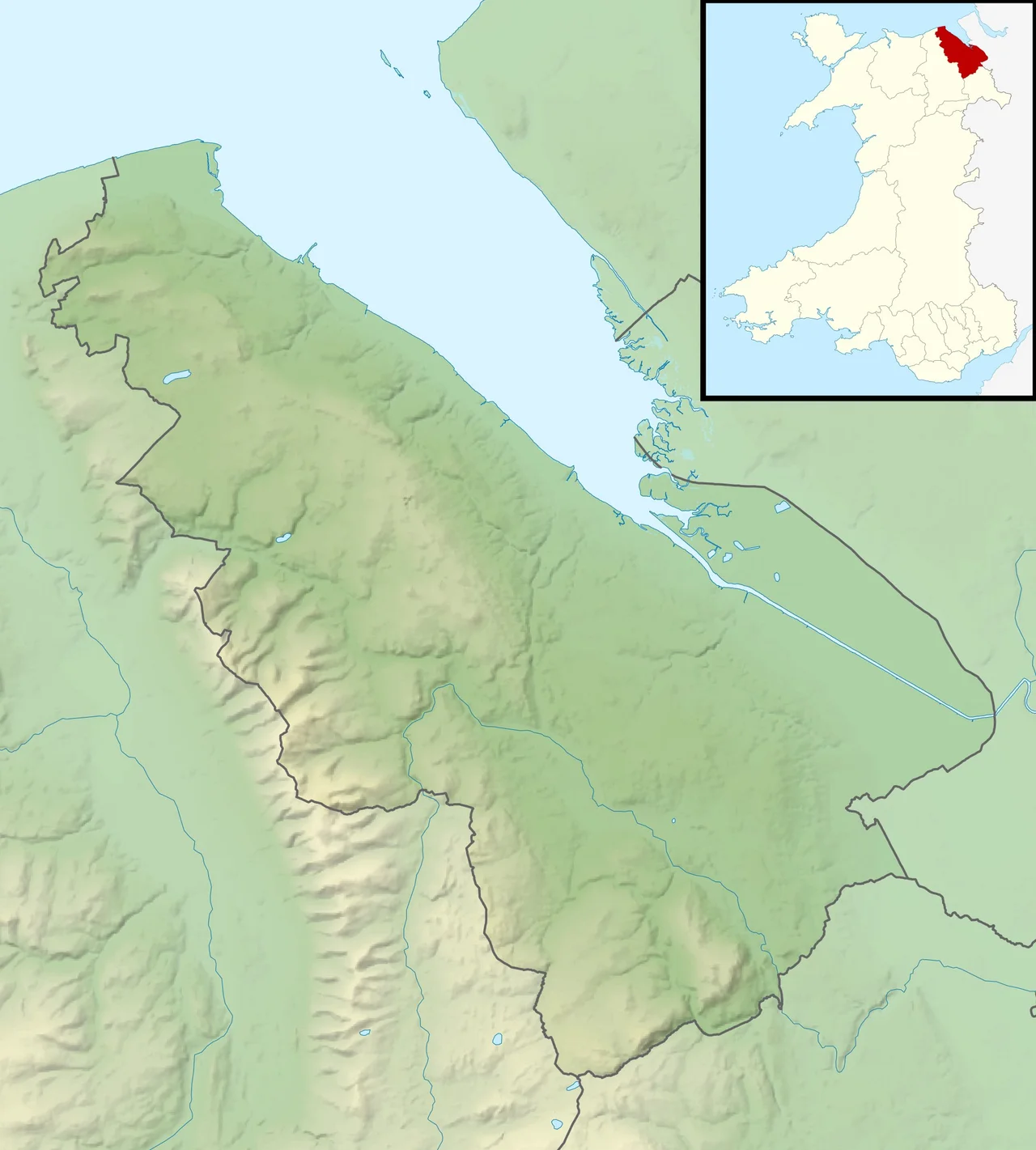

Flint Lifeboat Station
The Dee estuary at low tide is one of the strangest landscapes in Britain. It looks like solid mud, walkable for miles. It is not. The water comes in fast across a flat plain, the sand shifts, and the channels move with each tide. Boats run aground here in conditions that look harmless from the shore. The Royal National Lifeboat Institution has kept an inshore boat at Flint, in the shadow of the castle, since 1966, ready to launch into that deceptive water within minutes of a phone call.
Twenty-Five Boats in 1964
The story begins not at Flint but at the RNLI's national headquarters in 1964. Postwar Britain had taken to the water for leisure on a scale nobody had anticipated, and the dinghies, cabin cruisers, and small motorboats clustered along the coast were getting into difficulties that the offshore lifeboats, designed for ocean rescues, were too slow and too big to handle. The Institution placed twenty-five small fast inshore lifeboats around the country, each launchable by just a few people, each able to be on the water within minutes. The model was new and it worked. More stations followed, and in May 1966 the RNLI established one at Flint, on the south bank of the Dee estuary at the end of Castle Dyke Street. The first boat, D-37, was unnamed. The crew were local.
Heron II, February 1983
At five past eight on the evening of 26 February 1983, the Flint inshore lifeboat D-252 launched into the dark towards the cabin cruiser Heron II, in difficulty a mile south-east of Mostyn Docks. When the lifeboat arrived, the cruiser had its anchor out but was aground and taking on water. The conditions were difficult. Helm Robert Alan Forrester brought the lifeboat alongside, and two of his crew boarded the failing cruiser to carry off a survivor who had collapsed. Forrester received the RNLI Bronze Medal for the rescue. The two who boarded the Heron II were each given a Framed Letter of Thanks signed by the Chairman of the Institution. The boathouse they returned to that night was one of the temporary 'Hardun' type structures that the RNLI had been using at inshore stations since the mid-sixties. A new purpose-built boathouse went up in 1985, two years later.
Graham Oare's Open Boat
On 5 June 1991, three fishermen capsized off Flint Castle and went into the water. A local man named Graham Oare set out in his own small open fishing boat and pulled all three from the estuary. The RNLI has a tradition going back to 1824 of recognising any rescuer, lifeboat crew or otherwise, who acts to save a life at sea. Oare received a Framed Letter of Thanks signed by the Chairman, the same honour given to the Heron II boarding party eight years earlier. The story is the kind of thing the lifeboat service quietly keeps records of. A neighbour does what neighbours do on this coast, and the Institution writes it down.
Sir Y Flint and Lady Barbara
On 19 December 2006, the new inshore lifeboat Sir Y Flint, designation D-658, entered service at Flint, funded by the Flintshire Lifeboat Appeal. The current boat, Lady Barbara, D-795, took over in 2016. Both are members of the new generation of inshore lifeboats that the RNLI has been rolling out across the country, faster and more stable than the boats that replaced the original D-class. The station still operates from the 1985 boathouse at the end of Castle Dyke Street, looking out across the estuary towards the Wirral. Flint Castle's curtain wall stands a few hundred yards to the south.
Names on the Wall
The lifeboat station carries a small roll of honour for those who died in service. William E. Towers, the deputy launch authority and a shore helper, suffered a severe stroke during a service launch on 9 April 2001 and died the following day. He was sixty. His name is on the wall not because he drowned, which is the death the RNLI is best known for preventing, but because he was working. The volunteers at Flint, like the volunteers at every inshore station around the British coast, are ordinary local people who give up evenings, weekends, Christmas dinners, and sometimes their lives, to be ready when the pager goes off. Sixty years after the first boat arrived at this stretch of the Dee, that arrangement still holds.
From the Air
Located at 53.251N, 3.128W at the end of Castle Dyke Street, Flint, on the south bank of the Dee estuary, with Flint Castle immediately to the south. From altitude the station is a small structure on the waterfront, but the broader landscape is striking: the Dee estuary tidal sands stretch north and west across to the Wirral peninsula, with patterns of channels visible at lower water. Nearest airports: Hawarden (EGNR, 5nm south) and Liverpool John Lennon (EGGP, 9nm east-northeast across the estuary).
Nearby Stories
- Goodison Park 1.5 km away
- First Battle of Middlewich 2.4 km away
- Whittington Castle 4.2 km away
- Worsley 9.5 km away
- Gwrych Castle 14 km away
- Lilleshall Abbey 22 km away
- Cymer Abbey 31 km away
- Celtic Array 70 km away