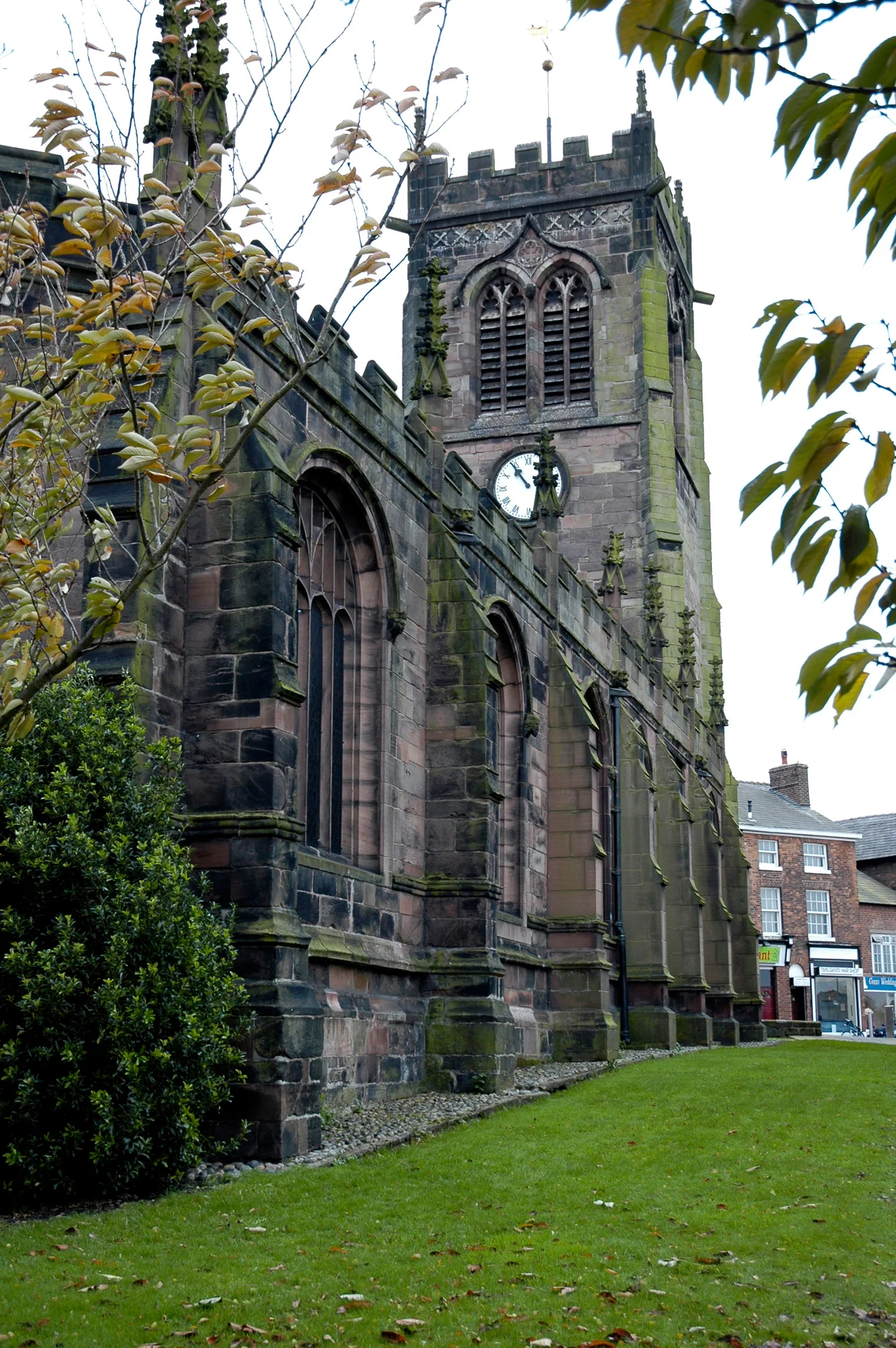

First Battle of Middlewich
Sir William Brereton was a baronet of Handforth, a Cheshire man and a Parliamentarian, and on 13 March 1643 he won the engagement at Middlewich that would shape his county's experience of the English Civil War. He did not regard the victory as his own. I desire the whole praise and glory may be attributed to Almighty God, he wrote afterwards, who infused courage into them that stood for His cause and struck the enemy with terror and amazement. Reading those words today, it is easy to mistake them for performance. They were not. Brereton was a serious Puritan, and the war for him was a religious one. The professor John Morrill, who wrote a major study of seventeenth-century Cheshire, made a striking claim about him: because Cheshire mattered as much as it did, Brereton had more influence on the outcome of the First English Civil War than Oliver Cromwell had.
A County That Could Not Stay Out
Cheshire in 1643 was strategically valuable to both sides. The county sat on the route between Royalist Wales and the Royalist garrisons of the north Midlands, and it controlled the road and river crossings that any march south or north had to use. Middlewich, in the middle of the county where the rivers Croco and Dane met, was one of those crossing points. Whoever held it could move troops north or south as needed. Brereton's victory in March 1643 broke a Royalist attempt to dominate the county. By the end of the spring, Parliamentary forces with Brereton as commander-in-chief held five of the seven Hundreds of Cheshire. From that point on through to February 1646, when the last Royalist base at Chester surrendered, Cheshire was Brereton's. He governed it as much as he commanded it, settling administrative disputes alongside military ones.
A Setback at the Second Battle
Brereton was not invincible. In December 1643 the Royalists turned on him at the Second Battle of Middlewich and inflicted his only major defeat of the war. He recovered, regrouped, and resumed his slow grinding-down of Royalist strength in the county. The two battles at Middlewich, nine months apart, are linked in name and place but not in shape; the first was Brereton's making, the second nearly his unmaking. The Cheshire campaigns of the Civil War were not as celebrated as Marston Moor or Naseby, but they were not minor sideshows. The Royalist garrisons at Chester, Beeston and elsewhere absorbed Royalist troops that the king needed in his southern field armies. Every month Brereton kept those garrisons besieged was a month they did not contribute to the larger war.
The Death of Sir Thomas Aston
Sir Thomas Aston, the Royalist commander defeated at the first battle, did not have a long life left after Middlewich. He served in the West Country under George Goring in 1645, then decided to head home through Kidderminster and Stourbridge. In November of that year a Parliamentary force under a Captain Stones captured him somewhere near Banke, possibly near Walsall, along with about sixty Cheshire Royalists who were presumably trying to get home along with their commander. Aston was imprisoned in Stafford. He attempted to escape and was hit on the head in the attempt. On 24 March 1645 he died of fever brought on by his wounds, including that escape-attempt head injury. His war did not end on a battlefield. It ended in an English jail, of complications from a series of unhealed wounds. Most soldiers in seventeenth-century England died like that.
After the Peace
When peace returned in 1646 and Brereton's military command ended, he moved south to London and became an active Member of Parliament. As a reward for his services he was made chief forester of Macclesfield and seneschal of the Hundred of Macclesfield, civic offices with rights to revenue. In 1651 he received the tenancy of the former Archbishop of Canterbury's palace at Croydon in Surrey, and for the last nine years of his life he commuted between Croydon and his ancestral home at Handforth, in Cheshire. He died on 7 April 1661 in Croydon. Local family tradition put his burial in the Brereton vault at Cheadle in Cheshire, but the parish records of St John the Baptist at Croydon (now Croydon Minster) record him as buried there. Either way he died a respected MP, two years after the Restoration but apparently untouched by the change of regime. Middlewich today is a small market town on the Trent and Mersey Canal, better known for its salt works than its battles. The seventeenth century is still in the shape of the streets, but it takes a guided walk or a local memorial to find what happened at the crossing of the rivers.
From the Air
The site of the first battle lies at approximately 53.19N, 2.44W, within and around the small Cheshire town of Middlewich. From the air, the dominant feature is the Trent and Mersey Canal, which threads through the town and connects to the Shropshire Union via the Middlewich Branch. The rivers Croco and Dane meet in the town; the surrounding country is flat dairy farmland in the Cheshire Plain. The M6 motorway runs about three miles east of the town. Recommended viewing altitude 3,000-5,000 ft to see the canal network and the town's relationship with Crewe to the south and Northwich to the north. Nearest airports: Manchester (EGCC) 22 nm north, Liverpool John Lennon (EGGP) 26 nm northwest, Hawarden (EGNR) 26 nm west.
Nearby Stories
- Battle of Rowton Heath 1.1 km away
- Knowsley Hall 1.7 km away
- Old Trafford 2.9 km away
- Tutbury Castle 7.2 km away
- Haddon Hall 7.5 km away
- Whittington Castle 14 km away
- Stafford Castle 16 km away
- Wentworth Castle 19 km away