
Where Indonesia Was Written Into Existence
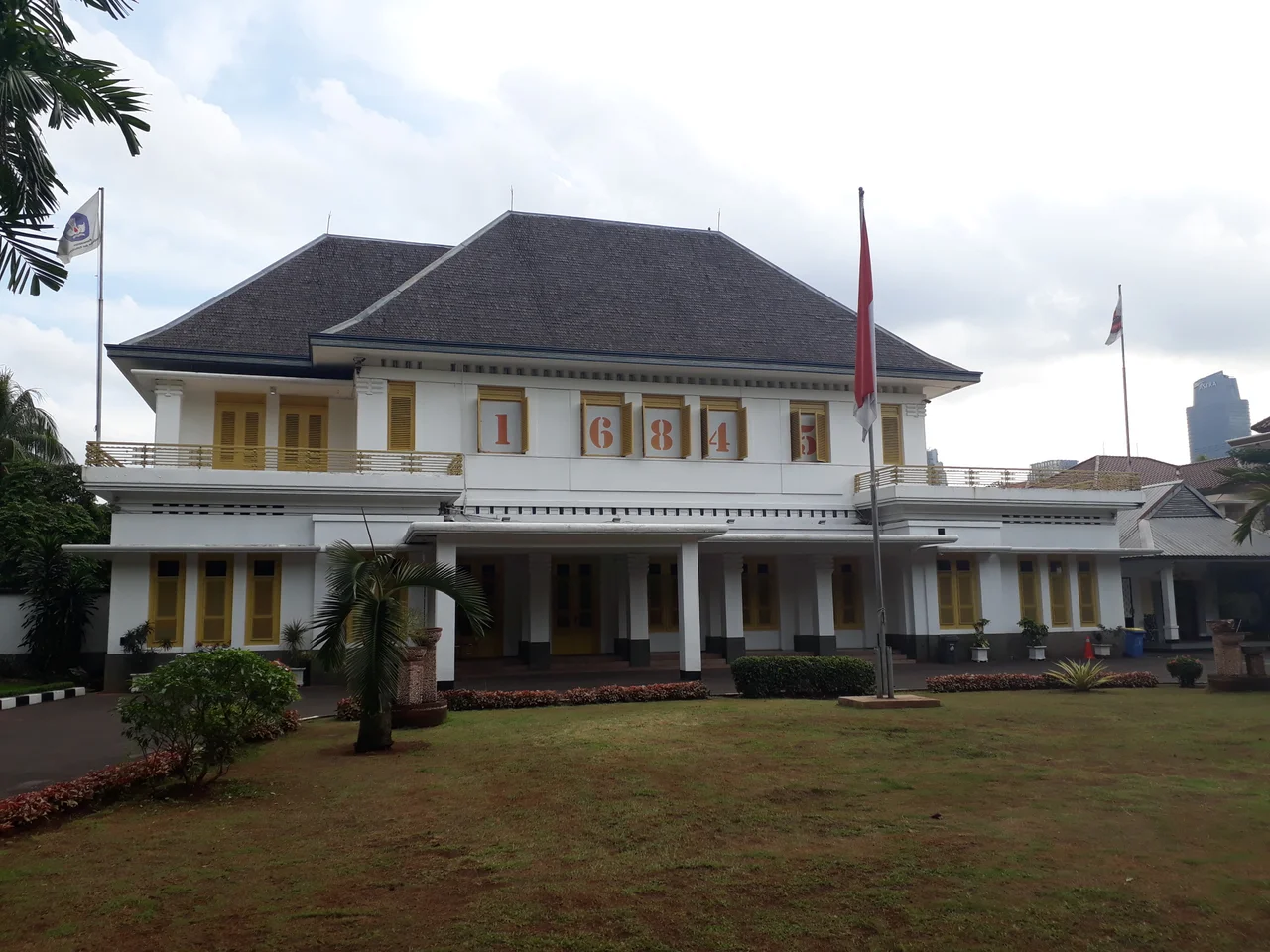
Sukarno's handwriting is not elegant. The letters slant and crowd each other, the pen pressing hard into the paper as though the words themselves carried physical weight. On the night of August 16, 1945, in a room on the second floor of an Art Deco building at Jalan Imam Bonjol 1 in Central Jakarta, the man who would become Indonesia's first president sat at a round table and drafted 47 words in Indonesian that would change the fate of an archipelago. The text of the Proclamation of Indonesian Independence -- declaring sovereignty over a nation of thousands of islands and hundreds of languages -- was handwritten here, debated here, typed here, and signed here, all before dawn. The building, designed by architect J.F.L. Blankenberg in 1920, had by then already lived several lives. It is now the Museum of the Formulation of the Proclamation Text, and its rooms have been arranged to recreate the exact atmosphere of that single, decisive night.
A Building That Changed Flags
The two-story structure covers 1,138 square meters on a plot nearly four times that size, its Art Deco lines clean and symmetrical in the manner of 1920s Dutch colonial architecture. When the Pacific War erupted, the building was serving as the British General Consulate. Japan's occupation of the Dutch East Indies brought a new tenant: Rear Admiral Tadashi Maeda, who used it as his personal residence. Maeda was an unusual figure among Japanese military officers -- sympathetic to Indonesian nationalism and willing to let his home become a meeting ground for independence leaders. When the Allies arrived in September 1945, the British took it over as a military headquarters. Later it housed the English Embassy from 1961 to 1981, then became an office for the National Library of Indonesia. Each transition marked a shift in who controlled Jakarta and, by extension, the archipelago.
The Night Everything Accelerated
Japan's surrender on August 15, 1945, created a vacuum that Indonesian nationalists had been waiting for. The atomic bombings of Hiroshima and Nagasaki had ended the war, and Dutch colonial authority had not yet returned. Hours mattered. On the evening of August 16, Sukarno, Mohammad Hatta, and a small group of independence leaders gathered at Maeda's residence to draft the proclamation. The admiral had given his tacit approval -- or at least his absence. In the first room, now reconstructed as a living room and office, the group debated the wording. The BPUPK and the PPKI -- the committees that had been preparing for independence under Japanese supervision -- had laid the political groundwork. But the text itself had to be written that night. Sukarno took the pen. Hatta and the others contributed edits around the round table in the second room, shaping each sentence under the pressure of a closing window.
Pen, Piano, and Typewriter
The museum preserves four rooms, each corresponding to a stage in the proclamation's creation. The first room sets the scene: scale models and period photographs depict the political atmosphere in the final days of Japanese occupation. The second room holds the round table where Sukarno handwrote the draft and Hatta and others revised it. In the third room, a piano still stands -- this was where Sukarno and Hatta signed the finalized text. The following morning, August 17, Sukarno would read the proclamation aloud in front of his own house on Jalan Pegangsaan Timur, an event that marks Indonesia's Independence Day. The fourth room completes the sequence: it was here that Sayuti Melik and B.M. Diah typed the handwritten draft into its final form. Display cases hold the personal effects of those who were present -- watches stopped at no particular hour, pens that wrote more than their owners could have imagined, the clothing they wore on a night they could not have known would become a national origin story.
From Neglect to National Shrine
For decades after independence, the building at Imam Bonjol 1 served prosaic functions -- embassy offices, library storage -- with no particular acknowledgment of what had happened within its walls. It was not until 1984 that Minister of Education and Culture Nugroho Notosusanto directed that the building be converted into a museum. The formal inauguration came eight years later, on November 24, 1992. Today the museum sits in the Menteng district of Central Jakarta, surrounded by the traffic and commercial density of a city of more than ten million people. Its Art Deco facade is modest against the skyline. But inside, the rooms remain arranged as they were in August 1945 -- a deliberate act of preservation that asks visitors to stand where Sukarno stood, to see the table where the pen moved, and to understand that a nation can begin with a single handwritten page.
From the Air
Located at 6.20S, 106.83E in the Menteng district of Central Jakarta. The museum building is a modest two-story colonial Art Deco structure, not easily distinguished from the air amid dense urban development. Nearest major airport is Soekarno-Hatta International (WIII), approximately 25 km northwest. Halim Perdanakusuma Airport (WIHH) lies about 13 km southeast. The National Monument (Monas) in Merdeka Square, roughly 1.5 km to the northwest, serves as the primary visual landmark for orientation. Best viewed at low altitude in conjunction with surrounding Central Jakarta landmarks.
Nearby Stories
- The King's Footprints in the River 2.8 km away
- Rawagede Massacre 6.4 km away
- The Cruiser That Wouldn't Stop Fighting 14 km away
- Four Minutes Over the Java Sea 14 km away
- The Scholar's Mosque 21 km away
- Through the Cidepong Hills 37 km away
- Ujung Kulon National Park 97 km away
- The Islands That Vanished from Sight 352 km away