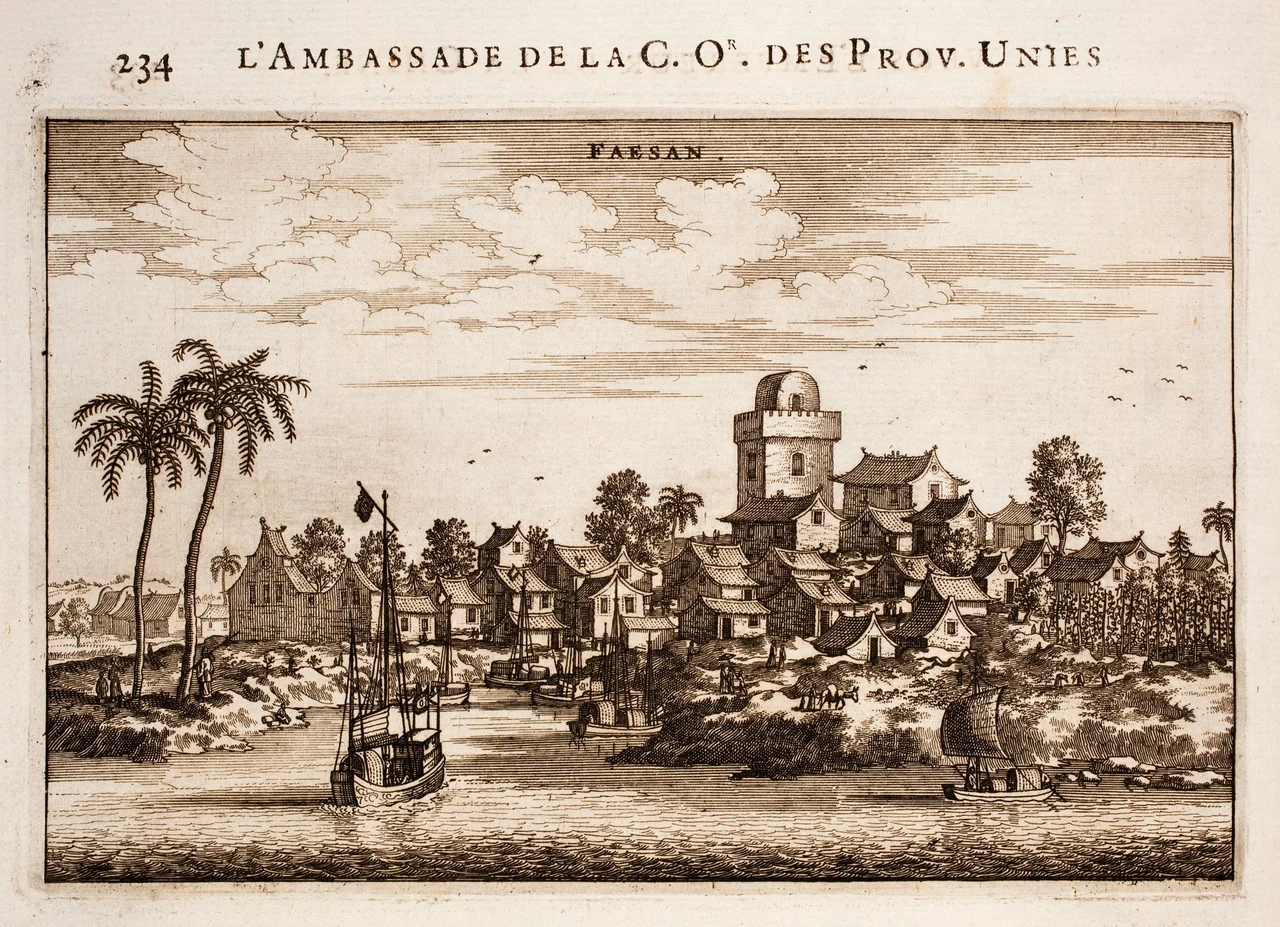

Foshan
There is a saying in the Pearl River Delta: "Guangzhou and Foshan are the same city." It isn't quite true — Foshan has its own metro system, its own identity, its own nine and a half million people — but the phrase captures something real about how the two cities have grown together, their edges blurring along highways and metro lines until the boundary becomes more administrative than visible. What Foshan has, though, that Guangzhou does not, is a specific kind of origin story. This is the city where Cantonese opera was born. Where ceramics defined the economy for centuries. Where Wong Fei-hung learned to fight, and where Ip Man would later teach Wing Chun to a student named Bruce Lee. Foshan is not a footnote to Guangzhou's story. It is a different story entirely.
Four Great Towns
Foshan's prominence predates the industrial era by centuries. During the Ming and Qing dynasties, the city earned a place among the "Four Great Towns of China" — a distinction based on its position as a major commercial and manufacturing hub. Its location along the Pearl River's tributaries gave it access to markets across Guangdong and beyond. Shiwan, now part of Foshan, became one of China's most important ceramic production centers, its dragon kilns firing continuously for centuries to supply architectural ceramics, household wares, and expressive figural sculptures to a region hungry for quality goods.
Metalworking and textiles rounded out Foshan's economy. The city was a place where raw materials arrived by river and finished goods departed the same way — a logic that shaped the urban geography and the culture alike. The river networks weren't just transportation; they were the organizing principle of an entire way of life, visible today in the dragon boat racing traditions that persist in Foshan's communities, particularly during the early summer Dragon Boat Festival.
The Art That Travels South
Cantonese opera is a performance tradition of elaborate costumes, falsetto singing, acrobatic combat, and stories drawn from history and mythology. Foshan is regarded as its birthplace, and the city's connection to this art form runs deeper than the origin claim. Opera troupes, craftsmen who made the costumes and props, and musicians who developed the accompanying instrumentation all found a home here. The Foshan Ancestral Temple, the city's most important historic site, hosts Cantonese opera performances as part of its regular calendar.
The tradition has proven durable. Traditional music and folk performances remain part of everyday cultural life in a way that is somewhat unusual for a heavily industrialized city. The Shiwan area contributes a different artistic tradition: ceramic sculpture, including the expressive figurines called Shiwan dolls, that have been produced here for generations and carry Foshan's aesthetic sensibility into homes across southern China and the diaspora.
Where Masters Come From
The name that opens almost every conversation about Foshan is Wong Fei-hung — romanized from Cantonese, or Huang Feihong in Mandarin. He was born in the Foshan area in the 19th century, trained in a martial arts lineage rooted in these communities, and went on to become a physician, a militia leader, and an icon of Chinese folk culture so influential that his life story has been depicted in over 100 films. He mastered and systematized Hung Ga — the style known in Cantonese as Hung Kuen, rooted in the southern Shaolin tradition — shaping it into the form that would become one of the most widely practiced southern Chinese martial arts.
A generation later, Ip Man was born in Foshan. He became a grandmaster of Wing Chun kung fu and eventually, after the turmoil of the 20th century brought him to Hong Kong, taught a young man named Bruce Lee. That lineage — from the Pearl River Delta to global popular culture — runs directly through Foshan's streets. The city is also considered the ancestral home of Bruce Lee himself, whose family roots reach back here.
A City in Full
Modern Foshan is dense, industrial, and largely uninterested in presenting itself as a tourist destination. That is part of its appeal for visitors who want to experience Pearl River Delta life as locals actually live it. The Shunde district, now part of Foshan, has earned a reputation as the "food capital of Guangdong" — a serious claim in a province that takes food seriously. Dim sum, fresh river fish, and the particular cuisine of Lingnan culture are available at every price point and in every neighborhood.
The metro system connects Foshan to Guangzhou seamlessly, with Line 1 integrated across both cities' networks. Cantonese remains the dominant everyday language, though Mandarin is widely understood. The climate runs subtropical — summers long and humid, winters mild and brief, spring and autumn offering the most comfortable visiting conditions. The rainy season peaks in late spring and early summer, and typhoons can affect the region between July and September. For a city of nine and a half million people, Foshan moves at a pace that still has room for history.
From the Air
Foshan sits at approximately 23.029°N, 113.106°E in central Guangdong, immediately west of Guangzhou in the Pearl River Delta. The nearest major airport is Guangzhou Baiyun International (ZGGG), roughly 25 kilometers northeast of Foshan's city center and the gateway for international arrivals to this part of the delta. From the air, the Pearl River tributaries that define the delta's geography remain the clearest navigation reference — Foshan's urban core occupies the western side of the Guangzhou-Foshan conurbation, a sprawling low-rise and mid-rise grid interspersed with rivers and canals. Mount Xiqiao, Foshan's most prominent natural landmark, rises 346 meters approximately 40 kilometers to the southwest and provides a distinctive visual reference on clear days. Visibility is best in autumn and early winter; summer months bring persistent haze across the delta.
Nearby Stories
- Humen 7.6 km away
- Birds' Paradise 11 km away
- South China Mall 19 km away
- Qingyuan Maglev Tourist Line 22 km away
- Heyuan 123 km away
- Battle of Nanpeng Island 148 km away
- Temple of the Five Lords 410 km away
- Lugu Lake 1268 km away