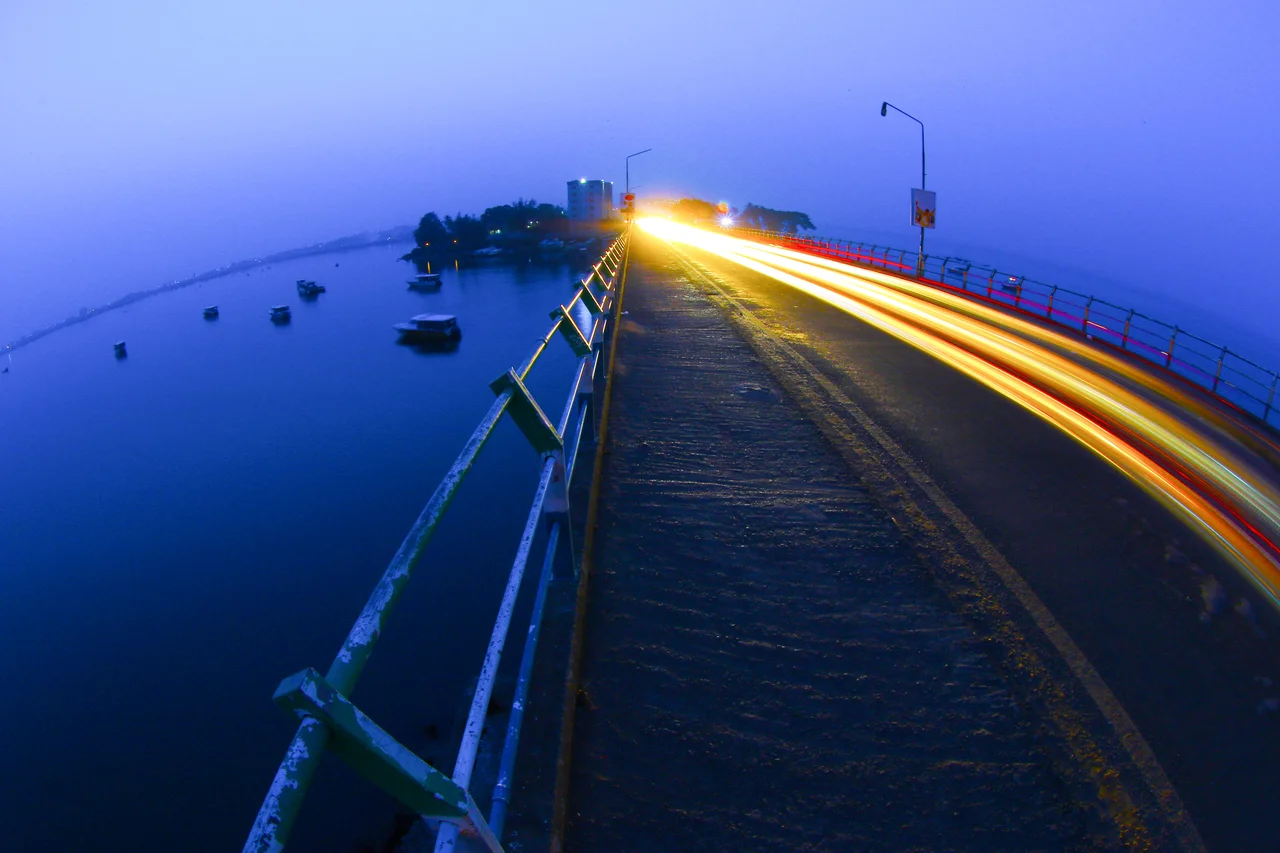

Freetown
The city was named for a promise. Freetown began as a settlement for freed and recaptured Africans — people who had been enslaved and then liberated, set down on this peninsula to begin again. The name was the whole point. Today over 1.3 million people live where the Sierra Leone River widens into one of the best natural harbors on the west coast of Africa, the city rising from the waterfront into green peninsula mountains, with beaches strung along its edge that rank among the most beautiful on the continent. It is a place that wears its history openly, and rewards travelers willing to look past the rough edges.
Harbor, Mountains, Sea
Freetown sits on a peninsula on the south bank of the Sierra Leone River estuary, hemmed between water and steep forested slopes. That geography shapes everything — the harbor that made the city, the mountains that crowd it against the shore, and the Atlantic beaches that curl around the peninsula's edge. Lakka, No. 2 River, Bureh and Tokeh beaches draw those willing to brave bad roads to reach them, and from Tokeh junction onward a smooth modern highway finally rewards the effort. The climate is tropical monsoon: a bone-dry stretch from December to April, when the dusty Harmattan wind blows down from the Sahara, then drenching rains from May to November, with July and August each averaging over a meter of rain.
Getting There Is Half the Adventure
Here is the city's first riddle: the international airport at Lungi sits across the estuary from Freetown itself, with no bridge yet connecting them — though construction is still expected to begin in the coming years. Most foreign visitors skip the long land route and pay around US$40 for a fast boat across the water, with ticket offices waiting as you leave the airport. The alternatives are character-building. The overloaded government ferry feeds into a bus ride that can take three hours, or eight on a bad day. Driving around via Port Loko runs at least four hours. The boat, in other words, is not a luxury — it is the sane choice.
The Rhythm of the Streets
Once in the city, you move as locals do. Shared taxis run fixed routes for a pittance — just declare "no cha cha" to signal you want a shared ride rather than a private charter, then hop in and see where it takes you. Poda-podas, the ubiquitous minibuses, display their destinations on the front: "Lumley" for the beach, "Aberdeen" across the north bridge, "Eastern Police" for the great clock tower at Kissy Road. Downtown, confusingly, is simply "Tong." Beyond the paved arteries you'll switch to an okada — a motorbike taxi — to reach the beaches. None of it is signposted for outsiders, which is precisely why striking up conversation with locals, famously hospitable, is the best map you'll find.
Layers of a Hard History
Freetown carries its past close to the surface. The country's brutal civil war, which ended in 2002, drove rural Sierra Leoneans into the city, swelling its population and clearing jungle for new homes. Quieter relics survive too. The public railway closed in 1974, but a museum at Cline Town preserves its old locomotives, and railway buildings still stand around Hill Station and Congo Cross. At Hill Station, colonial stilt houses molder above the city; downtown, the old board houses show the Caribbean-influenced Krio architecture brought by the city's founding settlers. The Hill Station Club, a looted colonial gentlemen's club, survived the war with its snooker room and champions' boards eerily intact.
Sacred Ground Upriver
No visit to Freetown is complete without acknowledging Bunce Island, twenty miles up the estuary. From this small island, one of the busiest British slave castles on the so-called Rice Coast, countless captured Africans were shipped to the American South — which is why DNA testing links so many African Americans, the Gullah people especially, back to Sierra Leone. The ruins are extensive but overgrown, with almost no tourist infrastructure beyond a guestbook. Reaching them is genuinely difficult and not cheap: a chartered fastboat from Kissy starts around £115, a comfortable speedboat from Aberdeen runs roughly US$300, and budget routes through the village of Pepel are an ordeal. Go anyway, if you can. Few places on Earth carry such weight.
Eating, Drinking, Lingering
On the Atlantic coast, the seafood is the reward — barracuda, grouper and lobster come fresh, and the city's large Lebanese community means excellent Lebanese food at many restaurants. Along the beach roads, small bars cluster thick, and Star beer flows on tap in the better ones. Heat and humidity are the constant companions; an air-conditioned room is less a splurge than a survival tool. Violent crime is rare, though petty theft rewards caution. The traveler's clichés are true here for once — the rough roads, the underdeveloped sites, the sense of being the only visitor at some hidden gem. Sierra Leoneans call their country a "diamond in the rough," and Freetown is where you start to see why.
From the Air
Freetown sits at 8.49°N, 13.24°W on the Sierra Leone peninsula, fronting the broad Sierra Leone River estuary. The international airport is Freetown–Lungi (GFLL), across the estuary about 13 miles to the north — note the airport and city are separated by water with no bridge. From the air, the city reads unmistakably: a great natural harbor backed by the forested peninsula mountains, with Atlantic beaches lining the western and southern shore. Clearest in the December–April dry season; the May–November monsoon brings heavy cloud and rain.
Nearby Stories
- Tombo, Sierra Leone 11 km away
- Mabilafu 50 km away
- Makeni 68 km away
- Îles de Los 75 km away
- Bonthe 83 km away
- Sandervalia National Museum 98 km away
- Loos Islands 106 km away
- Rocas Atoll 2605 km away