
Furna Feia National Park
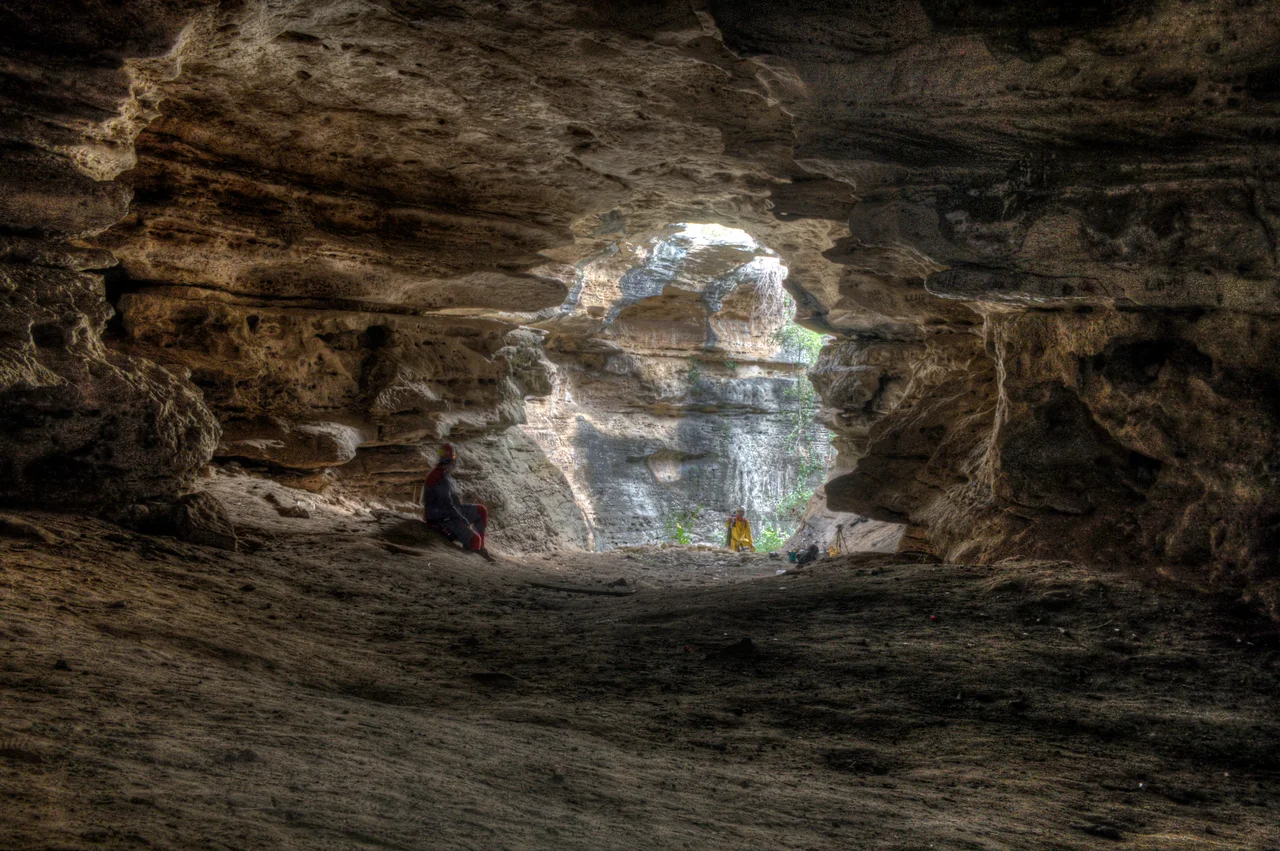
The name translates unflatteringly. Furna Feia means Ugly Cavern, a blunt label that the geologists who mapped this landscape never quite bothered to soften. The cave itself is 766 meters long and anything but ugly: limestone chambers, passages that shrink and swell, rooms where the temperature holds steady while the surface above bakes under Caatinga sun. Around it, in the red scrub of Rio Grande do Norte, more than 200 other caves have been found. Eleven species of blind, pale invertebrates that live permanently underground were catalogued here for the first time in scientific history. The park that protects all this is the first national park ever declared in Rio Grande do Norte, and it almost didn't happen.
A Park Born of Compromise
Limestone is the enemy of caves that are trying to stay caves. The rock that forms the chambers is also the raw material for cement, and for years the planned boundaries of Furna Feia sat directly over active mining claims. Creation of the park stalled as operators dug in and negotiators searched for a way through. The solution was arithmetic: 700 hectares of the planned park, exactly the parcels where mining applications had already been filed, were cut loose. What was left, 8,518 hectares of Caatinga scrubland, limestone plateau, and cave-riddled subsurface, became the protected area. President Dilma Rousseff formally announced the creation on June 5, 2012, choosing World Environment Day as the backdrop. The compromise left a ragged boundary on the map but made the rest of the protection real.
Life Under Rock
What makes Furna Feia scientifically special is what lives inside its caves. Troglobites are animals that have evolved to live only in total darkness: they tend toward pale, almost translucent bodies, reduced or absent eyes, and elongated sensory appendages that make the most of vibration and chemistry. Eleven species of troglobite invertebrates have been described here, every one of them new to science when researchers first collected and described them. Above ground, the park holds about 105 plant species and 135 animal species, some of them endangered. The Caatinga biome that surrounds the caves is itself unusual: a semi-arid thorn forest found only in Brazil, full of plants that look dead through the dry season and burst into flower when the first rain arrives.
The Main Cave
The chamber that gives the park its name is the centerpiece for visitors who can arrange a trip with a guide. Entering from a collapsed doorway in the plateau, the passage opens into a 766-meter corridor of limestone shaped by slow water over timescales that dwarf recorded human history. Previous generations used the caves for shelter and for the kinds of resources that dark, cool spaces provide: stored goods, hidden livestock during drought, places to escape the worst of the sun. Less reverent visitors have left their marks in broken stalactites and graffiti. The park's administration, the Chico Mendes Institute for Biodiversity Conservation, now runs guided-only access to the main cave specifically because the earlier pattern of destructive visits was damaging formations that took tens of thousands of years to grow.
Fire, Hunters, and the Long Work of Protection
A national park in Brazil is a legal category, but it is also a daily argument with the landscape around it. The communities living in the municipalities of Baraúna and Mossoró, which contain the park, have long-standing practices the park's boundaries now prohibit: hunting for food, cutting timber, grazing animals into the protected scrub. ICMBio's approach has been to work with local residents rather than against them, running outreach and education alongside enforcement. A fire brigade trained from local recruits patrols the dry-season months, when a spark in Caatinga can become a fast-moving ground fire that threatens both surface vegetation and cave ecosystems that depend on steady conditions. The park is still young, created just over a decade ago, and the work of understanding what it actually protects continues.
Why the Caves Matter
Caves are not just pretty. For geologists, they are libraries; stalactite growth rings record regional climate over tens of thousands of years, and sediment layers preserve evidence of prehistoric animal life. For biologists, they are laboratories for convergent evolution, where the same subterranean pressures produce similar adaptations in unrelated lineages. For anyone who walks into one, they are a reminder that the surface of the earth is thin. Furna Feia sits at a meeting point of these interests, where a semi-arid ecosystem above the ground conceals a wetter, cooler, stranger world below. The eleven unknown species described here are almost certainly not the last to be found. The real work of the park may only be getting started.
From the Air
Furna Feia National Park sits at 5.06 degrees south, 37.51 degrees west in Rio Grande do Norte, Brazil, in the municipalities of Baraúna and Mossoró. Elevation ranges around 80 to 160 meters above sea level across the limestone plateau. Best viewing altitude is 3,000-6,000 feet above ground to see the dry Caatinga scrub, the pale limestone outcrops, and the mosaic of fields and mining operations nearby. Mossoró Airport (SBMS) is about 20 kilometers east, and Augusto Severo International (SBSG) at Natal is roughly 280 kilometers east. Dry season runs August through December with clearest air.
Nearby Stories
- Açu, Rio Grande do Norte 34 km away
- Canoa Quebrada 37 km away
- Castanhão Dam 59 km away
- Açu National Forest 65 km away
- Beberibe 66 km away
- Castanhão Ecological Station 89 km away
- 1986 João Câmara earthquake 121 km away
- Atol das Rocas Biological Reserve 358 km away