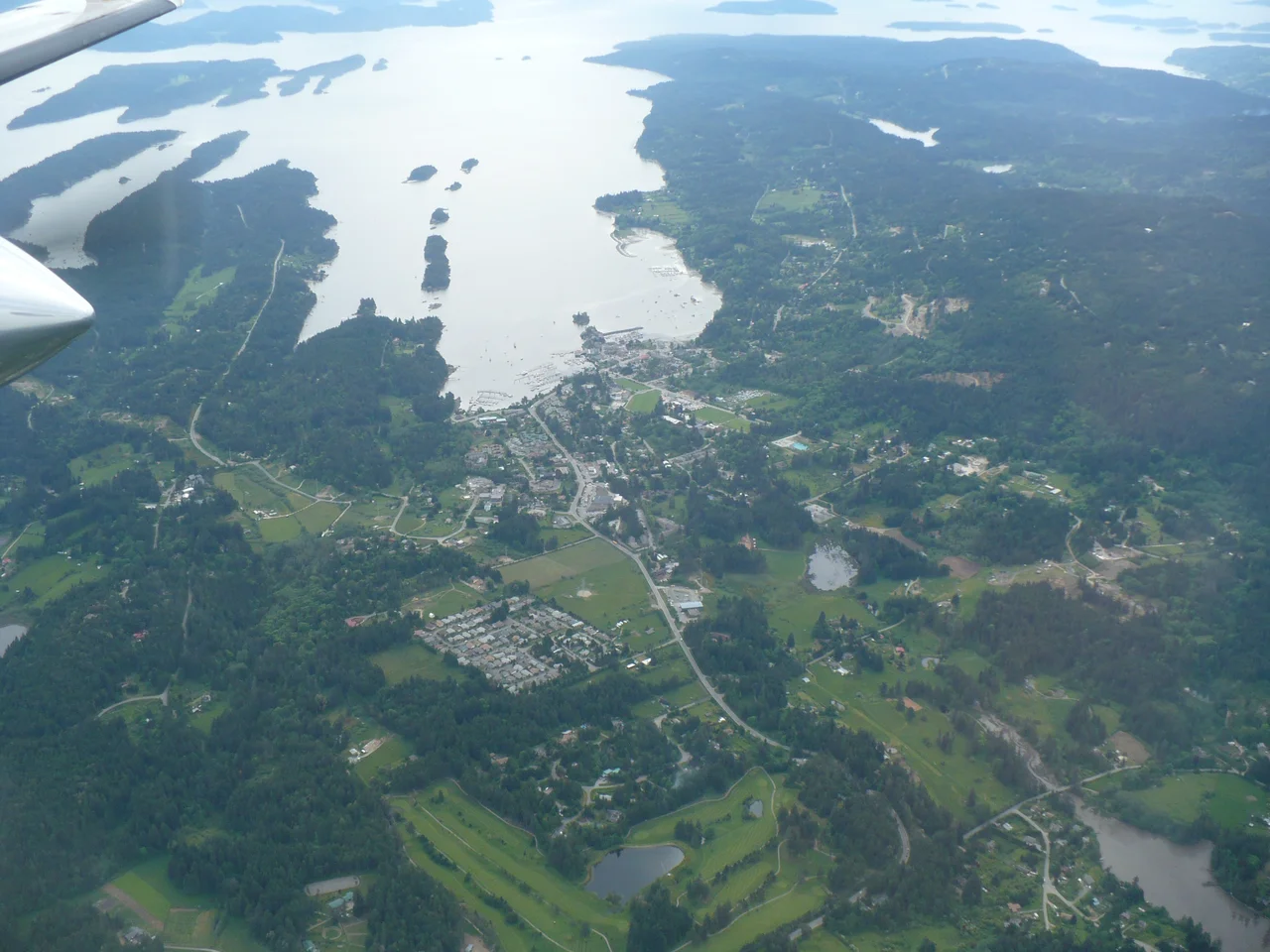

Ganges, British Columbia
In 1859, a group of families packed up and left California, not because they had failed there but because the state had made it legislatively clear that they were not wanted. They were African American, and the laws being passed around them were designed to squeeze them out. Word came from the north that the colonial governor of Vancouver Island, James Douglas - himself a man of Guyanese and multi-ethnic birth - would guarantee them fair treatment in a colony that had abolished slavery more than twenty years earlier. They came. The north end of Salt Spring Island is where a good many of them settled, and the town they helped build is called Ganges.
The Families Who Came North
Through the 1800s, Ganges and neighbouring Vesuvius were predominantly African American communities - a fact that startles most visitors, because nothing about the island's present advertises it. The first house on Salt Spring was built at Ganges in 1859 by the first party of twenty settlers to arrive that summer. The south end of the island filled with Native Hawaiian settlers, known then as Kanaka, giving a small Gulf Island a demographic mix that almost no other place in British North America could match. The promise held better than California, but it did not hold perfectly: in 1867 and 1868, three Black men on the island were murdered. Their names deserve to be better known than they are. The community they belonged to stayed and kept farming.
Named for a Ship Made of Teak
The harbour was originally Admiralty Bay. Captain Richards renamed it in 1859 for HMS Ganges, and Ganges in turn had been named for the river in South Asia - so a Gulf Island town carries a place name from half a world away by way of the Royal Navy's filing system. The ship herself is worth the detour. An 84-gun second-rate ship of the line, she was built of teak at the Bombay Dockyard and launched on 10 November 1821, measuring 193 feet 10 inches on the gun deck. From 1857 to 1861 she served as flagship of the Pacific Station under Rear Admiral Robert Lambert Baynes, working the San Juan boundary dispute out of the Esquimalt dockyard. She was the last sailing ship in the Royal Navy to serve as a flagship. Afterwards she became a training ship, and was finally broken up in 1930.
The Island's One Town
Salt Spring is 182.7 square kilometres holding 11,635 people, and Ganges is where all of them eventually have to go. The groceries are here, along with the banks, the restaurants and a dense concentration of art galleries. So is the hospital, the RCMP detachment and the island's main fire hall. Salt Spring Coffee roasts here and sells aboard BC Ferries, which means a good many people have tasted the town without knowing where they were. Gulf Islands Secondary School serves not just Salt Spring but Pender, Galiano, Mayne and Saturna; the Gulf Islands Water Taxi brings more than a hundred students across open water to class, which puts most commutes into perspective.
Make It, Bake It, or Grow It
Every Saturday from April to October, 8:30 in the morning until four in the afternoon, Centennial Park and the streets around it fill with the Ganges Market. The governing rule is refreshingly short: make it, bake it, or grow it. Hundreds of vendors work within it, selling produce, baked goods, soap and lotions, pottery, jewellery, art and clothing, all of it originating on the island. Buskers work the crowd. Dogs get looked after by the SPCA. Children are surrendered to the adjacent playground. It is the closest thing the island has to a weekly civic assembly, and in a place where everybody has to come to town anyway, that is more or less exactly what it functions as.
Arriving by Water or Air
There is no bridge, and there never will be. Three BC Ferries terminals sit within a twenty-minute drive of Ganges, running to Swartz Bay on the Saanich Peninsula, Crofton on Vancouver Island, Tsawwassen on the mainland, and the South Gulf Islands. Ganges Harbour itself is a busy water aerodrome, with several scheduled flights a day to Vancouver flown by Harbour Air, Salt Spring Air and Seair Seaplanes - floatplanes taxiing past sailboats at anchor is simply how the harbour looks. Marinas line the shore, a Canadian Coast Guard cutter is based here, and the island's central position among the Gulf Islands makes it one of the most reliable stops in the archipelago for anyone travelling under sail.
From the Air
Ganges lies at 48.85°N, 123.517°W on the east side of Salt Spring Island, the largest of the southern Gulf Islands at 182.7 km2. Ganges Water Aerodrome (CAX6) occupies the harbour itself and carries scheduled floatplane traffic to Vancouver, so expect seaplane movements at low level over the water and keep clear of the approach and departure lanes. From 2,000-3,500 ft the island reads clearly: Ganges Harbour notched into the east shore with its marinas and moored boats, wooded ridges running the length of the island, and the maze of Gulf Islands scattered northeast toward the Strait of Georgia. Vancouver Island lies west across Sansum and Stuart Channels; the Saanich Peninsula and Victoria International (CYYJ) are to the south, and Victoria Inner Harbour (CYWH) further south again. Channel winds can be brisk and shifty between the islands, and summer mornings often start under marine stratus.
Nearby Stories
- Mesachie Lake 3.6 km away
- Island Rail Corridor 3.9 km away
- Canadian Forces Station Ladner 4.5 km away
- Patos Island Light 5.6 km away
- San Juan Island National Historical Park 6 km away
- Valdes Island 6.4 km away
- Juan de Fuca Marine Trail 11 km away
- Mount Arrowsmith Biosphere Region 19 km away