
The Stadium That Sukarno Willed Into Being
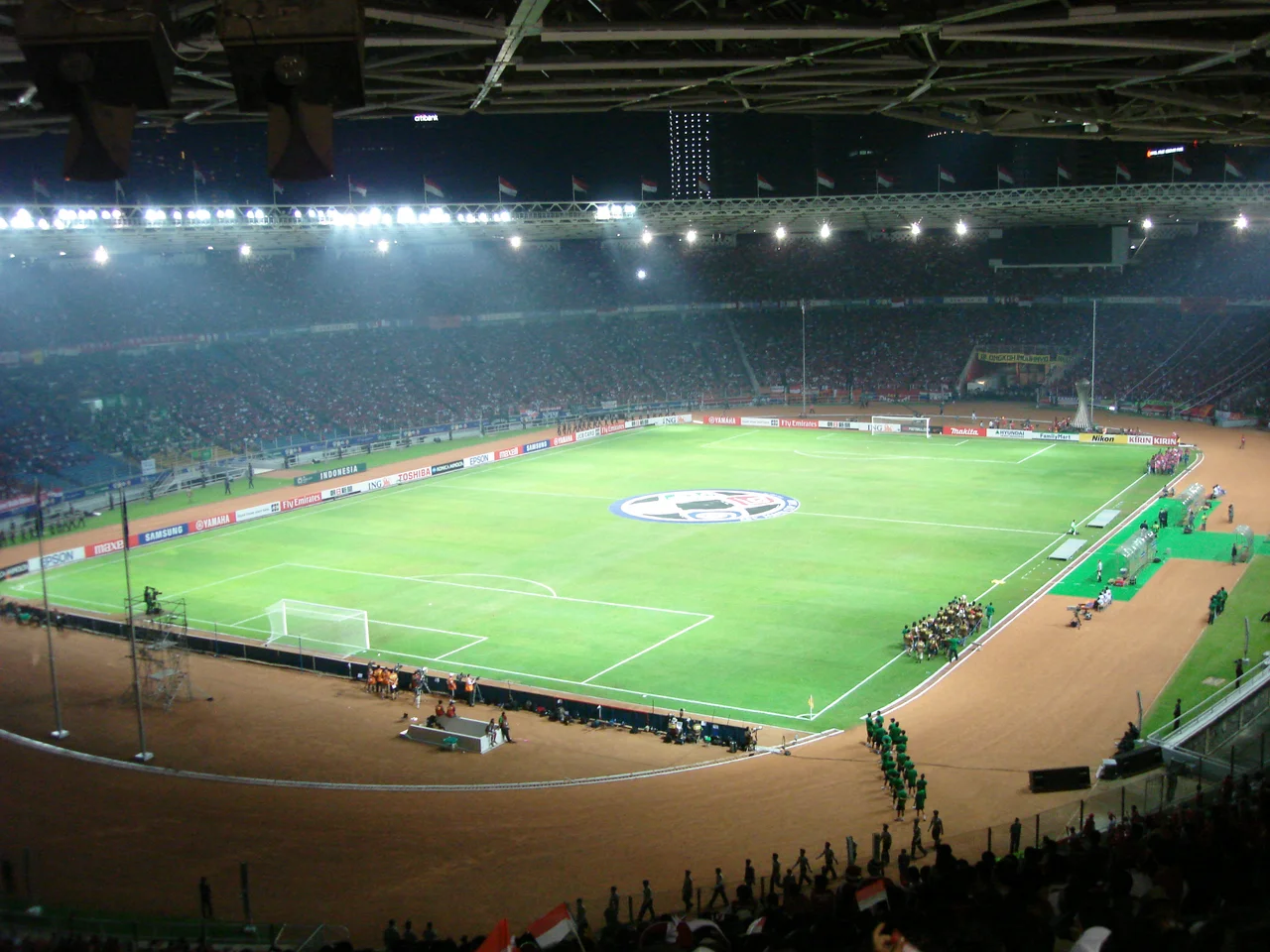
The Soviet architects said no. A circular roof encircling an entire football stadium had never been built. The engineering was uncertain, the design unprecedented, and the timeline -- less than three years to completion -- was already aggressive. President Sukarno listened, then insisted. He called the design temu gelang, a Javanese term for a ring that meets itself, and he wanted it not because it was practical but because it would make the world look. Construction began on February 8, 1960, in the Senayan district of Central Jakarta. By July 21, 1962, the stadium was finished -- 110,000 seats arranged beneath a gigantic ring-shaped facade that did exactly what Sukarno intended. The Gelora Bung Karno Stadium opened in time for the 1962 Asian Games, and it has since hosted everything from papal masses to presidential campaign rallies to Muhammad Ali boxing matches.
A President Who Was Also an Architect
Sukarno was not just a politician giving orders from a desk. He was a trained architect and civil engineering graduate, and he approached the stadium project with the hands-on intensity of a designer protecting his vision. When the Asian Games Federation awarded Jakarta the 1962 Games in 1958, the city lacked a multi-sport complex entirely. Sukarno issued Presidential Decree No. 113/1959, establishing the Asian Games Council of Indonesia, and personally proposed locations for the complex. He favored a site near M.H. Thamrin Boulevard and Menteng -- essentially the center of Jakarta's future downtown. The renowned architect Friedrich Silaban disagreed. The two surveyed potential sites by helicopter, and Silaban argued that building a massive sports complex in the heart of the commercial district would cause permanent traffic congestion. Sukarno conceded the point and redirected the project to Senayan, where approximately 300 hectares of land awaited transformation into what would become Southeast Asia's most ambitious sports complex.
Cold War Concrete
The stadium's construction was partially funded by a special loan from the Soviet Union -- one of many Cold War-era development projects where superpower patronage shaped the built environment of newly independent nations. Soviet architects designed much of the structure, which made Sukarno's insistence on the temu gelang roof ring an exercise in diplomatic stubbornness as much as architectural ambition. The Soviets built what the Indonesian president demanded. The original capacity of 110,000 made it one of the largest stadiums in Asia. Its circular roof, designed to shade spectators from Jakarta's equatorial sun while amplifying the sense of enclosure and grandeur, became the stadium's signature feature -- visible on commemorative stamps, painted in panoramic views, and immediately recognizable from the air as a perfect circle cut into the urban grid of Central Jakarta.
150,000 People and a Pope
The stadium's most astonishing crowd figure predates its renovation to all-seater configuration. At the 1985 Perserikatan Final between Persib Bandung and PSMS Medan, an estimated 150,000 spectators packed the venue -- well beyond its official capacity and among the largest attendances for an amateur football match anywhere in the world. PSMS Medan won the match, but the number itself became legendary. Beyond football, the stadium has served as a stage for moments that transcend sport. Pope Paul VI celebrated a Grand Catholic Mass here on December 3, 1970. Pope John Paul II returned on October 9, 1989. Pope Francis followed on September 5, 2024. The 2019 Indonesian presidential campaign saw both candidates hold final-day rallies in the stadium, each drawing more than 77,000 supporters -- arguably the largest single-day campaign events in Indonesian electoral history. Muhammad Ali fought Rudie Lubbers here on October 20, 1973. The stadium has hosted COVID-19 mass vaccination drives, Christmas services, and the caliphate conference of Hizb ut-Tahrir Indonesia.
Three Renovations, One Identity
Each renovation has shrunk the stadium and improved it. The original 110,000-seat capacity dropped to 88,306 for the 2007 AFC Asian Cup, when the venue hosted the final between Iraq and Saudi Arabia. For the 2018 Asian Games and Asian Para Games, a comprehensive renovation replaced all remaining bleachers with individual seats, bringing the capacity to 77,193 and making it an all-seater stadium compliant with FIFA standards. The new seats were colored red, white, and grey to resemble the waving flag of Indonesia -- a detail visible from the upper tiers. A 620-fixture LED lighting system replaced the old floodlights, and an RGB system was installed on the facade, allowing the temu gelang to glow in shifting colors at night. The renovation cost approximately 769.69 billion rupiah, around US$59 million at 2016 exchange rates. The stadium remains the eighth-largest football stadium in Asia and the centerpiece of the Gelora Bung Karno Sports Complex, accessible by Jakarta's MRT via Istora Mandiri station and by the KRL Commuterline through Palmerah railway station.
From the Air
Located at 6.22S, 106.80E in the Senayan district of Central Jakarta. The stadium's distinctive circular roof -- the temu gelang -- is clearly visible from altitude as a large ring shape within the expansive Gelora Bung Karno Sports Complex, which covers approximately 300 hectares. The complex is one of the most recognizable landmarks in Central Jakarta from the air. Nearest major airport is Soekarno-Hatta International (WIII), approximately 25 km northwest. Halim Perdanakusuma Airport (WIHH) lies roughly 15 km southeast. The National Monument (Monas) in Merdeka Square is about 4 km to the northeast and provides a useful orientation point.
Nearby Stories
- The King's Footprints in the River 2.8 km away
- Rawagede Massacre 6.4 km away
- The Cruiser That Wouldn't Stop Fighting 14 km away
- Four Minutes Over the Java Sea 14 km away
- The Scholar's Mosque 21 km away
- Through the Cidepong Hills 37 km away
- Ujung Kulon National Park 97 km away
- The Islands That Vanished from Sight 352 km away