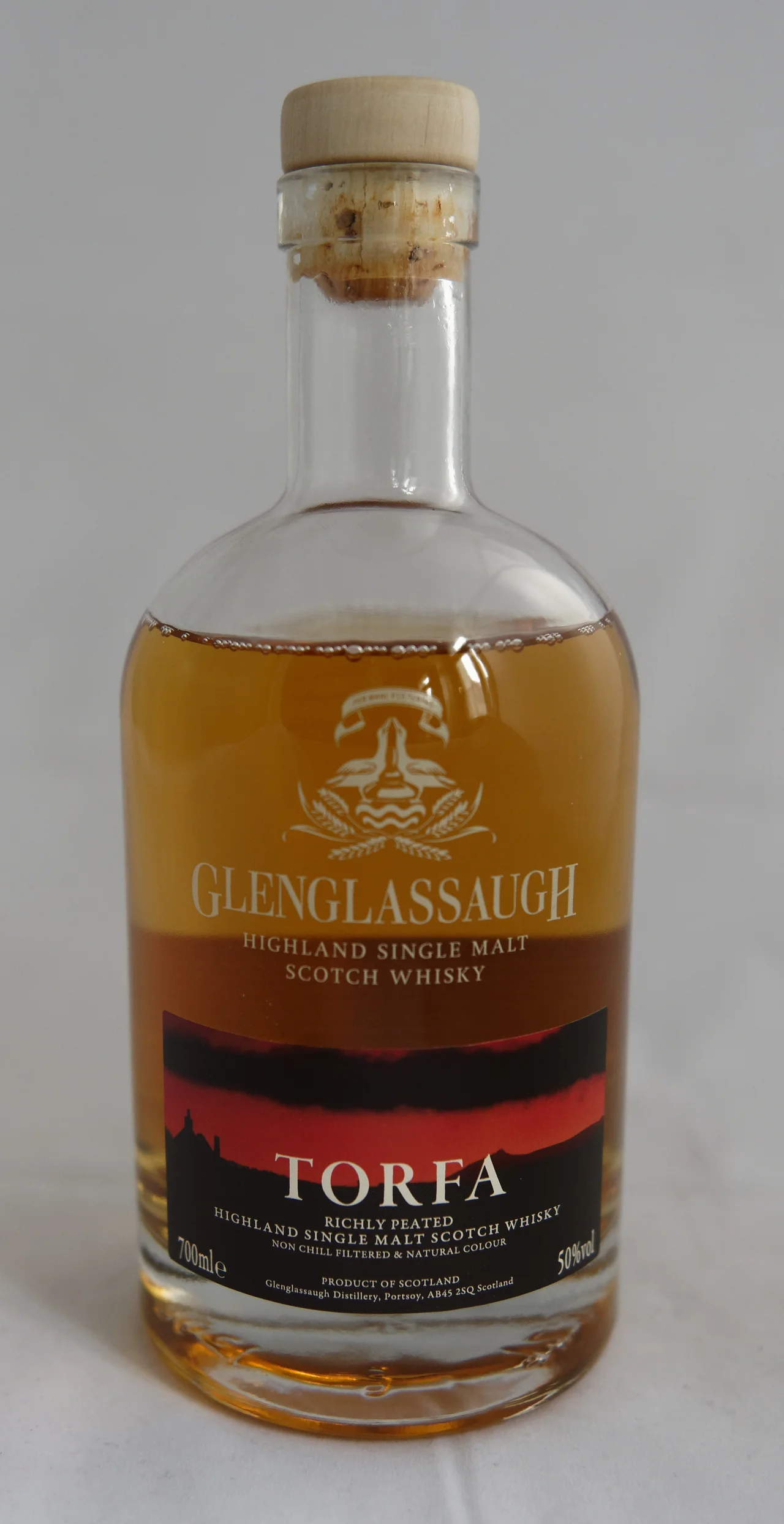

Glenglassaugh Distillery
Alex Salmond, then First Minister of Scotland, cut the ribbon at Glenglassaugh on 24 November 2008. The distillery had stood silent since 1986, twenty-two years of dust on the stills, twenty-two years of warehouses holding only old casks and the smell of damp wood. Now an independent investment group had spent millions on refurbishment and Salmond was here in a kilt to relight the spirit lamp. For a few years the revival looked like one of the great Scotch whisky comebacks. Seventeen years later, the distillery is silent again, mothballed by Brown-Forman in January 2025. The story between those bookends is what Glenglassaugh is.
James Moir's Whisky
James Moir ran a grocery in Portsoy in the 1870s, and his customers wanted whisky better than the rough spirit they could get at most country inns. In 1875 Moir and his two nephews, Alexander and William Morrison, built a distillery near the village of Sandend, between Portsoy and Cullen, on land already known for producing excellent whisky illicitly. The site offered everything a distiller wanted: the clean Glassaugh Springs for water, the barley fields of the Aberdeenshire coastal plain, and a tradition of smugglers who had clearly understood the local terroir. The location was technically just outside the Speyside region proper, but the whisky was unmistakably in that family of malts.
Highland Distillers and the Long Pause
Moir and William Morrison died within a few years of opening, and Alexander Morrison was forced to sell. In 1892 the distillery passed to Highland Distillers, a subsidiary of the Edrington Group that also owns Macallan and Highland Park. Highland kept Glenglassaugh running through most of the twentieth century, then closed it in 1986 during the great Scotch whisky downturn. The industry had overproduced for years, demand had collapsed, and small coastal distilleries were the first to go silent. For twenty-two years Glenglassaugh produced nothing. Stock from the pre-closure runs aged in the warehouses and became increasingly rare, and increasingly expensive.
The 2008 Revival
The Scaent Group, an independent investment vehicle based in the Netherlands through Lumiere Holdings, bought Glenglassaugh from Highland Distillers in February 2008. They invested heavily in restoring the stills, the malting floor, the cooperage, and the visitor centre. Alex Salmond opened the rebuilt distillery in November of that year. On 16 December 2011 the first bottling of newly distilled Glenglassaugh whisky went on sale, available only from the distillery shop, a moment whisky writer Ian Buxton chronicled in his book Glenglassaugh: A Distillery Reborn. In March 2013 the BenRiach Distillery Company bought Glenglassaugh, adding it to a portfolio that included BenRiach and Glendronach.
Sandend Bay in a Bottle
Brown-Forman, the American company best known for Jack Daniel's, acquired BenRiach Distillery Company in 2016 and inherited Glenglassaugh with it. In June 2023 the brand was relaunched with new artistic direction inspired by the rippling sand of Sandend Bay just below the distillery, with notes of colour drawn from sea glass. A flagship twelve-year-old single malt led the new portfolio. The release was praised. The brand seemed alive again. Then in January 2025 Brown-Forman announced that Glenglassaugh would pause production and run on what they called periods of production alongside occasional silent seasons, which is the industry's careful phrasing for mothballed. The Glassaugh Springs still flow. The warehouses still hold maturing stock. The stills are cold for the third time in 150 years, waiting for whichever cycle of demand brings them back. They have come back before.
From the Air
Glenglassaugh stands on the Moray Firth coast between Sandend and Portsoy at 57.68 degrees N, 2.74 degrees W. From the air the distillery buildings are visible just inland from Sandend Bay, with the white sand of the bay itself a clear feature against the dark coastal rocks. Cruise altitude three to six thousand feet shows the relationship to Portsoy a mile to the east and Findlater Castle a similar distance to the west. Nearest airports are Aberdeen (EGPD) about fifty nautical miles southeast, RAF Lossiemouth (EGQS) about thirty nautical miles west, and Inverness (EGPE) about forty-five nautical miles west.
Nearby Stories
- Aberlour Distillery 4.2 km away
- Pitsligo Castle 5.8 km away
- Lossiemouth 7.7 km away
- Battle of Slioch 7.8 km away
- Old Slains Castle 18 km away
- Helmsdale 32 km away
- HMS Exmouth (H02) 35 km away
- German submarine U-58 (1938) 39 km away