
Glyfada
Twenty kilometres south of the Acropolis, the city opens onto the sea. The apartment blocks thin out, a marina appears, and the atmosphere shifts — from the density of central Athens to something airier, sunlit, and consciously stylish. This is Glyfada, the municipality that considers itself the capital of the Athens Riviera, and it has spent the last several decades making a case for that title.
From Salt Wells to Seafront
The area's name comes from an old Greek word for salt water. At the beginning of the twentieth century, the presence of salt-water wells gave the district the name Glyfada, and the name stuck even as the wells gave way to mansions, seafront restaurants, and a marina that extends three kilometres along the coast. In ancient times this stretch of the Attic coast was a deme — a local administrative unit — called Aixone. It was unremarkable agricultural and coastal land. The transformation into one of Athens's most sought-after addresses happened across the twentieth century, driven by the town's position between the Hymettus mountain to the northeast and the Saronic Gulf to the southwest — a geography that delivers shade, sea breeze, and water access simultaneously. Today the municipality covers 25.366 square kilometres, and it carries itself with the particular confidence of a place that knows it has a good address.
An American Accent
One of the more unusual chapters in Glyfada's recent history is the American airbase that occupied land nearby until the early 1990s. The base brought American military families, American tastes, and American money into a Greek coastal town, and the combination produced a local character that observers have long described as the most 'Americanized' of Athens's municipalities. Diners, certain food imports, English-language services — they followed the base and, in some form, outlasted it. The base is gone now and the school relocated, but Glyfada retained something of that hybrid quality: English spoken readily, American-style dining sitting comfortably beside Greek tavernas, an international ease that the other southern suburbs don't quite share. The former airbase land at Ellinikon has since become the site of one of Europe's most ambitious urban redevelopment projects, though the Glyfada Golf Club occupies land south of it — a course that is itself a remnant of the American-era infrastructure.
The Riviera Headpoint
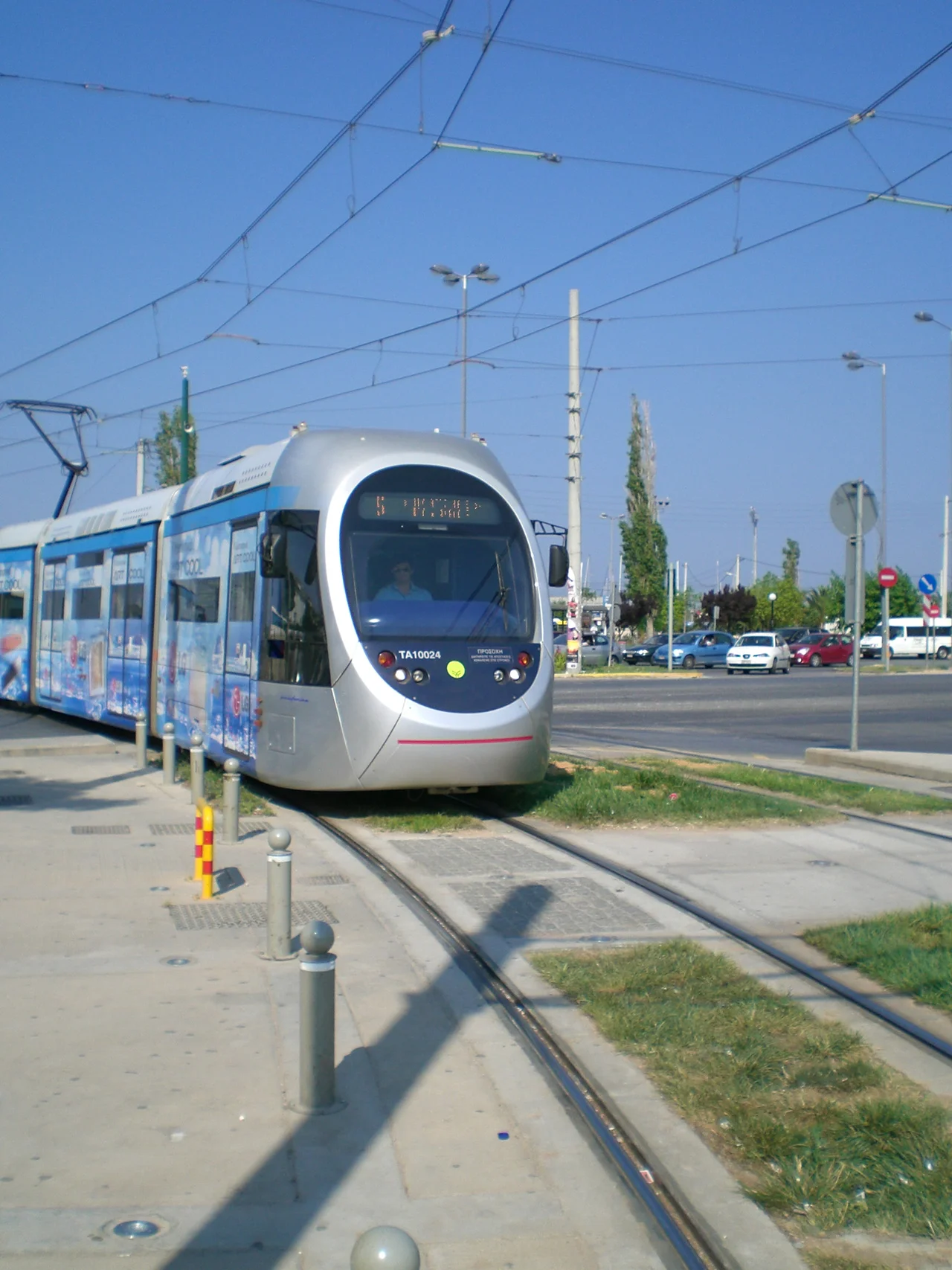
Glyfada describes itself as the headpoint of the Athens Riviera, and the claim is defensible. The coastline running south from here through Vouliagmeni and beyond is one of the most developed leisure coastlines in Greece, and Glyfada is where the character is set. In summer, the seafront club scene concentrates visitors from across Athens. Designer boutiques line Metaxa Avenue and Grigoriou Labraki Street. The marina handles a fleet of private boats. Some of Europe's most expensive seafront residential properties are here — the kind of addresses that show up in real estate brochures alongside photographs of infinity pools and Saronic sunsets. The tram line connecting Glyfada to central Athens follows Poseidonos Avenue along the seafront, giving riders an unusually scenic commute.
People and Place
Glyfada has produced and attracted a particular mix of Greeks. Constantine Mitsotakis, former Prime Minister of Greece, is among the notable residents. So is Elena Paparizou, the pop singer who won Eurovision in 2005, and Giorgos Karagounis, one of Greece's most celebrated footballers. The poet and democracy activist Alexandros Panagoulis also lived here — a man who attempted to assassinate the military dictator Papadopoulos in 1968 and survived nearly five years of imprisonment and torture to become a symbol of resistance. The municipality's 32,000-plus registered voters have cycled through several mayors; the current politics of the place are less interesting than its social texture, which runs from old Athenian money to celebrity and includes the sort of casual internationalism that comes from decades of foreign visitors, foreign bases, and a coastline that draws people in.
Where Athens Meets the Sea
What Glyfada offers, ultimately, is relief. Athens is a dense and demanding city — the traffic, the heat, the vertical sprawl up Lycabettus and down to Piraeus. Glyfada is where the city exhales. The promenade along Poseidonos Avenue, the marina cafes, the succession of beaches stretching south — these are the safety valve. On summer evenings the seafront fills with people who have come from the city for the specific pleasure of being somewhere that faces the water. The Saronic Gulf turns gold and then pink. The island of Aegina sits on the horizon. For a few hours, Athens feels like a city that knows how to rest.
From the Air
Glyfada sits on the Attic coast at approximately 37.880°N, 23.753°E, about 15 km south-southeast of central Athens. From the air at 3,000–5,000 feet on approach to Athens International Airport Eleftherios Venizelos (LGAV), the seafront of Glyfada is clearly visible as a developed coastal strip along the Saronic Gulf, with the marina basin distinguishable as a rectangular harbour. The former Ellinikon Airport site — now under redevelopment — is immediately north of central Glyfada and identifiable by its large cleared area. Mt. Hymettus provides a dramatic ridge to the northeast. LGAV is approximately 20 km to the east.
Nearby Stories
- Parnitha 3.4 km away
- Kea (island) 7.3 km away
- Sanctuary of Apollo Maleatas 11 km away
- Sousaki Volcano 12 km away
- Battle of Leuctra 14 km away
- Great Sand Beach 18 km away
- Agios Georgios (island) 23 km away
- Skyros 84 km away