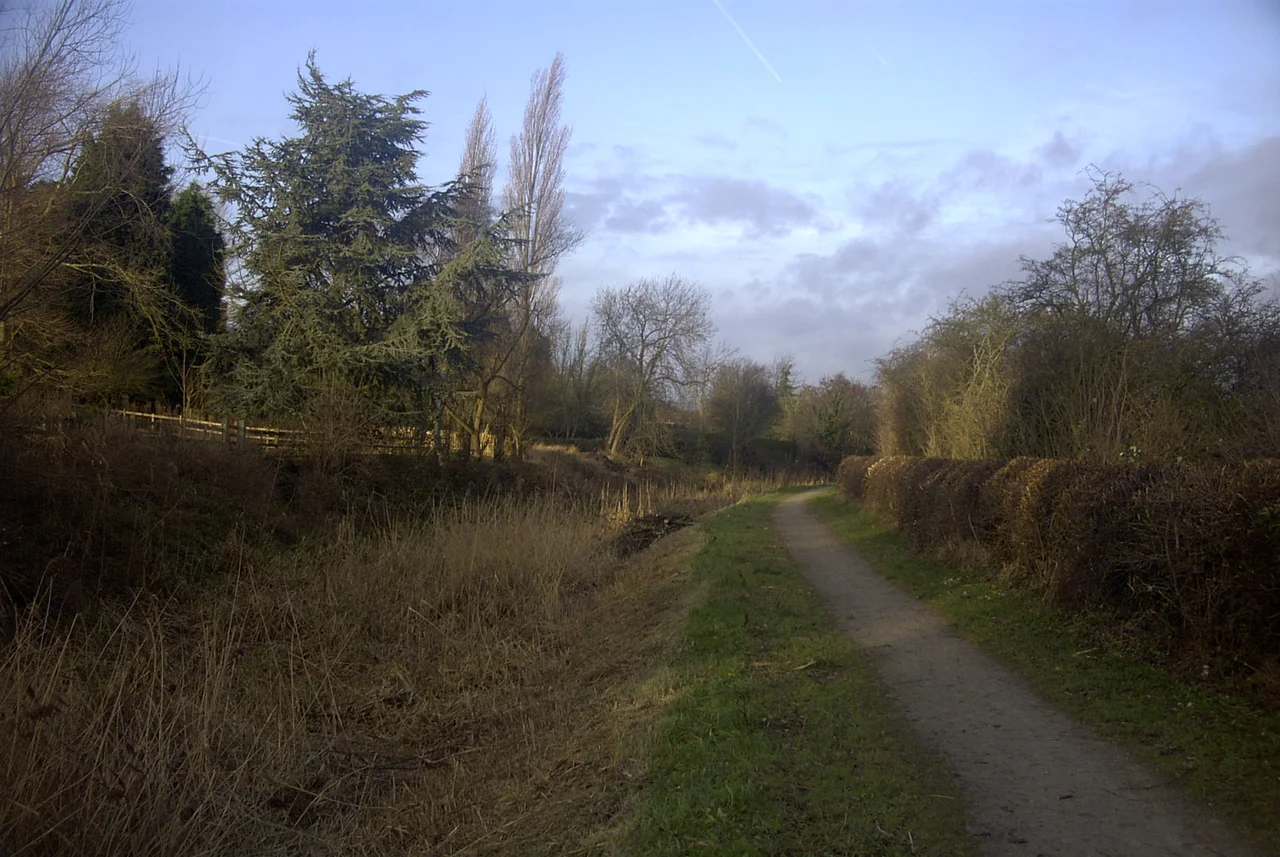

Grantham Canal
On 27 August 1791, in a Grantham public meeting room, someone made the kind of practical proposal that built Georgian England: cheaper coal for the town, please, and a canal to bring it. The argument took two years, two acts of Parliament, and a fight with the coal merchants who had been carting fuel by road and did not want competition. But in 1797 the boats began to move. For the next forty-four years the Grantham Canal made its shareholders steadily richer. Then the railways arrived, and a story that had taken centuries to write changed direction in a single decade.
Jessop and the Two Acts
William Jessop, one of the great canal engineers of the age, was already surveying the Nottingham Canal when the Grantham promoters asked him to look at their route too. The first bill went to Parliament in 1792 and lost - the road-coal merchants lobbied hard against it, and there were worries that the River Witham would be damaged. A second bill, with a revised route junctioning the Trent at West Bridgford instead of Radcliffe-on-Trent, succeeded in 1793. Construction began that summer with Jessop in overall charge and two resident engineers under him: James Green of Wollaton, handling the Trent-to-Leicestershire section, and William King, agent for the Duke of Rutland, handling the rest, including the supply reservoirs at Denton and Knipton. The initial £75,000 budget proved inadequate. A second act in March 1797 unlocked further funds and removed restrictions on the rates the company could charge.
Eighteen Locks and a Gypsum Problem
The completed canal ran 33 miles from Grantham through 18 locks down to West Bridgford on the Trent, raising the level by 140 feet end to end. The lock chambers were sized 75 feet long, matching the Nottingham Canal so boats could move freely between the two systems. Eleven of the eighteen locks were packed into the first four miles above the Trent. After that came a long level pound of about 20 miles, a flight of seven locks at Woolsthorpe, and a short final pound into Grantham. The engineers met some real geological mischief along the way. At Harlaxton, the canal had to cut deep through the watershed between the Trent and the Witham, and the cutting was so narrow it only allowed single-file traffic until widened in 1801. At Cropwell Bishop and Cropwell Butler, the route crossed gypsum beds, which meant the water kept leaking out into the rock, and kept needing to be put back.
Forty Good Years
The canal began paying dividends to its shareholders in 1806, starting at 2 per cent and climbing steadily to a peak of 8.6 per cent in 1839. Toll income, below £9,000 a year through the early 1820s, climbed to £13,079 by 1841. Coal, coke, lime and building materials flowed upstream toward Grantham; corn, beans, malt and wool flowed back down. The Duke of Rutland built a private tramway from the canal wharf at Muston Gorse to Belvoir Castle in 1814-15, a fish-belly rail system that operated for a hundred years carrying coal and supplies up the slope to the family seat. Some of the original wagons and rail-chairs survive in the castle cellars; one chassis is now in the National Railway Museum at York. The canal worked exactly as its promoters had planned, supplying a market that had been served before only by expensive road haulage.
Railways, Closure and Patient Return
Then the railways came. The Ambergate, Nottingham, Boston and Eastern Junction Railway bought the canal in 1854, completing a deal first reached in 1845, and used it primarily to suppress competition with their own trains. The canal passed through the Great Northern Railway in 1861 and the London and North Eastern Railway after that, neither company having much interest in maintaining it. Traffic dwindled. By 1905 only 18,802 tons moved on the canal in a full year. The last boats ran in 1929. The 1936 act of Parliament that formally closed the canal stipulated water levels be kept at two feet to support agricultural use - which is why, miraculously, most of the channel still exists today. In the 1950s, 46 of the 69 bridges were lowered for road improvements, blocking navigation but not draining the canal. Restoration began with the Grantham Canal Society in the 1970s. Two stretches are now navigable to small craft. In 2024, society volunteers - trained on Heritage Lottery Fund money during earlier projects - began rebuilding Lock 13 themselves, no outside contractors required. The work is expected to take two years and cost £250,000. The original junction with the Trent has been severed by the A52 road; the original basin at Grantham has been filled in. Around these severed ends, a 33-mile Georgian engineering project is being slowly, lock by lock, brought back.
From the Air
The Grantham Canal runs roughly east-west across the Vale of Belvoir between Grantham and West Bridgford, with its midpoint around 52.862 N, 0.984 W near the village of Hose. From the air the canal reads as a thin straight line of water cutting across agricultural land, with the flight of locks at Woolsthorpe forming the most distinctive feature - a stepped descent at the eastern end of the long level pound. Recommended viewing altitude is 1,500-3,000 ft AGL. East Midlands Airport (EGNX) lies about 15 nm west; the Lincolnshire town of Grantham, on the A1 with its prominent St Wulfram's Church spire, lies at the eastern terminus. Belvoir Castle on its ridge to the south makes a useful navigational anchor for tracking the canal across the vale.
Nearby Stories
- Calke Abbey 4.2 km away
- Nuneaton Rail Crash 5.3 km away
- National Tramway Museum 5.4 km away
- Rockingham, Northamptonshire 12 km away
- Nottinghamshire 12 km away
- RAF Coningsby 12 km away
- Spalding War Memorial 14 km away
- Connington South Rail Crash 15 km away