.jpg)
RAF Coningsby
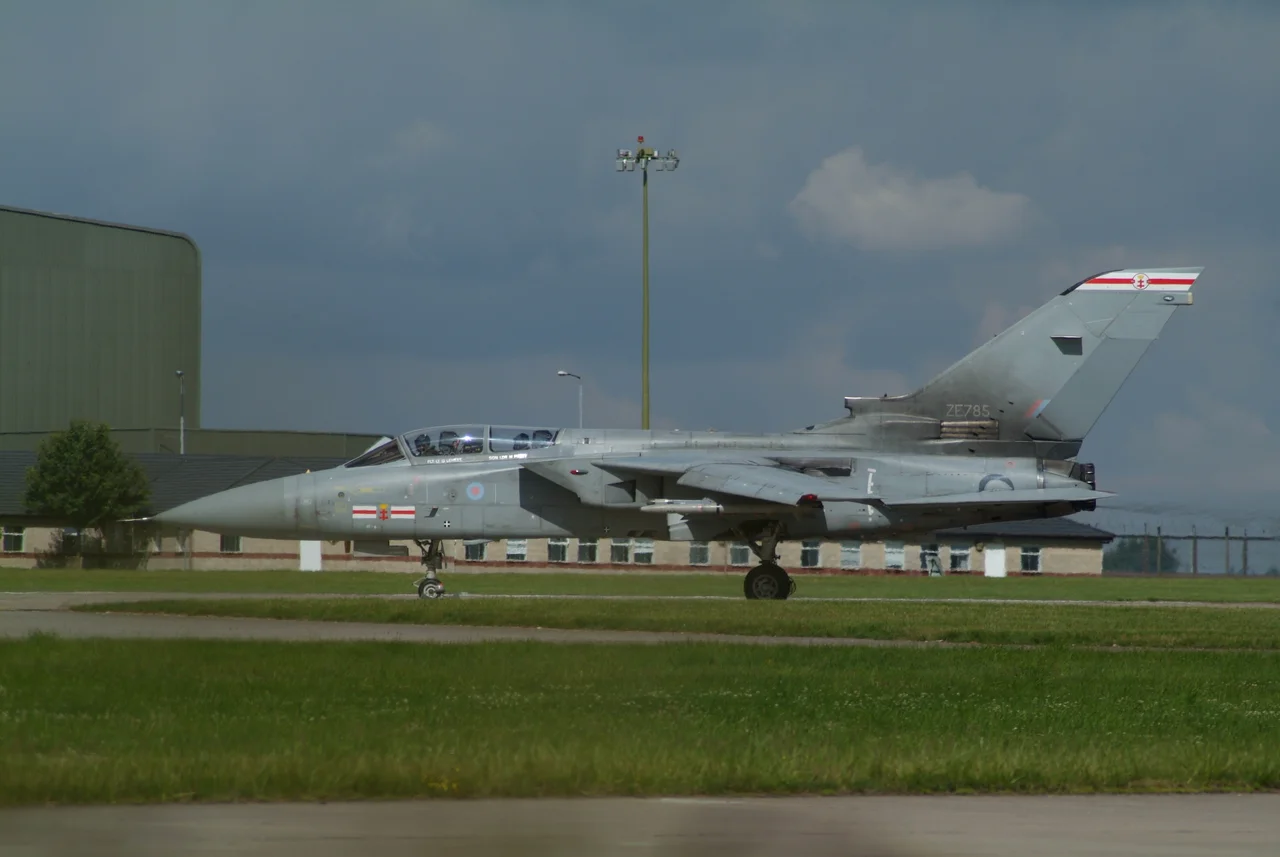
Two aircraft sit side by side on the apron at Coningsby. One is a Eurofighter Typhoon FGR4, twenty-first-century stealth-adjacent, four hardpoints under each wing, capable of intercepting a Russian Tu-95 at thirty thousand feet. The other is an Avro Lancaster, PA474, built in 1945, one of only two Lancasters left in the world that can still fly. They share the same runway. They sometimes share the same flypast. Coningsby is the RAF's southern Quick Reaction Alert station, the front-line interceptor base that scrambles to meet unidentified aircraft approaching UK airspace twenty-four hours a day, three hundred and sixty-five days a year — and it is also the home of the Battle of Britain Memorial Flight, whose Spitfires, Hurricanes, and that single Lancaster keep the air war of 1940 to 1945 visibly, audibly present over modern English skies.
Typhoons on alert
RAF Coningsby is a Main Operating Base. Three front-line Typhoon squadrons live here — No. 3 Squadron, No. 11 Squadron, and No. 12 Squadron, the last a joint RAF/Qatar Emiri Air Force unit that emerged from the Qatari purchase of twenty-four Typhoons from the UK in 2018. No. 29 Squadron runs the Operational Conversion Unit, training new Typhoon crews. No. 41 Squadron, the Test and Evaluation Squadron, develops new tactics, avionics, and weapons. Since June 2007, Coningsby has held QRA(I) South — the southern half of the UK's airborne air-defence alert. Armed Typhoons sit in hardened shelters with pilots on call, ready to launch within minutes. Most QRA sorties are routine: civilian airliners that have stopped responding to air traffic control, or Russian Tu-95 Bears and Tu-160 Blackjacks probing the edge of UK airspace north of Scotland (Coningsby's northern counterpart, RAF Lossiemouth, usually handles those). The station hosts nearly 3,000 military personnel, civil servants, and contractors. In September 2025, two Mitsubishi F-15J jets of the Japan Air Self-Defense Force arrived at Coningsby — the JASDF's first fighter deployment to Europe in its 71-year history.
The Memorial Flight
The Battle of Britain Memorial Flight has been at Coningsby since March 1976, when it moved from RAF Coltishall. Its hangar is open to the public most days. Inside sit six Spitfires of various marks, two Hawker Hurricanes, the Lancaster PA474, a Douglas Dakota for transport and crew flying, and two de Havilland Chipmunks used for pilot training. The Flight does flypasts at royal events, anniversaries, and air shows across Britain. To hear Merlin engines warming up on a Lincolnshire morning, eighty years after they were designed, is an experience no recording captures — it is mechanical, alive, and oddly tender. On 25 May 2024, the Flight lost Spitfire MK356 in a crash shortly after takeoff from Coningsby; its pilot, Squadron Leader Mark Long, was killed. He had been with the team for four years and was set to take command of the BBMF the following October. The aircraft had been on its way to display at the Lincolnshire Aviation Heritage Centre at East Kirkby, twelve miles east. The Flight continues; the loss is acknowledged in everything they do.
Coningsby's previous wars
The station opened on 4 November 1940 under No. 5 Group of RAF Bomber Command. The first squadron, No. 106 with Handley Page Hampden medium bombers, arrived in February 1941 and bombed Cologne the following month. Lancaster squadrons followed through the war — Nos. 61, 83, and 97 among them — flying the same night missions over Germany that defined Bomber Command's catastrophic losses. After the war, Coningsby went through Mosquitoes, Boeing Washingtons, and English Electric Canberras (the first jet to operate from the base, in 1953). The 1960s brought Phantom FGR2s; the 1980s, Tornado F3s; the late 2000s, the Eurofighter Typhoon. In Coningsby's history, briefly, sits the F-111K — the American General Dynamics F-111 Aardvark that the UK was supposed to buy in 1968 to replace the cancelled TSR2, but cancelled in turn when the costs overshot. Coningsby was the planned home for fifty F-111Ks that never arrived. The Typhoon, which now does the job, is what eventually came instead.
What sits at the gate
The station badge depicts Tattershall Castle, a fifteenth-century brick keep that stands a kilometre northwest of the airfield — one of the great surviving medieval brick buildings in England. The motto is Loyalty binds me. Inside the No. 3 Squadron hardened-shelter complex sits a preserved Hawker Siddeley Harrier GR.3, XW924. The No. 11 Squadron complex holds an English Electric Lightning F.6, XT753. Another Lightning, XS897, sits in the No. 29 Squadron site. These are aircraft that flew from this airfield within living memory, kept now as gate guardians by the squadrons whose markings they carry. Outside the perimeter, the Battle of Britain Memorial Flight's visitor centre lets the public into the hangar. From a perfectly ordinary spot beside the road, you can sometimes watch a Typhoon launch on QRA alert while, in the next hangar, ground crew gently roll a 1945 Lancaster out of its bay.
From the Air
RAF Coningsby (ICAO: EGXC) sits at 53.093°N, 0.166°W, in the East Lindsey district of Lincolnshire — 13.7 km southwest of Horncastle and 15.8 km northwest of Boston. Runway 08/26, 2,742 metres. Quick Reaction Alert is active 24/7; Typhoons may launch at high speed with little notice. Tattershall Castle, a striking red-brick fifteenth-century keep about 1 km northwest of the airfield, is an unmissable visual landmark — and a key motif on the station badge. Battle of Britain Memorial Flight flying is unpredictable but visible from public roads adjacent to the airfield perimeter. Avoid overflight.
Nearby Stories
- RAF Binbrook 2.4 km away
- Belvoir Castle 5.6 km away
- Newark Castle 13 km away
- Chain Bridge Forge, Spalding 14 km away
- Sandringham House 14 km away
- RAF Finningley 21 km away
- Hunstanton Lifeboat Station 26 km away
- Amethyst Gas Field 28 km away