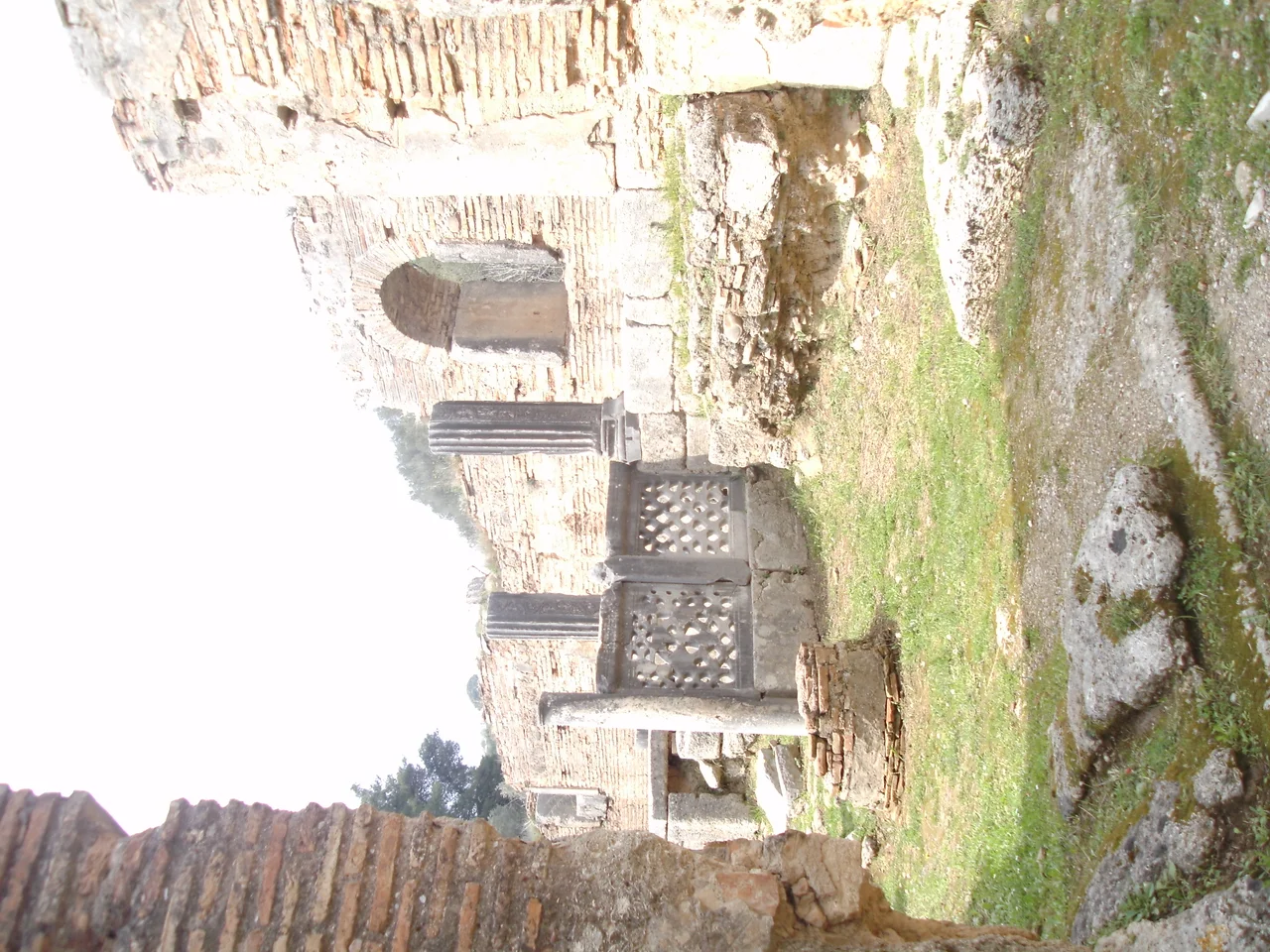

Greek Baths in Ancient Olympia
The strigil came first. Before an ancient Greek athlete entered any water, he scraped. Oil and fine dust coated the body during training — the oil applied deliberately, the dust thrown on afterward to regulate the sweat and protect the skin from the sun. After competition came the long bronze blade of the strigil, drawn across muscles and shoulders to remove the accumulated layer in thick, odorous curls. Only then, clean in the particular way that ancient athletics defined cleanliness, did the athlete approach the water. At Olympia, that water waited beside the Kladeos River, in a complex that would eventually become the oldest known bathing installation at the sanctuary.
First Built in the Fifth Century BC
The Greek Baths began as something modest: a building with a well, positioned on the west side of the Altis outside the sacred enclosure, close to the bank of the Kladeos. Construction started in the fifth century BC, a period when organized athletic bathing was still developing across the Greek world. What began simply did not stay simple. Over the following centuries, the complex grew — additional rooms, more refined architecture, greater capacity for the athletes and officials who crowded into Olympia every four years during the Games. By the time the Romans arrived and built their own bath complex, the Kladeos Baths, on top of the older Greek foundations in the second century AD, the Greek Baths had already had six or seven centuries of use.
The Ritual of the Body
To understand the baths, you have to understand how ancient Greek athletes prepared. Training was not a casual activity — it followed structured protocols and carried its own rituals. Athletes coated themselves with olive oil before exercise to warm and protect the muscles. During training they threw fine dust over the oiled skin, which absorbed sweat and created a protective layer. The combination was effective but messy, and removing it after competition was itself a considered process. The strigil — a curved bronze scraping tool — was the first instrument, removing the oil-dust mixture from the skin in methodical passes across the body. Massage followed, to calm the nervous system and ease the muscles after exertion. Water completed the sequence: the cleansing of body and, the ancient Greeks believed, something beyond the body as well.
A Pool Among the Oldest Known
Among the features that distinguish the Greek Baths at Olympia is evidence of a swimming pool — one of the earliest such installations yet identified in the archaeological record. The pool was fed separately from the bathing rooms, part of a facility that recognized the difference between cleansing the body and using water for exercise or cooling. The baths also included heated rooms: a sign of the gradual sophistication of the complex over its centuries of development, moving from cold-water facilities toward the warmer, more elaborate arrangements that would characterize Roman bathing culture. The Greek facility was, by Roman standards, relatively austere — function over luxury. But it worked, for athletes who had come to Olympia for reasons that had nothing to do with comfort.
Built Upon and Remembered
In the second century AD, the Romans constructed the Kladeos Baths on the same site, using the foundations of the Greek Baths as their base. This was common Roman practice — building on what existed rather than clearing it — and it has made the archaeological record of the Greek Baths harder to read cleanly. The two phases of construction are now distinguished by the name: the earlier facility is called the Greek Baths to separate it from the Roman-era complex built above and around it. The name preserves a distinction that matters: these were baths built according to Greek athletic culture, for Greek athletic purposes, before the Roman world arrived with its hypocausts and heated pools and very different ideas about what bathing was for.
Where Athletes Ended Their Day
The Greek Baths at Olympia are not among the site's famous monuments. No traveler in antiquity wrote admiringly of their architecture; no philosopher meditated on them as a symbol. They were working infrastructure — the place where the muscle and effort of competition was washed away, where the body was returned to something like its ordinary state after the extraordinary demands of the Games. But that ordinariness is its own kind of significance. Behind the temples, the statues, and the sacred oaths, Olympia was also a place where thousands of people — athletes, trainers, spectators, officials — lived for the duration of the festival. The baths remind us of that human scale: the smell of oil, the sound of water over stone, the quiet relief of a competition finally done.
From the Air
The Greek Baths sit at approximately 37.638°N, 21.628°E on the western edge of the ancient Olympia archaeological complex, near the bank of the Kladeos River. From the air, the Kladeos is a useful navigation feature — a smaller watercourse joining the larger Alpheios from the north just west of the site. The archaeological precinct is visible as a pattern of excavated foundations and restored columns in the Alpheios valley. Nearest airport: LGRX (Araxos), approximately 55 km northeast. Recommended viewing altitude 2,000–3,000 feet to distinguish the site's layout from the surrounding farmland.
Nearby Stories
- Santameri Castle 4.6 km away
- Aristarchos 2.3 m Telescope 4.8 km away
- Lepreum 9.1 km away
- Arcadia (region) 13 km away
- Peloponnese 14 km away
- St. Mark's Roman Catholic Church 20 km away
- Strofades 22 km away
- County Palatine of Cephalonia and Zakynthos 39 km away