
Hall Caine Airport
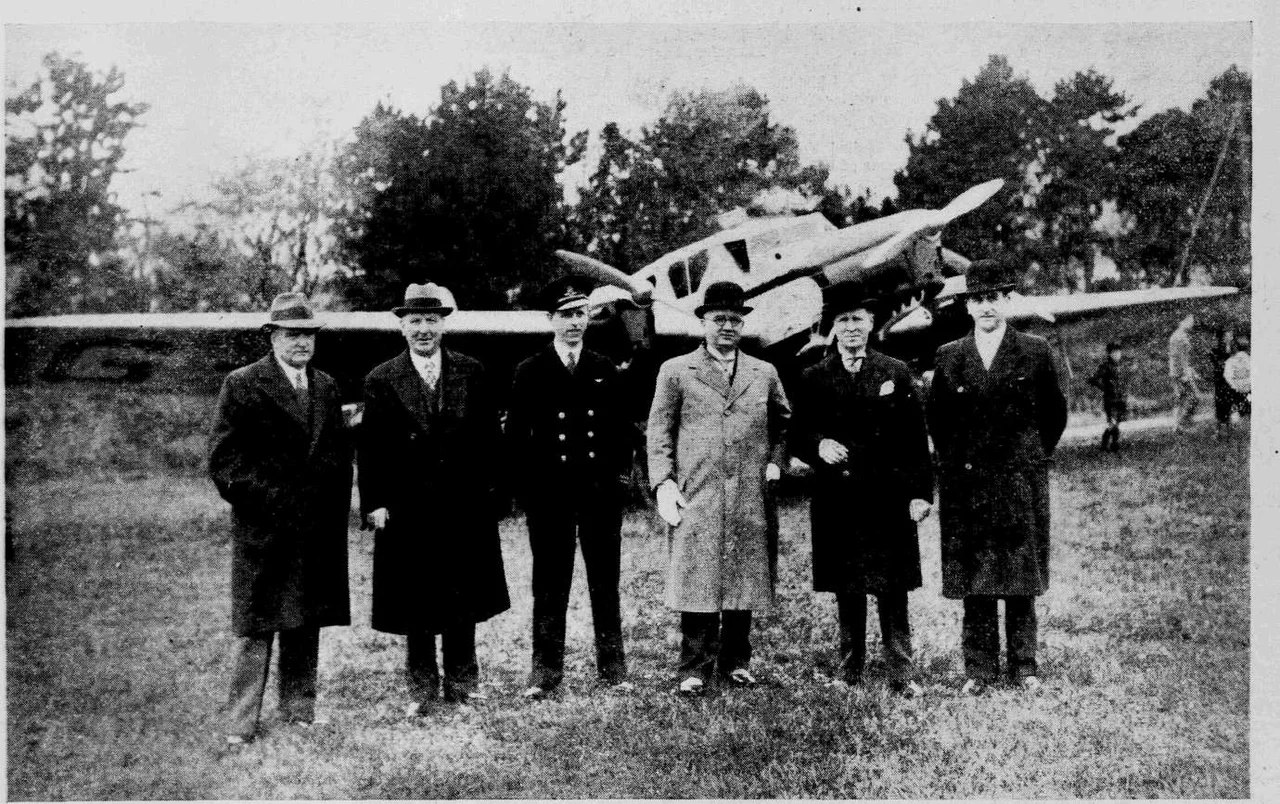
It lasted barely two years as a scheduled airport, and yet for a brief moment in the mid-1930s, Hall Caine handled more passengers in two weeks than some islands see in a season. Tucked into Close Lake Farm on the flat northern plain near Ramsey, the airfield was named for the novelist Sir Thomas Henry Hall Caine by his sons Gordon and Derwent, who pushed the project as a memorial to their late father. It was the first airport in the British Isles named after a person. From 1935 to 1937, biplanes hummed in from London, Belfast, and Glasgow over the Sulby River meadows, and then, almost as quickly as it had appeared, the airport faded away.
A Farm Turned Aerodrome
Close Lake Farm sat on land flat enough and broad enough to land a twin-engined biplane, and that geography alone made it interesting to the new commercial aviators of the early thirties. The first recognised commercial passenger arrived on 21 January 1933, in a DH.83 Fox Moth bound for the Glen Auldyn Estate. By the summer of 1934, eight aircraft had landed in a single day because fog had closed Ronaldsway on the south coast. That weather advantage was enough to win Derwent Hall Caine an operating licence from Lieutenant Governor Sir Claude Hill in August 1934, and a permanent licence from the Air Ministry the following month. Four hundred tons of silt dredged from the Sulby River was used to firm up the surface. A Nissen hangar, a petrol pump, and a telephone followed.
Sensational Pilots and Skeleton Schedules
United Airways announced a skeleton service in April 1935 and a full schedule for May, with a route from London via Blackpool to Hall Caine and onwards to Dublin's Collinstown. To run the operation, the airline brought in Captain Oscar Garden, an aviator who had made what the press called a sensational flight from England to Australia in 1930. The Argosy biplane City of Manchester was converted to carry 28 passengers and called at Hall Caine when traffic required. By the autumn, services ran London-Blackpool-Hall Caine-Belfast. Through a round of amalgamations, United Airways was folded into the new British Airways Ltd, the company that would itself join Imperial Airways in 1940 to form BOAC. For a moment, this small Manx field sat on a national air map.
Records, Fog, and Music Hall Stars
The summer of 1936 was Hall Caine's busiest. In a single Saturday, 18 July, the field handled 160 arrivals, including the music hall double-act The Western Brothers, who had flown in from Birmingham's Elmdon Airport to perform at Douglas's Villa Marina. George Formby touched down in August on a private charter with friends. Records tumbled: a Dragon Rapide carrying mail covered the trip from Hall Caine to Ronaldsway in six minutes with a tailwind. By the end of August, the airfield had handled around 2,500 passengers, many of them refugees from fog that had grounded operations at Ronaldsway. In the seven months to November 1936, 7,000 passengers had been landed. Hall Caine had accommodated 39 diversions from its southern rival on 18 separate days.
Glider Across the Irish Sea
By 1937 the lease passed to Northern and Scottish Airways, and the cracks began to show. In May the airline suspended most services and never restored them all. The Ramsey Ratepayers Association petitioned the Lieutenant Governor to save the airport, but the final commercial flight departed at 4:15 pm on Saturday, 2 October 1937. The summer of 1938 brought one last extraordinary visitor: the Austrian glider pilot Robert Kronfeld, blown off course while attempting the first glider crossing of the Irish Sea. Towed behind an Avro Cadet from Kirby Moorside in Yorkshire, his Kirby Kite sailplane crossed from St Bees Head to Maughold Head and landed at Hall Caine just after eight in the evening. After that the field grew quiet. The Air Ministry inspected the site for a permanent RAF station but rejected it, choosing land at Jurby instead. The Ramsey Gun Club took over the airfield for skeet shooting.
From the Air
Hall Caine Airport lay at 54.337N, 4.439W (gcsv4) on the Isle of Man's flat northern plain, just inland of Ramsey Bay. The nearest active runway today is Isle of Man Airport (Ronaldsway, EGNS) about 26 nm south, the very rival whose fog problems made Hall Caine briefly viable. The closest general aviation field is Andreas Airfield (former RAF Andreas) 3 nm to the north. For a low-level transit, 1,500 to 2,500 ft AGL keeps the Sulby River meadows, the line of Sky Hill to the south, and the Point of Ayre lighthouse beacon to the north all visible in one frame. The site itself is now farmland; satellite imagery still shows the faint geometry of the old landing area between Lezayre and Ramsey.
Nearby Stories
- Kirkmaiden 3.2 km away
- Isle of Whithorn 4.1 km away
- Santon Railway Station 13 km away
- Solway Firth 16 km away
- St Bees Lighthouse 19 km away
- Portavogie 34 km away
- Walney Island 40 km away
- German submarine U-1024 55 km away