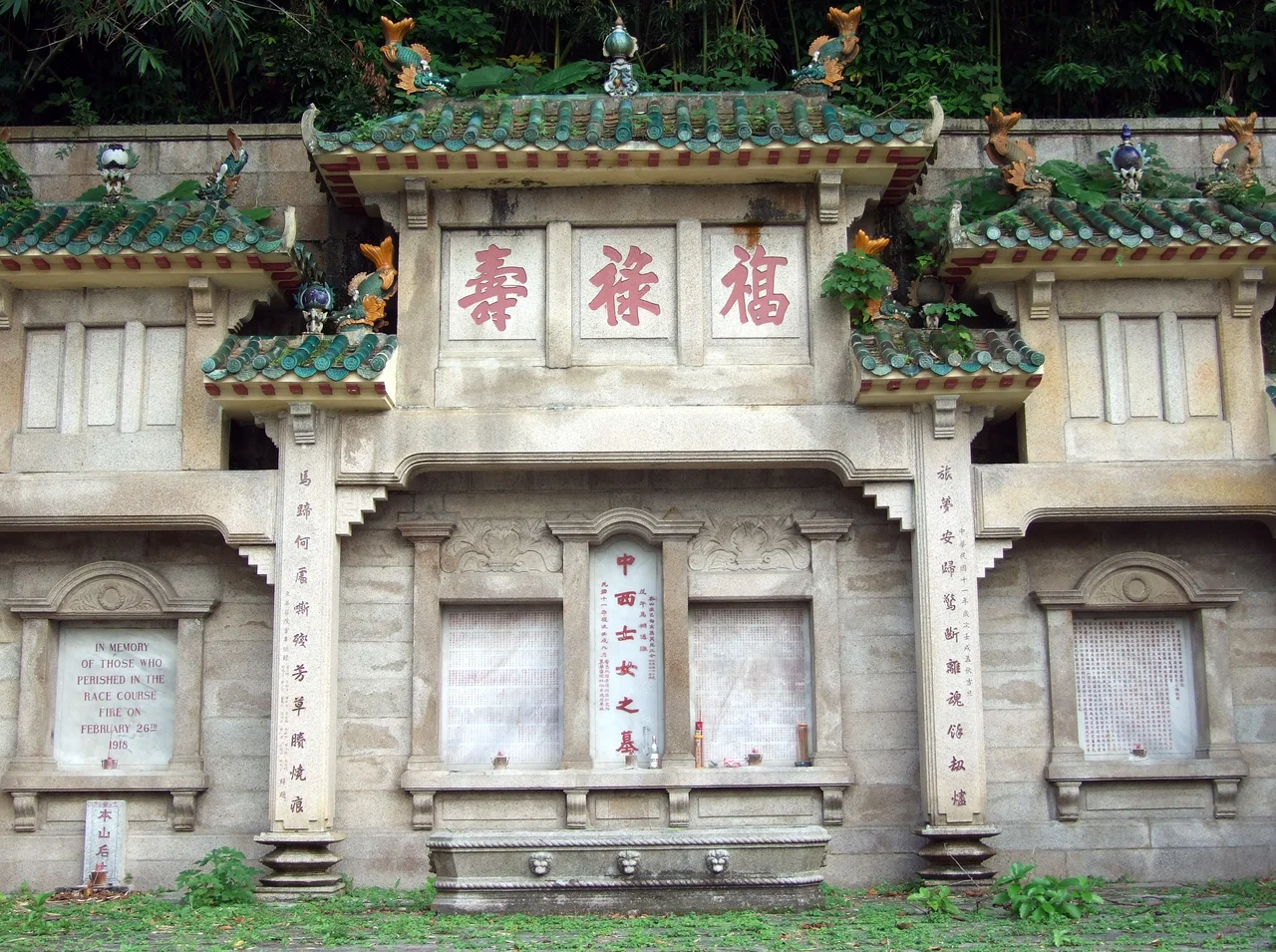

Happy Valley Racecourse fire
Derby Day in Hong Kong was supposed to be a celebration. On 26 February 1918, thousands of people — most of them Chinese residents who had come to love horse racing in the decades since the British introduced the sport — crowded into Happy Valley Racecourse for the second day of the annual races. Many had gathered on the temporary bamboo grandstand erected each year to handle the overflow. By midday, that structure would be gone, and 670 of the people who had been standing on it would be dead. It remains the deadliest fire in the history of Hong Kong.
A Day at the Races
Horse racing had been part of Hong Kong life since 1846, when the first race ran on a mudflat that British colonial administrators had drained and leveled — the only flat ground on the whole of Hong Kong Island. Over the following seven decades, the sport had grown from a pastime of the colonial elite into something that genuinely bridged communities. Chinese residents filled the stands alongside British officers and merchants. The annual Derby Day drew the largest crowds of the year, and the permanent grandstand couldn't hold them all. Each February, a temporary structure of bamboo poles and matting went up to accommodate the extra thousands. It had worked well enough in previous years. On this particular Tuesday in 1918, it would not.
When the Stands Came Down
The precise sequence of events was rapid and brutal. The temporary grandstand — packed with spectators — collapsed. As the bamboo framework gave way, it knocked over the food stalls that had been set up nearby to serve the crowd. The stalls had open flames for cooking. The bamboo matting caught immediately. What had been a festive afternoon became an inferno within minutes. The district's fire department responded, but the scale overwhelmed them; the marine police were called in to help fight the blaze. There was no escape for many of those caught in the initial collapse. They died beneath the burning wreckage before anyone could reach them.
Six Hundred and Seventy
By the following day, the Hongkong Telegraph reported 576 confirmed deaths. The final official toll, recorded in the Secretary for Chinese Affairs annual report, reached 670 people — all of them human beings with families, with names, with reasons for being at a race meeting on a February afternoon. The investigation that followed noted grimly that most of the recovered bodies were unrecognizable. Colonial records classified the majority as 'Chinese,' a designation that reflects less about the victims than about who was keeping count and how they thought about the people in their care. What those records cannot capture is the scale of grief: the households left incomplete, the children without parents, the parents without children, the friends who waited at the gate for someone who would never come through it.
The Weight of What Remained
The Happy Valley Racecourse fire entered the historical record as a headline statistic — one of the deadliest stadium disasters in history, among the top ten fires of 20th-century China by some measures. But statistics flatten what actually happened. The victims were overwhelmingly working-class and middle-class Chinese residents of Hong Kong who had made horse racing their own, who had built a community around Derby Day in a colonial city that often treated them as secondary. A memorial was erected at the site; it stands today, quietly marking ground that was, for one terrible hour, a place of mass dying. The racecourse rebuilt and the races resumed. Hong Kong grew into one of the great cities of the world. The 670 people who came to Happy Valley that February day and did not leave — their lives cut short in a moment of structural failure and burning bamboo — deserve to be remembered as people, not just a number on a plaque.
What the Ground Remembers
Today, Happy Valley Racecourse is a beloved institution: Wednesday night races drawing crowds of tens of thousands, the stands lit against the Hong Kong skyline, the inner field converted to sports pitches used by schoolchildren and weekend athletes. The 1918 fire is commemorated by the Race Course Fire Memorial on the ground's edge. Most of the spectators who file in on a race night walk past it without a second glance. That is perhaps inevitable — cities carry their grief quietly, and life overtakes even the most terrible events. But the memorial is there for those who stop. It marks something real: the day a celebration became a catastrophe, and the hundreds of individuals — not statistics, but people — who deserved a better afternoon than they got.
From the Air
Happy Valley Racecourse sits at 22.27°N, 114.18°E in a valley ringed by high-rise residential towers on Hong Kong Island. From the air at 2,000–3,000 feet, the oval track is unmistakable — a rare patch of green enclosed by the dense urban fabric of Wan Chai and Causeway Bay. The nearest major airport is VHHH (Hong Kong International) on Lantau Island, approximately 25 nautical miles to the west. The distinctive bowl of the racecourse, surrounded by apartment towers that rise steeply up the hillsides, is one of the most recognizable geographic features of Hong Kong Island when viewed from above.
Nearby Stories
- Lok Ma Chau Loop 2.3 km away
- Portas do Cerco 2.3 km away
- Kweilin Incident 17 km away
- Wanshan Archipelago Campaign 34 km away
- Nanxiong Formation 115 km away
- Battle of Nanpeng Island 148 km away
- Heyuan 169 km away
- Cape Maobitou 632 km away