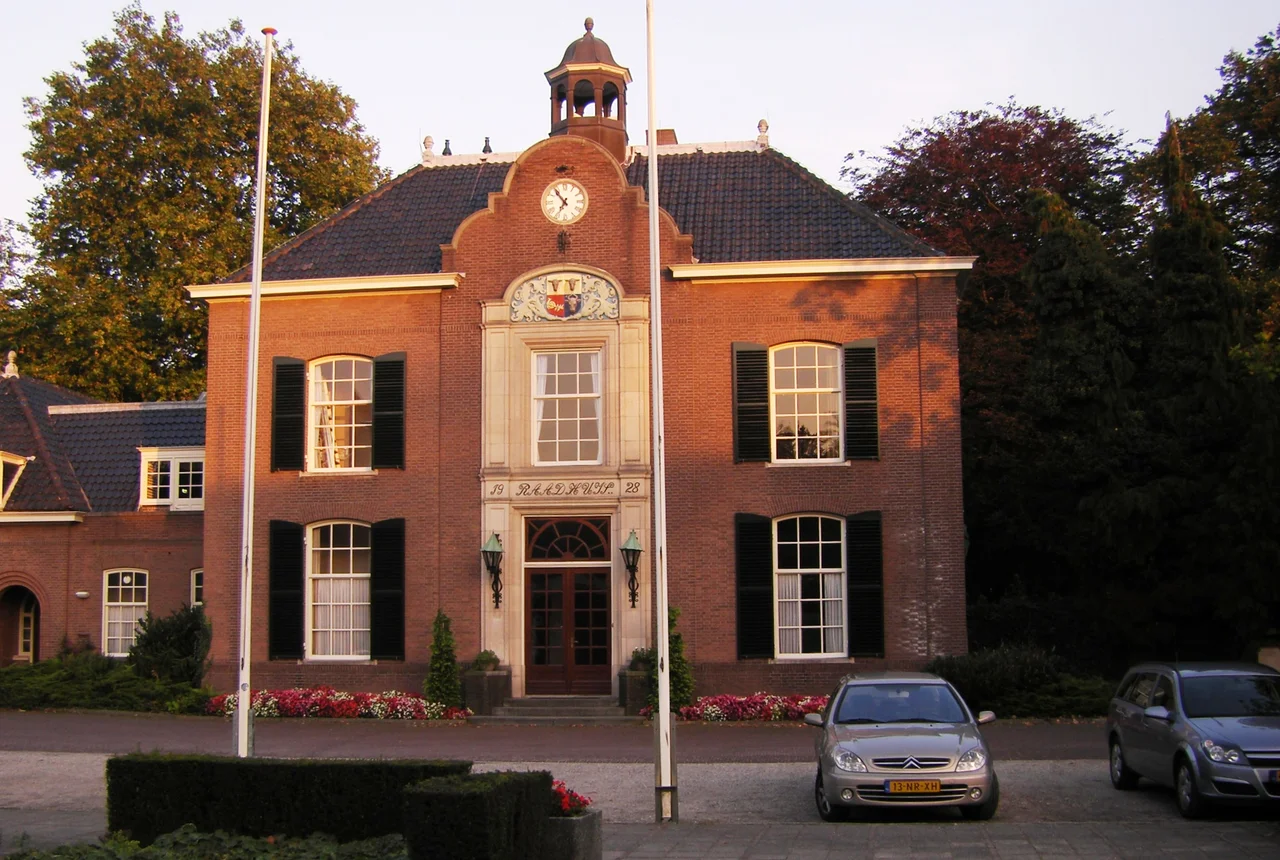

Heerde
Heerde is one of those Dutch towns where the most exciting thing on the horizon is a sundial on the side of an old country house. It sits on the eastern edge of the Veluwe forest, between Zwolle and Apeldoorn, with the IJssel river one ridge to the west and the Apeldoorn Canal running through its fields. The municipal council has seventeen seats, the Christian parties hold steady majorities, and the town has five amateur soccer clubs for a population that would fit comfortably inside a single Amsterdam neighborhood. Nothing here announces itself. And yet from this quiet ground a tennis player, a speed skater, and a sailor have walked out into the world to compete on the biggest stages there are.
Sand, Heath, and Forest
The Veluwe is the largest area of forest in the Netherlands - a long sandy ridge left by retreating glaciers, draped now in pine and oak and broken open in places by old heath. Heerde sits on the eastern flank of this landscape, where the dry forests slope down toward the rich clay floodplains of the IJssel. Two land worlds meet here. The town itself spreads in a loose cluster of red-brick houses and Reformed church steeples. The municipality is, in the polite Dutch phrase, fairly religious - meaning the Christian Democratic Appeal, the Reformed Political Party, and the ChristianUnion together hold more seats on the council than any secular bloc. South of the town center, the Apeldoorn Canal runs straight through the meadows, crossed by the Bonenbergerbrug; west, the Wijhese ferry still carries cars across the IJssel the way ferries have here for centuries.
Three Olympians from a Small Town
Jacco Eltingh was born in Heerde in 1970. He grew into one of the great doubles players of his generation - winner of the Australian Open, French Open, US Open, and Wimbledon in men's doubles, world number one in doubles in 1995, and a semi-finalist at the 1996 Atlanta Olympics partnered with Paul Haarhuis, falling to Germany in the bronze medal match. Gerard van Velde, born in 1971 in the Heerde village of Wapenveld, took a more circuitous route to glory: he was a sprint speed skater who finally broke through at the 2002 Salt Lake City Winter Olympics with gold in the 1000 meters and a world record on the same day. Jaap Zielhuis, born in Heerde in 1966, sailed for the Netherlands at the 2004 Athens Olympics. Three Olympic athletes from a town of fewer than twenty thousand people is the kind of statistic that surprises you only if you have not spent time in Dutch sport, where small-town clubs and long winters produce talent that punches several weight classes above its origins.
The Country Houses and the Sundial
If you wander Heerde looking for what the town is actually about, you find yourself drawn to its country estates and farmsteads. Huis Vosbergen, a 17th-century estate just outside the town, carries a stone sundial on one wall - a quiet, working timepiece in a country famous for clocks. The protected farmhouses along the Vosbergerweg are listed national monuments, examples of the long-roof Veluwe farmhouse tradition where house and barn are joined under one continuous thatched line. The roundabout where the A50 motorway meets the town carries a sculpture by Marijke Abels, born in Deventer in 1948, whose abstract metalwork makes the everyday business of a traffic island into something to look at twice. Daniel de Clercq, the Dutch socialist and activist, was born in Heerde in 1854 and devoted much of his life to early Dutch labor and cooperative movements - a quiet country radical from a quiet country town.
Heerderstrand and the Lake That Was a Quarry
On the southern edge of the municipality lies the Heerderstrand, a recreation lake that the locals treat as a small inland beach. Like many lakes in the Netherlands, it is not entirely natural - the basin was deepened by sand extraction, the bottom shaped by twentieth-century earthmovers - but the result is a clear-water pool surrounded by pine woods where Veluwe families come on summer weekends to swim, picnic, and rent paddle boards. It is the kind of place that gives the small towns of the Veluwe an unfair share of pleasant childhood memories: a forest, a lake, a soccer club, and a Sunday service. If you fly over Heerde in clear weather, you can pick out the Heerderstrand as a bright eye opened in the dark green canopy of the forest, and that view alone explains a great deal about why the town keeps producing people who win medals.
From the Air
Located at 52.40 degrees north, 6.07 degrees east, in the province of Gelderland between Zwolle and Apeldoorn, on the eastern edge of the Veluwe forest. Best viewed from 2,500 feet; look for the contrast between the dark Veluwe forest to the west and the open polders along the IJssel. The Heerderstrand recreation lake is a small bright water body just south of town. Nearest airports: Lelystad (EHLE) about 40 km northwest, Twente (EHTW) about 70 km east, Teuge (EHTE) about 15 km south.
Nearby Stories
- Windpark Noordoostpolder 2.7 km away
- Giethoorn 5.1 km away
- Aviodrome 6.6 km away
- Hans Philipp 7 km away
- Haaksbergen 7.2 km away
- Siege of Zutphen (1591) 8 km away
- Sleen 9.3 km away
- Onze Lieve Vrouwetoren 17 km away