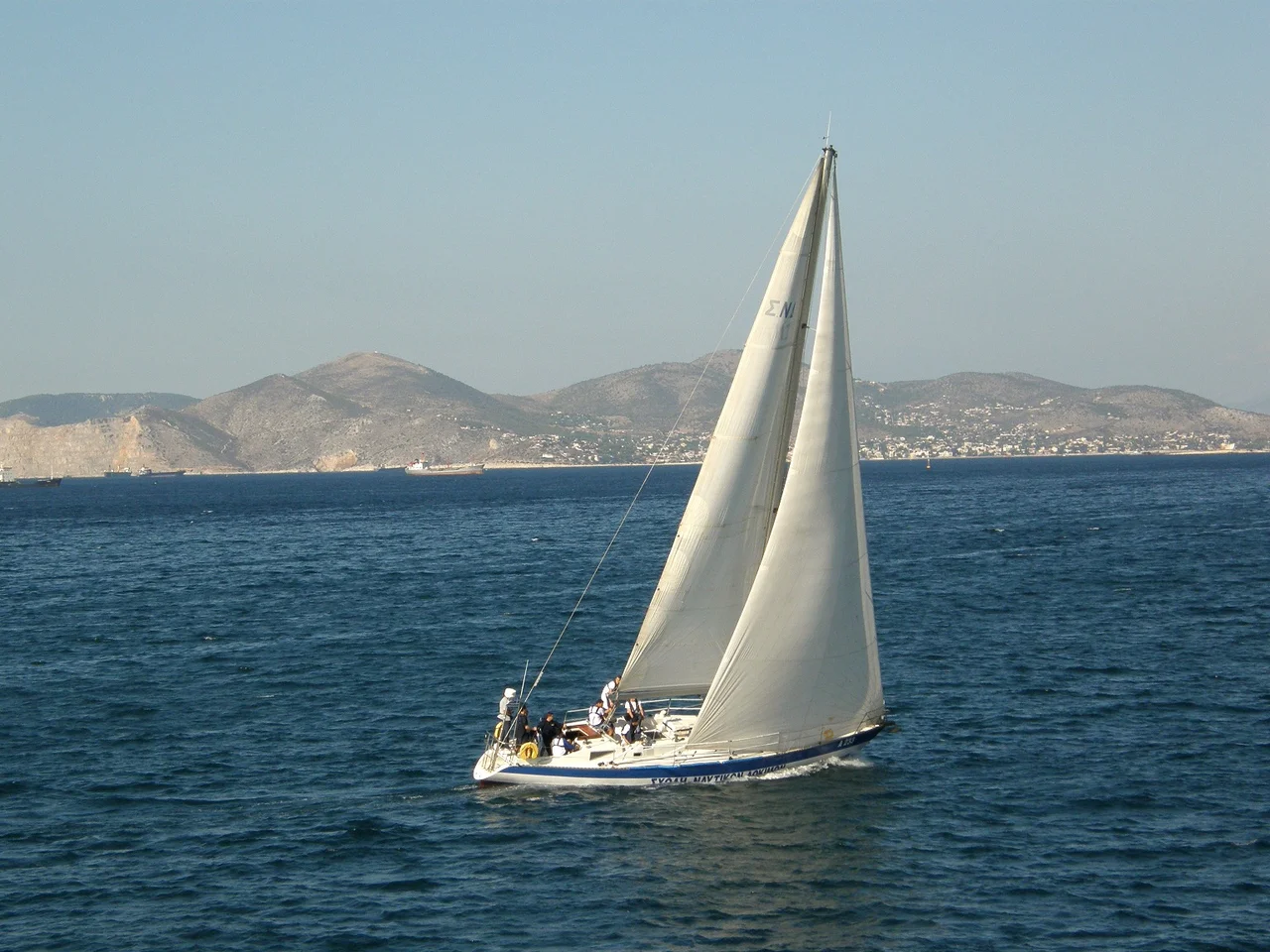

Hellenic Naval Academy
The Hellenic Naval Academy began without a building. In 1845, a year when the new Greek state was still assembling its institutions, the academy opened aboard a corvette — the ship itself as classroom, as dormitory, as training ground. For fifty years the institution operated this way, moving between vessels, with no fixed address and no permanent walls. There is a logic to it that the sea insists on: if you are training officers for a navy, the sea is the curriculum. By the time a French naval mission helped the Greek state reorganize and build permanent facilities in 1884, the Academy had already been teaching for four decades. It reached Piraeus in 1905, established itself by the harbor entrance, and has remained there ever since.
Fifty Years Afloat
The decision to found a naval academy aboard a corvette was practical as much as symbolic. Greece in 1845 had few permanent institutions and limited resources. Building a school required land, money, and time. A ship was already there; it was already naval; it moved. For half a century the Academy lived on the water, hosted by various warships and adapting to the conditions each vessel imposed. The corvette Hellas, which housed the Academy during the reorganization of 1884, gave its name to a formative period. There is something fitting about an institution whose graduates would spend their careers at sea being educated on the sea — learning the particular discipline of shipboard life not as a simulation but as daily reality, before they ever held a commission.
Piraeus and Permanence
When the Academy transferred to Piraeus in 1905, it settled beside the main harbor entrance — a location that is as much a statement as an address. The busiest port in Greece lies immediately beyond; the waters of the Saronic Gulf open to the south and west. Cadets training here wake to the sight and sound of working shipping. They study navigation and naval warfare within earshot of the commerce that makes Greek maritime life real. The installation beside the harbor improved conditions substantially over what shipboard quarters allowed, and new warships were assigned to support the educational process — a mobile classroom fleet to complement the fixed one. The Academy grew, the harbor grew, and the two became permanent features of the same waterfront.
What Four Years Builds
The Academy offers a four-year curriculum producing two tracks of officer: deck officers and engineering officers. The day begins at 6:00 a.m. Academic study runs five days a week alongside athletic and marine training. During winter terms, cadets take classroom courses and short training voyages on naval vessels. In summer, the first three classes embark on a two-month cruise aboard a frigate and a general support ship, calling at ports in multiple countries. This is not tourism — it is the core of a naval education. Officers must know how ships behave at sea, how to navigate foreign waters, how to maintain discipline and functionality in an environment that provides no margin for incompetence. The cruise is where theory meets salt water.
Five Thousand Officers
More than 5,000 naval officers have graduated from the Hellenic Naval Academy since its founding. Many went on to lead the Hellenic Navy through its major engagements: the Balkan Wars, the First and Second World Wars, the periods of NATO alliance and Cold War patrol. Others distinguished themselves in science, engineering, and politics — the range of careers possible after four years of technical and leadership education at an institution that has consistently reformed itself to match the Navy's evolving needs. About 400 cadets study at the Academy in any given year. Foreign nationals are accepted under bilateral agreements, completing a preparatory year of Greek-language instruction before joining the main course. The Academy, in this sense, functions as a small international institution within a national military structure.
The Career That Follows
Graduation does not end the education. New officers go directly to combat units, then attend specialized schools to deepen their expertise in gunnery, navigation, communications, or electronic engineering. Promotion to Lieutenant Junior Grade triggers another nine to eleven months of training. Some officers qualify for submarine service, helicopter operations, marine patrol aircraft, or underwater demolition units — each requiring additional specialized schools. The most accomplished are eventually sent abroad, to institutions like the Naval Postgraduate School in Monterey, MIT, or the University of Michigan, for advanced degrees in electronics, weapon systems, or marine architecture. The Academy initiates a lifelong process of professional development rather than completing it. At graduation, the Academy's flag is handed by new officers to the third-year cadets — a ritual of continuity, passing the institution forward one class at a time.
From the Air
The Hellenic Naval Academy is located at approximately 37.934°N, 23.628°E, beside the main entrance to Piraeus harbour on the western side of the port peninsula. From the air, the academy's compound is visible on the waterfront just south of the large commercial ferry terminal zone. The sheltered basin of the main harbor stretches north; the open Saronic Gulf lies to the southwest. At 1,500–2,500 feet, the distinction between the Academy's organized waterfront compound and the surrounding urban fabric is clear. The nearest major airport is Athens International Eleftherios Venizelos (LGAV), approximately 25 km to the east-northeast.
Nearby Stories
- Parnitha 3.4 km away
- Kea (island) 7.3 km away
- Sanctuary of Apollo Maleatas 11 km away
- Sousaki Volcano 12 km away
- Battle of Leuctra 14 km away
- Great Sand Beach 18 km away
- Agios Georgios (island) 23 km away
- Skyros 84 km away