
Helmshore Mills Textile Museum
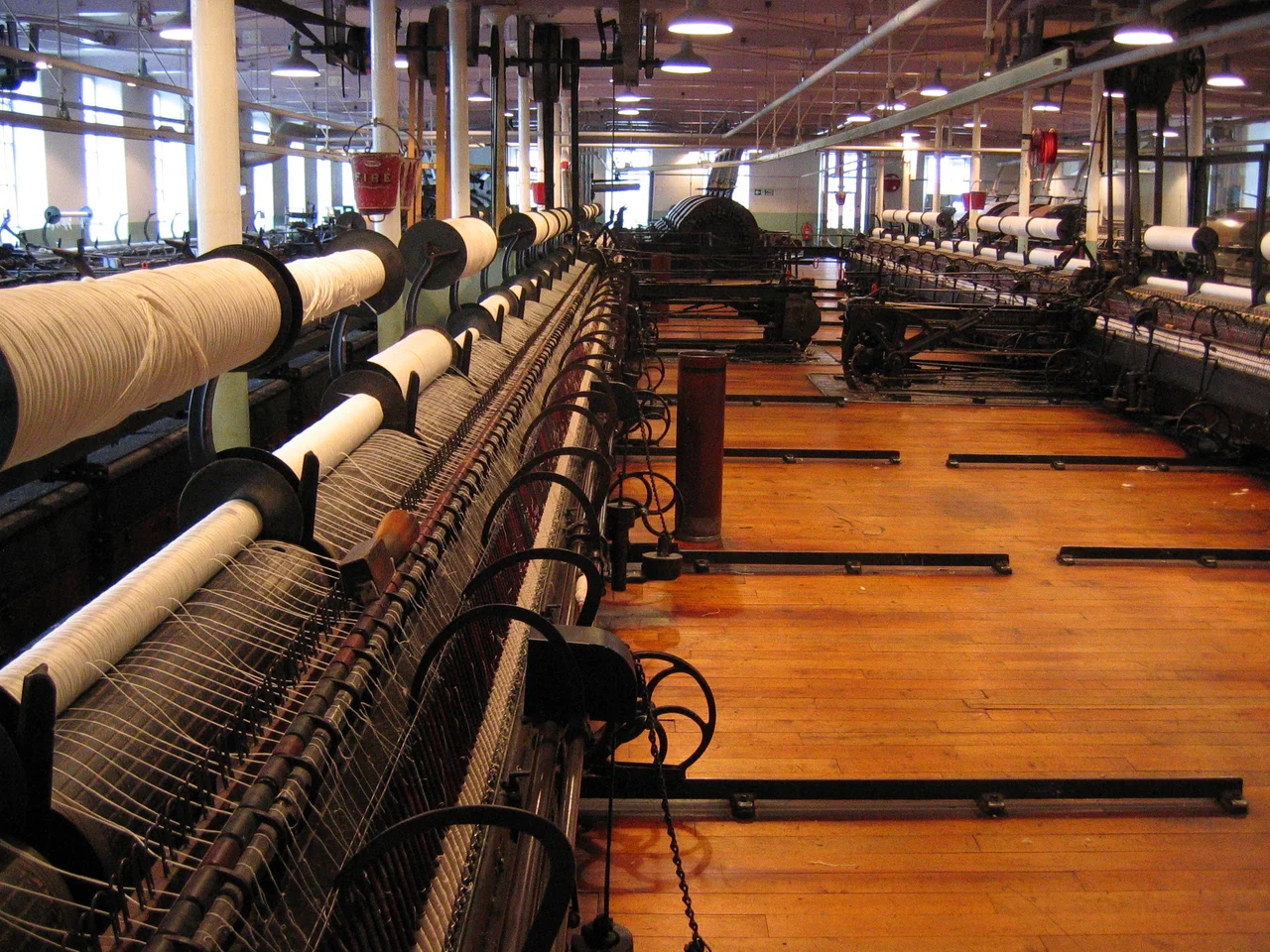
Walk into the upper floor at Whitaker's Mill and you are looking at 714 spindles on a single Taylor Lang spinning mule, all of them still capable of running. It is the only original and complete spinning floor of its type left in the country, and when the mule is set going for visitors, the noise is extraordinary - the rhythmic clattering pulse that powered Lancashire's cotton industry for two centuries, played here at full volume by machinery that has been doing the same job since the 1920s. Across the yard at Higher Mill, the equipment is even older. A water wheel turns. Clay pots once collected urine from local cottages to make ammonia for fulling wool.
The Turner Family
The Turner family had been in textiles before they came to Helmshore. Three made their living from wool in Martholme. Three brothers worked cotton in Blackburn. In February 1789 they paid 725 pounds for land in the parish of Musbury and built Higher Mill on a greenfield site as a woollen fulling mill, harnessing the River Ogden. By the end of that first year three of the six original partners had dropped out. A generation later, in the 1820s, William Turner - son of one of the originals - built a second, much larger mill nearby for wool carding and spinning. The two mills worked together: wool went out to Middle Mill on Holcombe Road for weaving, then came back to Higher Mill for fulling and finishing. Turner died in 1852. The mill burned in 1857. Edward Turner rebuilt it in 1860 - and this time it spun cotton, not wool, because the American Civil War had finally ended and raw cotton was flowing back into Lancashire.
How They Cleaned Wool
Fulling is the process of thickening woollen cloth by beating it with hammers in alkaline liquid. The alkaline liquid the Turners used was ammonia, which they got from the cheapest source available - urine. Local cottages collected it in clay pots. The pots arrived at Higher Mill, the contents were diluted, and the cloth was beaten in it for hours under wooden fulling stocks driven by the water wheel. The wool emerged thicker, denser, and largely odourless. Later the museum's exhibit shows a switch to a box system, then mechanised teasel raising for the nap, then the teasel-holding frame called the teasel raising gig. The wool story at Helmshore is the wool story of pre-industrial Britain told in surviving equipment - nearly everything the museum needed to explain it was still in the building when textile production stopped.
The Shoddy Trade
By the 1920s the mill had been bought by L. Whitaker and Sons - by which point, confusingly, no Whitakers worked for the company any more, which was owned by the Hardman family - and they installed cotton condensing equipment to process shoddy. Shoddy is recycled cotton: the loose fibre, broken thread and rejected yarn left over from fine spinning, all of it devilled back down to staple and re-spun into cheaper coarse yarn for cheaper cloth. Whitaker's Mill ran shoddy until November 1978. Higher Mill, running on Turner's original equipment under the Whittakers from 1875, continued as a fulling mill until June 1967 - making it one of the last working water-powered fulling operations in Britain when it closed.
Museum, Closed, Reopened
The Higher Mills Trust took over the buildings in 1967 with trustees including the historian Chris Aspin and the Conservative MP Rhodes Boyson. It became a museum, with sister-museum links to Queen Street Mill near Burnley - spun yarn from Helmshore is sent there to be woven, keeping the full cotton process alive between the two sites. In November 2015 Lancashire County Council, citing budget cuts, announced it was withdrawing funding from five of its museums including Helmshore. The museum closed to the public on 30 September 2016, remaining open only for pre-booked school groups. In April 2018 a partial reopening was announced: Fridays, Saturdays and Sundays in summer, with a Community Café added in 2022. The whole site is a Scheduled Ancient Monument. Higher Mill is also Grade II listed.
From the Air
Helmshore Mills sits at 53.689 degrees north, 2.336 degrees west, in the Rossendale Valley about 16 miles north of Manchester. Manchester Airport (EGCC) lies about 35 km south-southeast. Manchester Barton (EGCB) is about 23 km south-southwest. Blackpool Airport (EGNH) is about 38 km west-northwest. From altitude look for the narrow steep-sided Ogden Valley running south from Haslingden.
Nearby Stories
- Bank Hall 2.9 km away
- Huyton 3.7 km away
- Low Moor Explosion 5.1 km away
- Hat Works 8.8 km away
- Heysham Port 10 km away
- Hope Cement Works 11 km away
- Mercer Art Gallery 14 km away
- Malham Cove 14 km away