.jpg)
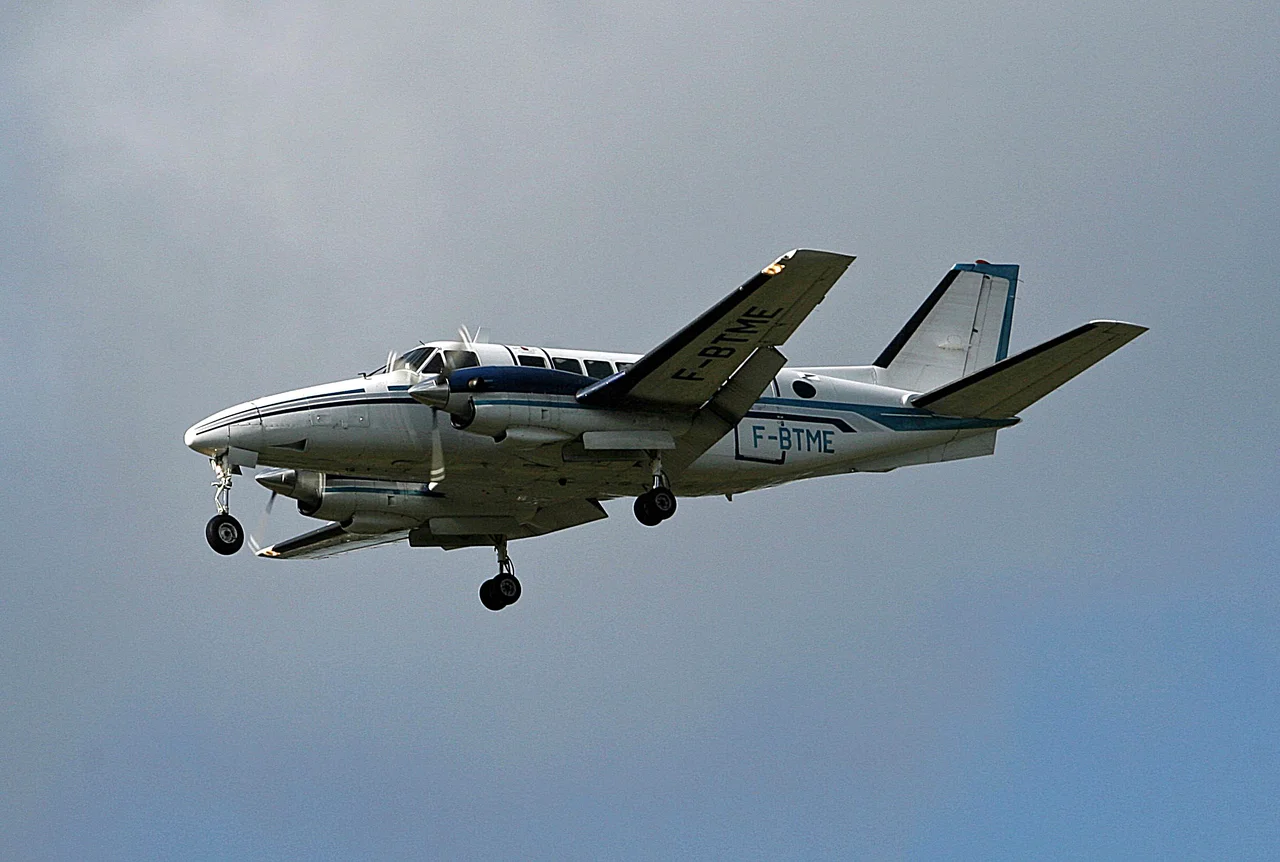
Henson Airlines Flight 1517
Larry Shue was 39 years old when he boarded Henson Airlines Flight 1517 in Baltimore on the morning of September 23, 1985. He was already an established playwright; his comedy The Foreigner had opened off-Broadway the previous November and was on its way to becoming an American theatrical staple. Shue was heading to the Shenandoah Valley. He never arrived. Twenty-eight minutes after takeoff, the Beechcraft B99 he and twelve other passengers were riding in struck the southwest face of Hall Mountain at 2,400 feet, six miles east of the airport he was trying to reach. There were no survivors.
The Last Transmission
Henson Airlines Flight 1517 departed Baltimore-Washington International at 9:59 a.m., operating on behalf of Piedmont Airlines as Piedmont Commuter. Captain Martin Burns III was 27. First Officer Zilda Spadaro-Wolan was 26. Both were young pilots, building hours on the Beech 99 in Henson's regional fleet. The flight proceeded normally for fifteen minutes. At 10:14 a.m., Captain Burns radioed Washington Center with a concern: he believed the aircraft was too far west of his planned course. The controller acknowledged and tried to refine the position. The next attempts to reach Flight 1517 went unanswered. The plane had already flown into terrain. The Civil Air Patrol did not find the wreckage on Hall Mountain until 6:42 p.m. that evening.
Cascading Failures
The NTSB's investigation, released the following year, traced the crash to a navigational error. The crew had tuned an incorrect navigational facility and failed to monitor their instruments closely enough to catch the resulting course drift. But the board identified a chain of contributing factors that pointed at the airline itself. Henson's Beech 99 fleet carried nonstandardized navigation radios, so the cockpit layout varied from aircraft to aircraft. Ambient cabin noise was loud enough to interfere with intracockpit communication. Pilot training was inadequate. The first officer had limited multiengine and instrument experience. Both pilots were stretched into roles their hours did not really support, and were carrying personal stress factors. The FAA's surveillance of Henson Airlines, the board found, had failed to detect these deficiencies. The crash, in other words, did not happen at a moment of error so much as at the end of a long road that had been allowed to bend the wrong way.
Two Lives in the Cockpit
Zilda Spadaro-Wolan became, in the cruelest of recognitions, the first female commercial airline pilot to die in a crash while flying a propeller aircraft in the United States. She was 26. Martin Burns III was 27. They had spent their twenties working toward the captain's seat and the right-seat job that comes before it. Both had families. Both showed up at Baltimore that morning planning to do their work and go home. Public attention to the crash, then and since, has focused understandably on Larry Shue, whose plays continue to be staged. But the cockpit deserves equal remembering. Two young pilots died too, and the NTSB report makes clear they were trying to do their jobs in a system that had not given them what they needed.
What Changed
The crash contributed to broader scrutiny of commuter aviation safety in the late 1980s. Regional carriers like Henson were rapidly expanding to feed major airline hubs, and oversight had not kept pace. The deficiencies the NTSB identified - cockpit standardization, training programs, FAA surveillance of small carriers - became targets of regulatory attention in the years that followed. Henson Airlines continued operating as Henson, The Piedmont Regional Airline after Piedmont's 1983 acquisition, and when Piedmont itself was absorbed by USAir in 1989, Henson's operation was eventually rebranded and became part of US Airways Express. The wreckage on Hall Mountain was removed; the ridge looks today like any other in the Shenandoahs. Larry Shue's plays are still performed. The Foreigner is one of the most-staged comedies in American regional theatre. Several Shenandoah Valley theatres have produced it. Audiences laugh. The author who would have laughed with them never reached the valley.
From the Air
Crash site located at 38.2266N, 78.7771W on the southwest face of Hall Mountain, 6 miles east of Shenandoah Valley Regional Airport (KSHD) in the Blue Ridge foothills above Grottoes. The mountain rises to about 2,400 feet at the impact elevation. Recommended viewing altitude is 4,500 to 6,500 feet for views of the ridge against the surrounding valley terrain. Nearest airport is Shenandoah Valley Regional (KSHD) about 6 nm west; Charlottesville-Albemarle (KCHO) is 25 nm east. Watch for ridge-induced turbulence and reduced visibility in cloud over the higher terrain - the conditions that make navigational vigilance crucial on instrument approaches to KSHD.
Nearby Stories
- Rockingham County 4.8 km away
- Shenandoah: The Skyline Drive Through America's Oldest Mountains 5.6 km away
- 2023 Virginia Cessna Citation Crash 16 km away
- Highland County, Virginia 16 km away
- Montpelier 20 km away
- Fork Union Military Academy 26 km away
- Battle of Greenbrier River 28 km away
- Alleghany County, Virginia 53 km away