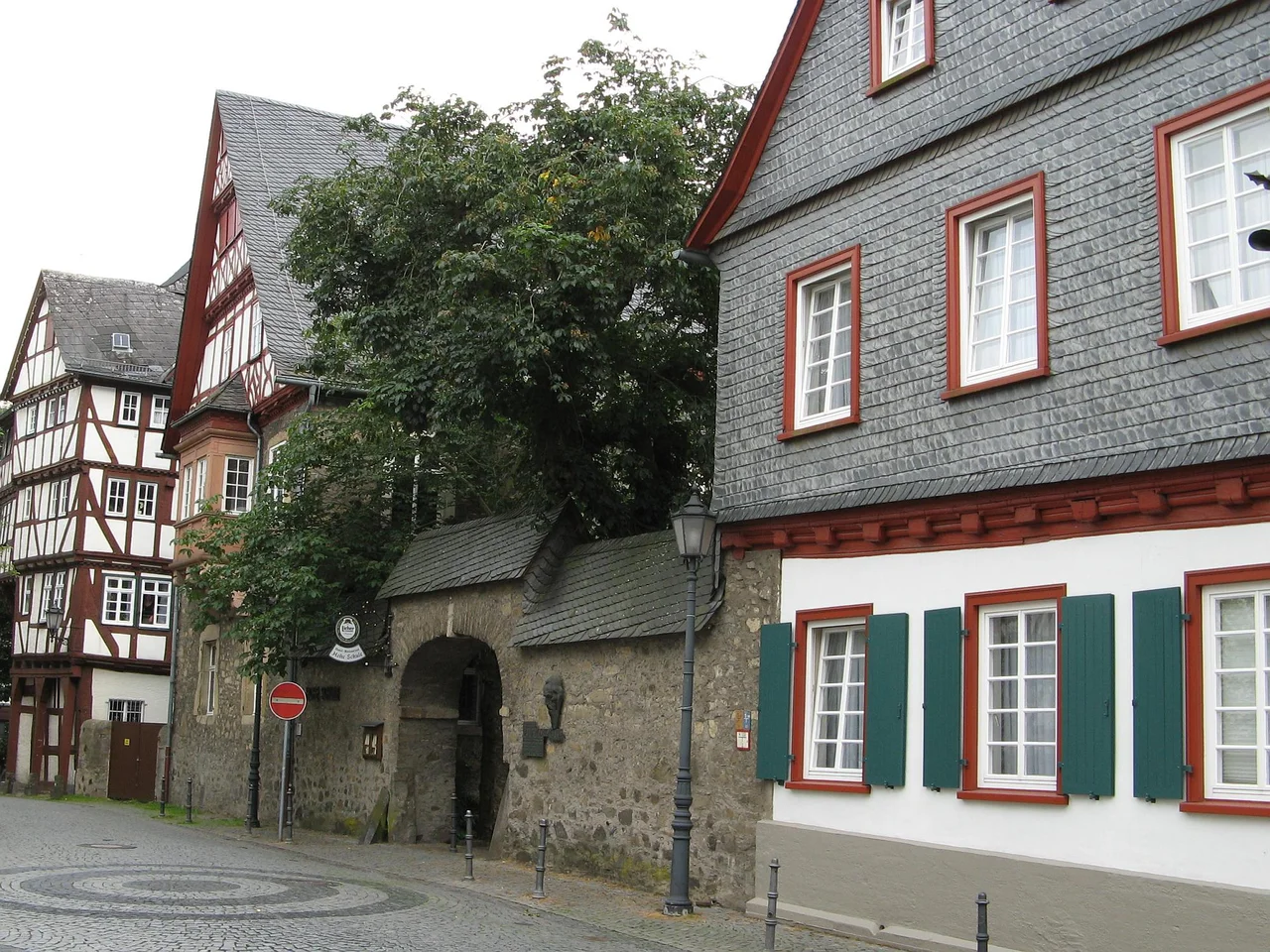

Herborn Academy
Two warm meals and three liters of small beer a day. That was the deal Count John VI of Nassau-Dillenburg offered students in 1584, when he founded the Academia Nassauensis in a borrowed wing of Herborn Castle. He had set up the school at the dying request of his older brother, William the Silent, Prince of Orange, who was assassinated that same year. Out of grief and conviction, a small post-secondary school began in a small town on the Dill river. Within twenty years, it had become one of the most influential Calvinist intellectual centers in Europe.
A School That Could Never Be a University
Herborn Academy was, by any modern reckoning, a university. Four faculties. Faculty of theology, of law, of medicine, of philosophy. Students came from Switzerland, Bohemia, Moravia, Hungary, Scotland. The teaching was admired across the Reformed world. But the Holy Roman Empire would not grant the imperial privilege that allowed a school to call itself a university and to issue doctorates. The reason was simple: Herborn was Calvinist, and Calvinism was, in the eyes of the Catholic emperor, not a legally protected confession. So the academy taught at university level for 233 years without ever being permitted the word. It is a small but telling injustice, the kind a town remembers. Students received their certificates, walked to other cities, and were granted their doctorates elsewhere. The work was done in Herborn. The credit was awarded somewhere else.
Comenius Walks the Dill
In 1611 a young Moravian arrived to study theology. Jan Amos Komenský, in Latin Johannes Amos Comenius, would later be called the father of modern education. The idea that children learn by doing, that pictures belong in textbooks, that all knowledge is one connected whole, that schools should be open to girls as well as boys, that war and ignorance are the same disease, all of these threads run back through his life to the two years he spent here. He studied alongside Johann Heinrich Alting and absorbed the encyclopedic Ramism that was Herborn's specialty: the conviction that every subject could be mapped, branched, and connected, that learning was a system rather than a list. Comenius would carry that conviction out of Herborn through a century of war, exile, and the burning of his manuscripts. The dream he wrote in Polish refugee houses began in a small town on the German Timber-Frame Road.
The Press in the Old Town Hall
Between 1602 and 1604, Johannes Piscator finished a Reformed translation of the Bible in Herborn. It was printed in the academic press of Christoph Corvinus, and it shaped Reformed church life in Germany, the Netherlands, Switzerland, and eventually the United States, where some descendants of those churches still read his phrasings on Sunday mornings. The press building stands today, called Paulshof after the family that has owned it for generations. The academy's own home was the old town hall, bought in 1588 and expanded for the school's use. After the academy closed, the building became, of all things, a hotel and restaurant. You can have lunch in the rooms where Reformed scholasticism reached its sharpest edge.
Five Students in 1745
Enrollment was rarely steady. In 1603 there were 400 students. By 1745, in the deep trough of the academy's middle years, there were fewer than five. The Thirty Years War had broken the town's nerves and the school's purse. A second peak came between 1685 and 1725, then a long, polite decline. Across 233 years roughly 5,700 students passed through, including the polymath Samuel Hartlib, who would become known in England as the Great Intelligencer of Europe; Ludwig von Siegen, who invented the mezzotint engraving technique; and Philip William Otterbein, who would later cross the Atlantic and help found the United Brethren in Christ in Pennsylvania. In its faculty rolls and alumni books, Herborn Academy is the kind of small institution whose graduates appear in far larger histories than its own.
Closure by Decree, Continuity by Stubbornness
On 17 December 1811 Napoleon issued a decree from a desk in Paris ordering the closure of the academy in favor of a new state university in Düsseldorf. The Duchy of Berg had absorbed Herborn five years earlier. The decree outlived Napoleon. Even after his fall and the creation of the Duchy of Nassau in 1817, the academy was not restored. Only the theology faculty survived, reborn as the Theological Seminary of the Evangelical Church of Hesse and Nassau. That seminary continues to this day, now housed in Herborn Castle itself, the same building where the academy began in 1584. The institution moved a few hundred meters across town, lost its other faculties, kept teaching, and is still teaching. The wider story is gone. The thread is not.
From the Air
Herborn lies at 50.683°N, 8.302°E in the Lahn-Dill valley of central Hesse, between Siegen and Wetzlar along the A45 motorway. Cruise the Dill river corridor at 4,000 to 6,000 ft for a clear view of the tight half-timbered old town. Nearest airports: Siegerland (EDGS) about 25 km north, Frankfurt (EDDF) about 80 km south. The Westerwald uplands ride the western horizon.
Nearby Stories
- Stadtallendorf 21 km away
- Bilstein Castle (Lennestadt) 22 km away
- Battle of Kircheib 22 km away
- Baumwollspinnerei Ermen & Engels 23 km away
- Edersee Dam 30 km away
- Zwingenberg Castle 116 km away
- Basilica of Saint-Pierre-aux-Nonnains 186 km away
- Marmoutier Abbey 206 km away