
Hickory, North Carolina
In the summer of 1944, polio came to the Catawba Valley with terrifying speed. The area around Hickory became one of the worst outbreaks of the disease ever recorded in the United States. Local hospitals could not handle the children flooding in. So the citizens of Hickory and the March of Dimes made a decision. They would build their own hospital. From the moment they decided to the moment doctors were treating patients in a new facility, less than 54 hours passed. A Red Cross official on the scene called it 'the most outstanding example of cooperative effort he has ever seen.' Hickory called it the Miracle of Hickory. The phrase has stuck for 82 years.
The Tavern Under the Tree
The city's name comes from a tavern - a log structure built in the 1850s underneath a hickory tree. Henry Link bought the first town lot in 1858 for $45. The first train rolled near Hickory Tavern in 1859. By 1870 it was a town, by 1873 simply Hickory, by 1889 a city. Electric lights arrived in 1888. The Elliott Opera House opened the year after that, French Renaissance auditorium with seating for 750 in the parquet and another 350 in the balcony, hosting touring shows and the Hickory Symphony Band until fire destroyed it in 1902. The replacement municipal auditorium, built across the street in 1921, still houses the Hickory Community Theatre. In 1913, Hickory became the first city in North Carolina to adopt the council-manager form of government and hire a city manager. The Piedmont furniture town was, very early on, an unusually deliberate place.
The Furniture Belt
Hickory White - founded as the Hickory Manufacturing Company in 1902 - is one of the oldest furniture makers in the United States still operating on its original site. During World War II it switched to making ammunition boxes for the military. At the industry's peak, an estimated 60 percent of the nation's furniture was produced within a 200-mile radius of Hickory. That share has fallen, but the industry is still here: HSM (formerly Hickory Springs, founded 1944) leads the country in mattress coil manufacturing. Sherrill, Century, and other furniture names anchor the regional economy. The Lyerly Full Fashioned Mill downtown was converted in 2015 into the headquarters of the logistics company Transportation Insight. Old mill buildings become new headquarters. The industry softens, then specializes, then survives.
Forty Percent of the World's Fiber
Beyond furniture, Hickory makes things that connect things. Forty percent of the world's fiber-optic cable is manufactured in the Hickory area. Corning Incorporated has major operations here. CommScope, the Fortune 500 network infrastructure company, is based in nearby Claremont. Apple's billion-dollar data center campus just south of Hickory is one of the world's largest, and Google operates another data center in the area. Shurtape Technologies, the adhesive tape maker, is headquartered downtown. The region markets itself as a data-center corridor now - a phrase that would have been incomprehensible to the WPA workers who paved the first roads here, but makes obvious sense for a place sitting on cheap electricity, cool nights, and the legacy of one of the densest manufacturing belts in the South.
Crawdads, Bumgarner, and the SALT Block
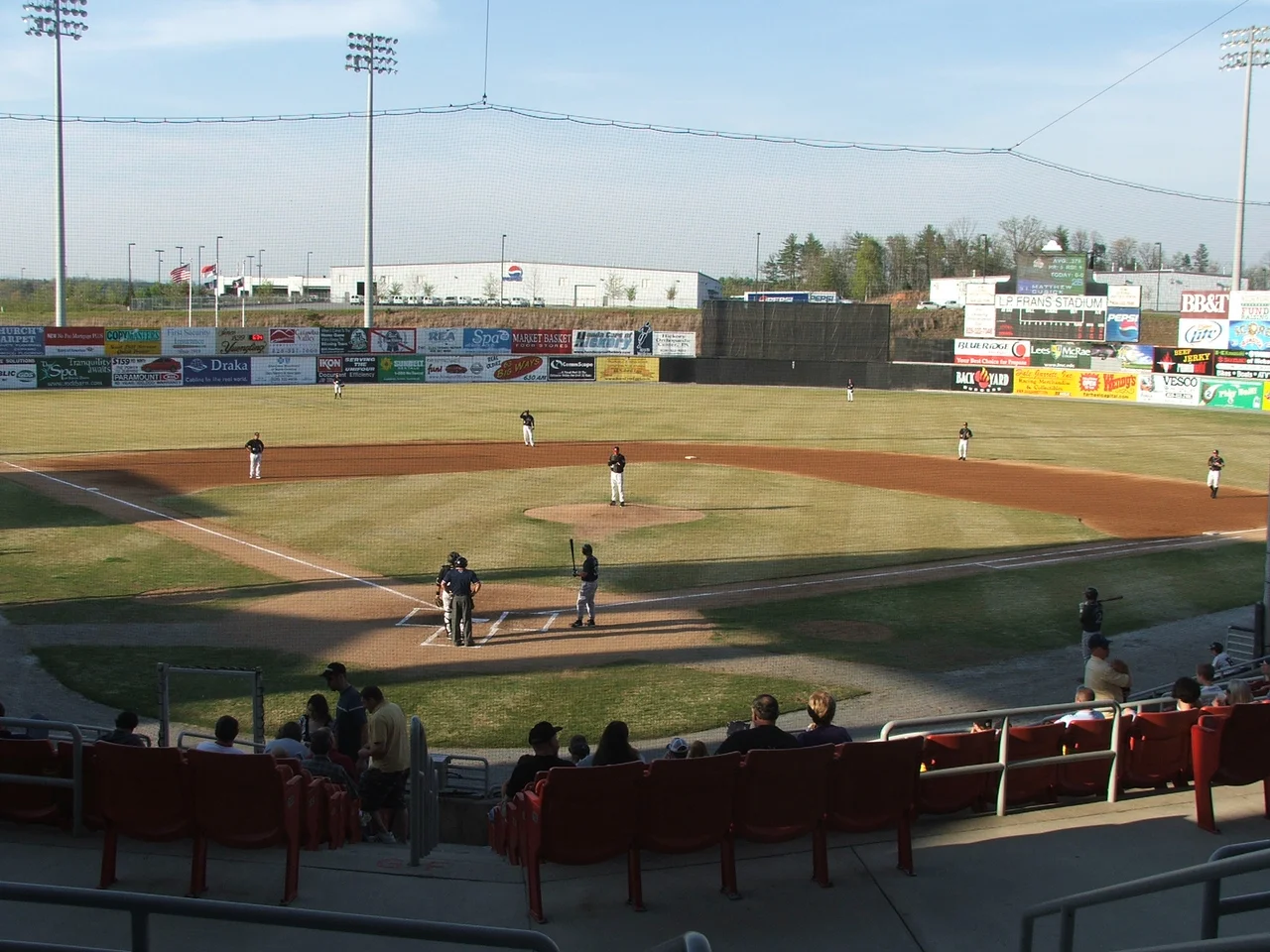
L.P. Frans Stadium on the west side of town hosts the Hickory Crawdads, the Single-A affiliate of the Texas Rangers. Hickory Motor Speedway sits just south in Newton, running its NASCAR Weekly Series season. The Hickory Aviation Museum at the regional airport began with a single FJ-3 Fury recovered by the Sabre Society and has grown from there. Downtown holds the SALT Block - the converted Claremont High School building that now houses the Hickory Museum of Art, the Catawba Science Center, and the Western Piedmont Symphony. The Catawba Valley has produced surprising people: Madison Bumgarner, three-time World Series champion and 2014 MVP; Landon Dickerson, three-time Pro Bowl offensive lineman; Dale Jarrett, 1999 NASCAR Cup champion; Chris Hughes, co-founder of Facebook; the comedian Jon Reep; the actor Matthew Settle. Sister city: Altenburg, Germany. Travel and Leisure called Hickory the most beautiful and affordable place to live in the United States in 2023. The city wears that designation quietly.
From the Air
Hickory sits at 35.738 N, 81.328 W, in western North Carolina, about 60 miles northwest of Charlotte. Field elevation around 1,160 feet, climbing rapidly toward the Blue Ridge to the west. Interstate 40 passes through the southern part of the city, with U.S. 321 cutting north-south. Hickory Regional Airport (KHKY) lies west of downtown. From altitude, look for Lake Hickory's elongated shape along the city's northern edge, the Catawba River system running northeast-to-southwest, and the broad agricultural-and-forest mosaic of the Piedmont stepping up toward the mountains.
Nearby Stories
- Perciphull Campbell House 1.7 km away
- Avery County, North Carolina 5 km away
- Rutherford County, North Carolina 12 km away
- Battle of Ramsour's Mill 12 km away
- Marion, North Carolina 13 km away
- Moravian Falls, North Carolina 21 km away
- Charlotte Motor Speedway 24 km away
- Thomas Gillespie 24 km away