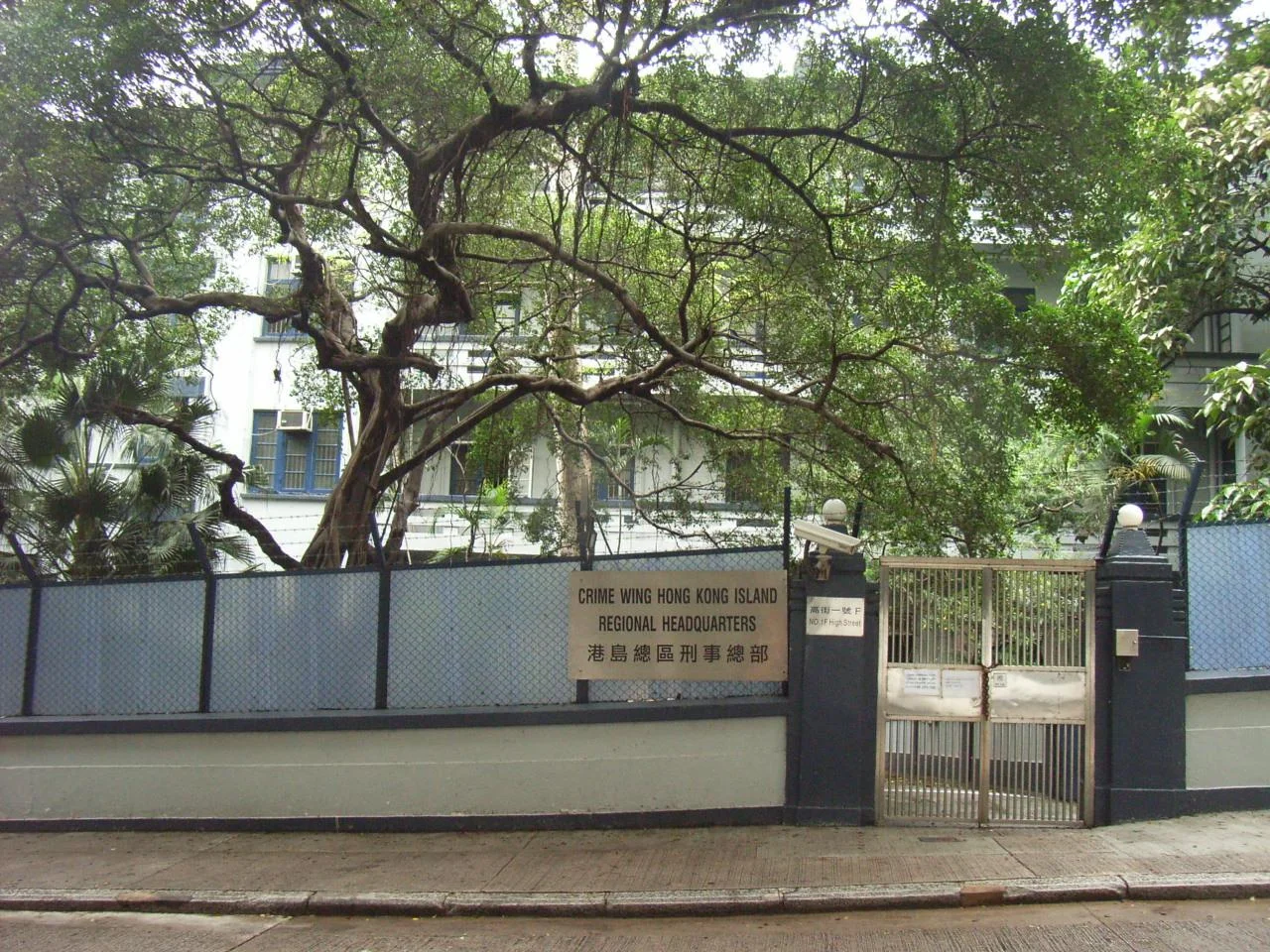

High Street, Hong Kong
The street was originally called Fourth Street, but in Hong Kong, the number four carries the sound of death — pronounced *si* in Cantonese, uncomfortably close to the word for dying. The government renamed it High Street. Whether that was enough to lift the associations is another question. Because for decades, what most people knew about High Street in Sai Ying Pun was not its name change or its minibuses or its community markets, but the building at its western end: a grand colonial structure of granite and plaster, its windows sealed, its gardens overgrown, its interior dark in the middle of a city that never turned off its lights. The locals called it the Haunted House. The history behind that name is less supernatural than human — and considerably sadder.
The Building That Became a Legend
The neoclassical structure at 2A High Street was built in 1892 as medical staff quarters — nursing accommodation for the nearby Government Civil Hospital, not a mental hospital at all. In 1939, it was converted into wards for female patients with mental illness. Patients were housed there for decades, in circumstances that, by later standards, would be considered deeply inadequate. The psychiatric facility closed as an inpatient hospital when Castle Peak Hospital opened in 1961, after which the building served briefly as an outpatient clinic before being left vacant in 1971. It did not stay in the public consciousness as a mental hospital. It became, in the retelling, simply the Haunted House — a place of broken windows, unexplained sounds, and stories that grew darker with each generation of children who dared each other to approach it. The building's colonial grandeur only deepened the uncanny effect: all that formal architecture, engineered for permanence, abandoned to weeds and silence.
A Street That Renamed Itself
High Street connects Bonham Road in the east with Pok Fu Lam Road in the west, running as a one-way road through the dense residential and commercial fabric of Sai Ying Pun — a district of Hong Kong Island that sits between the university slopes to the east and the quieter residential blocks to the west. The name change from Fourth Street was deliberate and culturally specific: tetraphobia, the avoidance of the number four, is widespread in Hong Kong and Cantonese-speaking communities throughout the region. The renaming was a practical acknowledgment that the government shared, or at least respected, its residents' associations. Small laneways cut through the block — Leung I Fong leading down toward Third Street, West End Path climbing up to Bonham Road. The street's texture is the texture of old Sai Ying Pun: narrow, layered, navigated mostly by people who live there rather than people passing through.
Community in the Bones of the Old Hospital
The story of the Haunted House did not end with its haunting. In the 1990s, after decades of standing derelict, the building was partially preserved and incorporated into the Sai Ying Pun Community Complex — a government facility housing a library, sports center, and social services. The facade was retained; the interior was rebuilt. The transformation is characteristic of how Hong Kong has handled its older colonial buildings: not always with full heritage preservation, but with a pragmatic acknowledgment that the bones of a century-old structure carry something worth keeping. What the community complex cannot carry forward is the building's earlier history as a place where people with mental illness were confined, largely out of sight, in an era that had few other ideas about what to do with them. That history sits under the renovated floors, unlit and largely unmarked.
What Lines the Street Today
High Street today is a neighborhood street in the full sense: small businesses, a market, a church, schools, a dental clinic, residential towers pressing close on either side. Kau Yan Church — its name meaning 'Saviour' in English — stands on the street alongside its school. King George V Memorial Park offers green space a short walk away. The broader Sai Ying Pun district has gentrified in recent years, drawing cafes and boutiques up the MTR extension that arrived in 2015, but High Street itself retains a quieter character. The community complex at the western end still draws a daily stream of people — exercising, borrowing books, using the services it was rebuilt to provide. From the street, looking up at the retained colonial facade, it remains possible to see the ghost of what the building once was, if you know to look for it.
From the Air
High Street sits at approximately 22.29°N, 114.14°E in the Sai Ying Pun district of Hong Kong Island's northern shore. From the air at 1,500–2,500 feet, the street itself is not individually distinguishable in Hong Kong's dense urban fabric, but the Sai Ying Pun district occupies the mid-levels slope between the University of Hong Kong campus and the Western District waterfront. Hong Kong International Airport (VHHH) lies roughly 22 nautical miles to the west. Victoria Harbour runs along the northern coast, and the hills of the Mid-Levels rise steeply to the south.
Nearby Stories
- Lok Ma Chau Loop 2.3 km away
- Portas do Cerco 2.3 km away
- Kweilin Incident 17 km away
- Wanshan Archipelago Campaign 34 km away
- Nanxiong Formation 115 km away
- Battle of Nanpeng Island 148 km away
- Heyuan 169 km away
- Cape Maobitou 632 km away