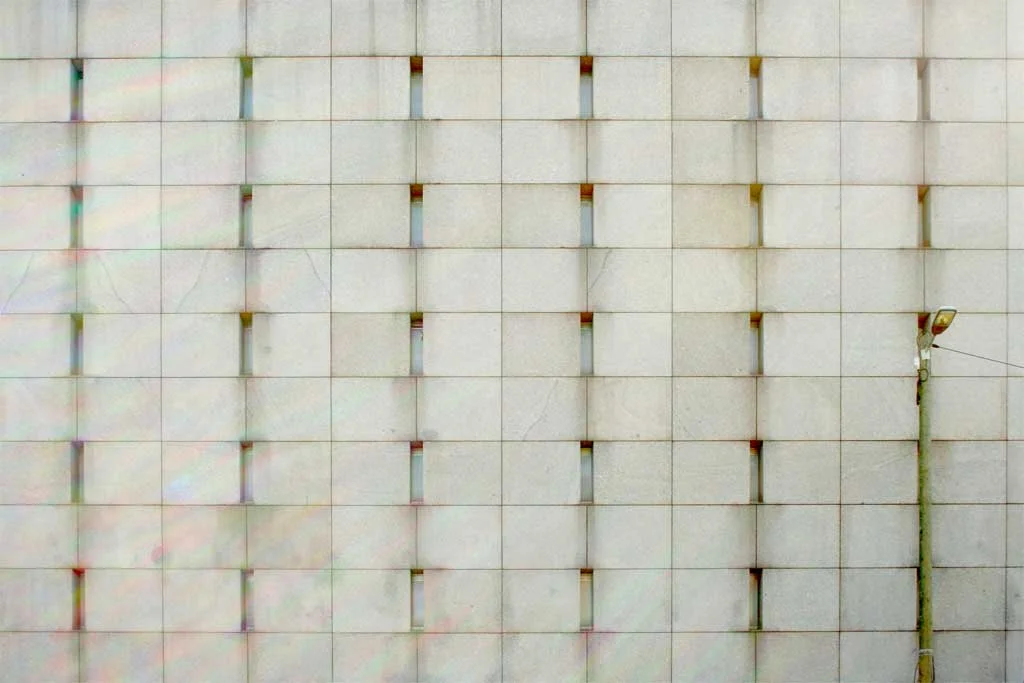

Historical Archive of the City of Cologne
The construction workers noticed the water first. Groundwater was pouring into the building pit for the new underground switch facility on the Nord-Sued Stadtbahn line, and they had the presence of mind to shout. Staff and visitors inside the Historical Archive of the City of Cologne were told to leave, and they left. Then the ground beneath Severinstrasse failed. At 1:58 pm on 3 March 2009, the six-story archive building toppled forward into the cavity, taking two adjacent apartment buildings with it. Everyone in the archive survived. Two of the neighbors did not. Within the rubble lay roughly ninety percent of the institution's holdings: 65,000 charters, 26,000 shelf-meters of records, 104,000 maps and plans, 50,000 posters, eight hundred private estates, and the literary papers of the Nobel laureate Heinrich Boell. A thousand years of one of Europe's great cities, buried under its own street.
The Neighbors
The two who died lived in the adjacent residential buildings that collapsed alongside the archive. Their homes were beside an archive, not in one. They had no professional reason to be near old charters and architectural drawings on a Tuesday afternoon. The city has named them in its memorials and in the years of legal proceedings that followed. Anyone telling the story of what was lost from the archive has to begin with what was taken from those two families: not records, not history, but people. The construction workers' warning saved the staff and the visitors. It came too late for the apartments next door. Public prosecutors would eventually confirm in 2017 that the construction of the Stadtbahn extension caused the collapse. Eight years to assign cause; longer still for the people who lived on Severinstrasse before that Tuesday.
What Was Buried
The Cologne municipal archive began documenting itself in 1322. The oldest inventory of charters dates to 1408. For seven centuries the city had been gathering: real estate contracts written in shrine books of the medieval parishes; the Koelner Verbundbrief of 1396, the constitutional document granted pride of place in a chest decorated with a crown; the Hanseatic League's Bruges records transferred here in 1594, making Cologne the second most important Hanseatic archive in the world. Then the architects: Hans Schilling, Oswald Mathias Ungers, Wilhelm Riphahn, Karl Band, Gottfried Boehm, Dominikus Boehm. The composers: Jacques Offenbach, Max Bruch. The conductor Guenter Wand. The philosopher Vilem Flusser. Eight hundred private estates in all, and at the heart of it the papers Heinrich Boell had given to his city. Boell's son Rene, asked what the family felt after the collapse, called the loss historical and irreversible. The microfilm safety copies in the Barbarastollen caves in the Black Forest covered roughly 638 reels, about one million images. It is a great archive of insurance. It is not the archive.
The Building That Was Supposed to Last
The 1971 building had been an engineering boast. Architect Fritz Haferkamp designed it as the Cologne Model, a structure that protected its contents through physics rather than machinery. An armored concrete frame, encased in a forty-nine-centimeter brick wall, faced with bright Czech granite at a seven-centimeter remove. Interior plaster of lime mortar to absorb moisture from the air. Vertical light slots one hundred thirty centimeters tall and twenty-five wide, admitting only diffused light, doubling as ventilation that ran exactly parallel to the shelves. A treasure bunker in the basement walled with sixty centimeters of armored concrete. The design became a model for archive buildings around the world. None of it accounted for the ground beneath the building being hollowed out for a subway tunnel.
Recovery, by Hand
Within hours, volunteers and conservators were on site. A freeze-drying unit was installed to stabilize the soaked and frozen materials before restoration could begin. Workers sifted through the rubble for years, lifting individual sheets of parchment and paper from concrete and broken granite. The spokesperson for the archive offered a sober estimate of what remained: more than two hundred restorers, working continuously for thirty years, would be needed to put the surviving records back into usable condition. Some pieces, soaked or torn or burned by friction in the fall, will never be readable again. Many can be saved. Each one is examined individually. Each one has to be.
A New House for the Salvage
The new Historical Archive opened on 3 September 2021, twelve and a half years after the collapse, on Eifelwall in the Neustadt-Sued district. The original ambition, to combine the archive with the Kunst- und Museumsbibliothek and the Rheinisches Bildarchiv into a single state-of-the-art complex, was pared back during Cologne's financial crisis after 2013. The building that opened is more modest, but still designed to hold what survived and what will be acquired. The Severinstrasse site, where the collapse happened, became an investigation building for the public prosecutor's case. Public prosecutors assigned blame in 2017. The Stadtbahn line that caused the collapse runs underneath the city it dug into. The archive, like Cologne itself, is the kind of place that does not stop because something terrible happened. It continues, slowly, by hand, one charter at a time, for as long as it takes.
From the Air
Coordinates of the new archive at 50.9244 N, 6.9375 E, on Eifelwall in Cologne's Neustadt-Sued district, about 2 km south-southwest of Cologne Cathedral. The original 1971 building stood about 1.5 km east, on Severinstrasse, where the collapse occurred in March 2009. From the air the new archive is a low rectangular block among inner-city blocks; the cathedral and the Rhine make better reference landmarks. Recommended altitude 1,500-3,000 ft AGL. Nearest major airport: Cologne Bonn (EDDK / CGN), 7 nm southeast. Cologne Class C airspace; expect traffic on the Rhine corridor.
Nearby Stories
- Diamond Interchange: How a Simple Idea Reshapes Towns Like Julich 2.8 km away
- Dusseldorf-Unterbach 6.1 km away
- Baumwollspinnerei Ermen & Engels 11 km away
- RAF Bruggen 15 km away
- Hagen Open-air Museum 21 km away
- Belgium 130 km away
- Marcinelle Mining Disaster 173 km away
- Zwingenberg Castle 178 km away