
HMS K13
At about three o'clock on the afternoon of 29 January 1917, HMS K13 dived in the Gareloch, off Faslane. She was on her final pre-acceptance trials, with 80 people aboard: 53 crew, 14 shipbuilders' employees, five sub-contractors, five Admiralty officials, a Clyde pilot named Joseph Duncan, and two officers — Commander Francis Goodhart and Lieutenant Leslie Rideal — borrowed from her sister ship K14, which was still under construction. Within minutes of submerging, water was pouring into her engine room. Forty-eight people would escape. Thirty-two would not.
A Submarine With Two Funnels
The K class were like nothing else. In 1915 the Royal Navy needed submarines fast enough to operate with the Grand Fleet, capable of at least 21 knots on the surface in the rough North Sea — speeds well beyond the reach of diesel engines of the day. The Admiralty's answer was a steam-powered submarine, designed by the Director of Naval Construction and detailed by Vickers. The K class were 339 feet long, displaced 1,980 tons on the surface and 2,566 submerged. The steam plant required two funnels and four air intakes piercing the pressure hull, all of which had to be folded into the superstructure and made watertight before diving. Electrically operated valves sealed the openings. It was an extraordinary engineering compromise, brilliant on paper, and lethal when something went wrong with the closure sequence.
The Dive
K13 had already made a morning dive that day, during which a small leak was reported in the boiler rooms. For the afternoon dive, all the boiler room vents were opened to clear residual steam and aid the search for leaks. The afternoon dive began. The engine room was reported shut off. The submarine submerged. Then water was seen flooding into K13's engine room. Lieutenant-Commander Godfrey Herbert, her commanding officer, ordered watertight doors shut and ballast tanks blown to bring her back to the surface. He ordered the drop keels released. None of it worked. The dive could not be stopped. K13 settled on the bottom of the Gareloch, somewhere around 50 feet down.
The Witnesses
The crew of another submarine on trials nearby had watched K13 dive and immediately thought the dive did not look right. They raised the alarm. A maid named Annie MacIntyre, working at a hotel about a mile away, saw two men in the water on the surface but her report was ignored. She had, in fact, seen the only two people who escaped from the trapped engine room — Engineer-Lieutenant Arthur Lane and a Fairfield shipyard foreman named John Steel. Lane's body would be recovered from the Clyde two months later. Steel's was never found. The first rescue vessel, the torpedo gunboat Gossamer, began searching with grapples around 11pm. When divers were finally summoned from Fairfields, the suit had not been used for years and burst on the first attempt, nearly drowning the man inside it. The rescue was, in every sense, improvised.
Fifty-Seven Hours
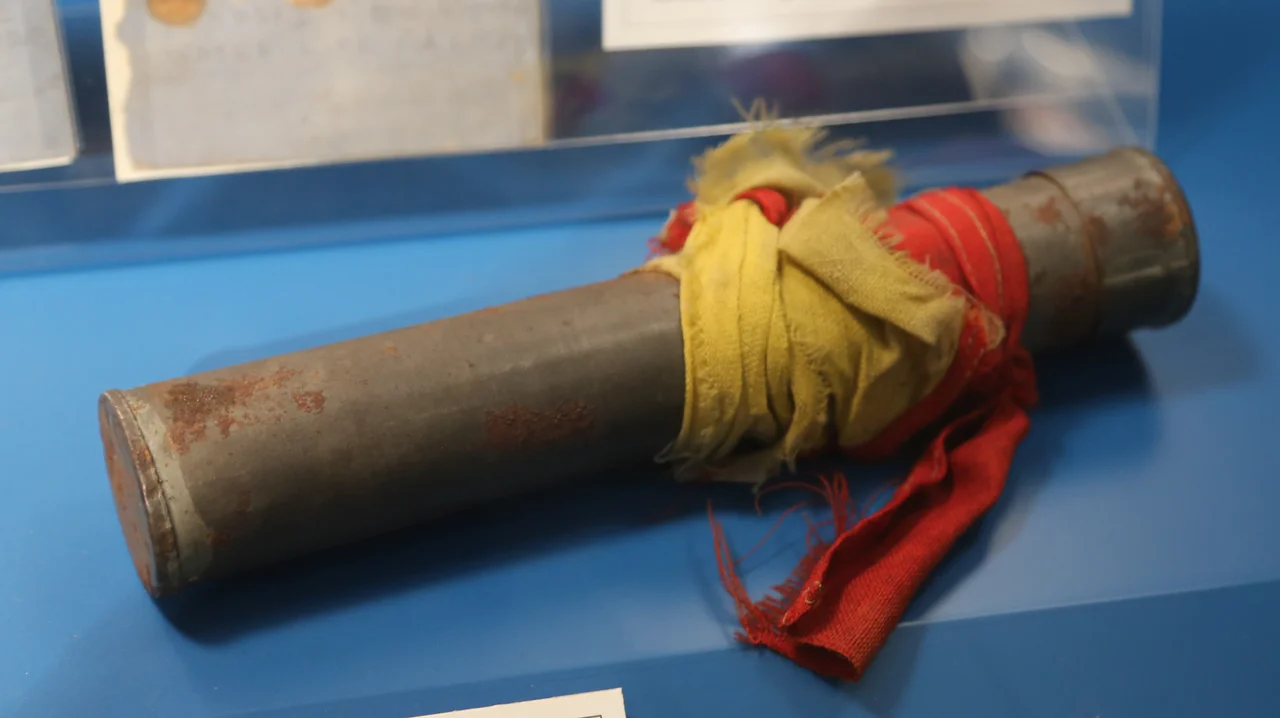
Trapped inside the forward part of the submarine, the survivors waited. They sent up a message capsule. They blew air to lift the bow. They worked through the night and into the next day and the day after that, while above them divers and gunboats and tugs tried to reach them. After fifty-seven hours on the bottom, on the afternoon of 31 January, Herbert and the rest of the forward survivors broke clear and reached the surface alive. Commander Goodhart's body was later found trapped in the wheelhouse — he had volunteered to try a desperate escape through the conning tower to reach help, and the attempt had killed him. In all, 48 people were rescued. Thirty-two died. The submarine was salvaged some weeks later, repaired, and recommissioned as HMS K22.
The Memorials
The ship's company at the Fort Blockhouse submarine depot in Gosport erected the first memorial at the entrance to Faslane Cemetery, at the head of the Gare Loch where the disaster happened. A second memorial stands in Elder Park in Govan, opposite the Fairfield shipyard that built her. The most surprising memorial, though, is in Carlingford, New South Wales, Australia. Charles Freestone, a leading telegraphist on K13, survived the accident, emigrated to Australia, and prospered there. After his death his widow paid for a memorial, unveiled on 10 September 1961, composed of large white letters spelling K13 inside a pool of water. The inscription dedicates it to all officers and men of the Commonwealth who gave their lives in submarines while serving the cause of freedom. The K class, it must be said, continued to be ill-starred: in January 1918, K22 — the salvaged K13 — and several sister boats were involved in the disastrous Battle of May Island, in which two more submarines were lost and 104 men killed in a chain of collisions during a Grand Fleet exercise.
From the Air
The site of K13's sinking lies at approximately 56.03°N, 4.81°W in the Gareloch, just southwest of HMNB Clyde at Faslane. Recommended viewing altitude 2,000-3,500 ft to take in the loch's length from Garelochhead at the head down to Rhu at the mouth. Nearest airport: Glasgow International (EGPF) 22 nm southeast. The Faslane Cemetery memorial sits at the head of the loch. Note that the loch and surrounding airspace contain active Royal Navy operations associated with the Clyde submarine base, so airspace restrictions apply.
Nearby Stories
- Loch Sloy Hydro-Electric Scheme 1.7 km away
- Lochranza Castle 2.2 km away
- Dalgarven Mill – Museum of Ayrshire Country Life and Costume 5.6 km away
- Loch Fyne 8.9 km away
- Battle of Drumclog 10 km away
- Battle of Kilsyth 12 km away
- Battle of Lagganmore 15 km away
- Comrie 20 km away