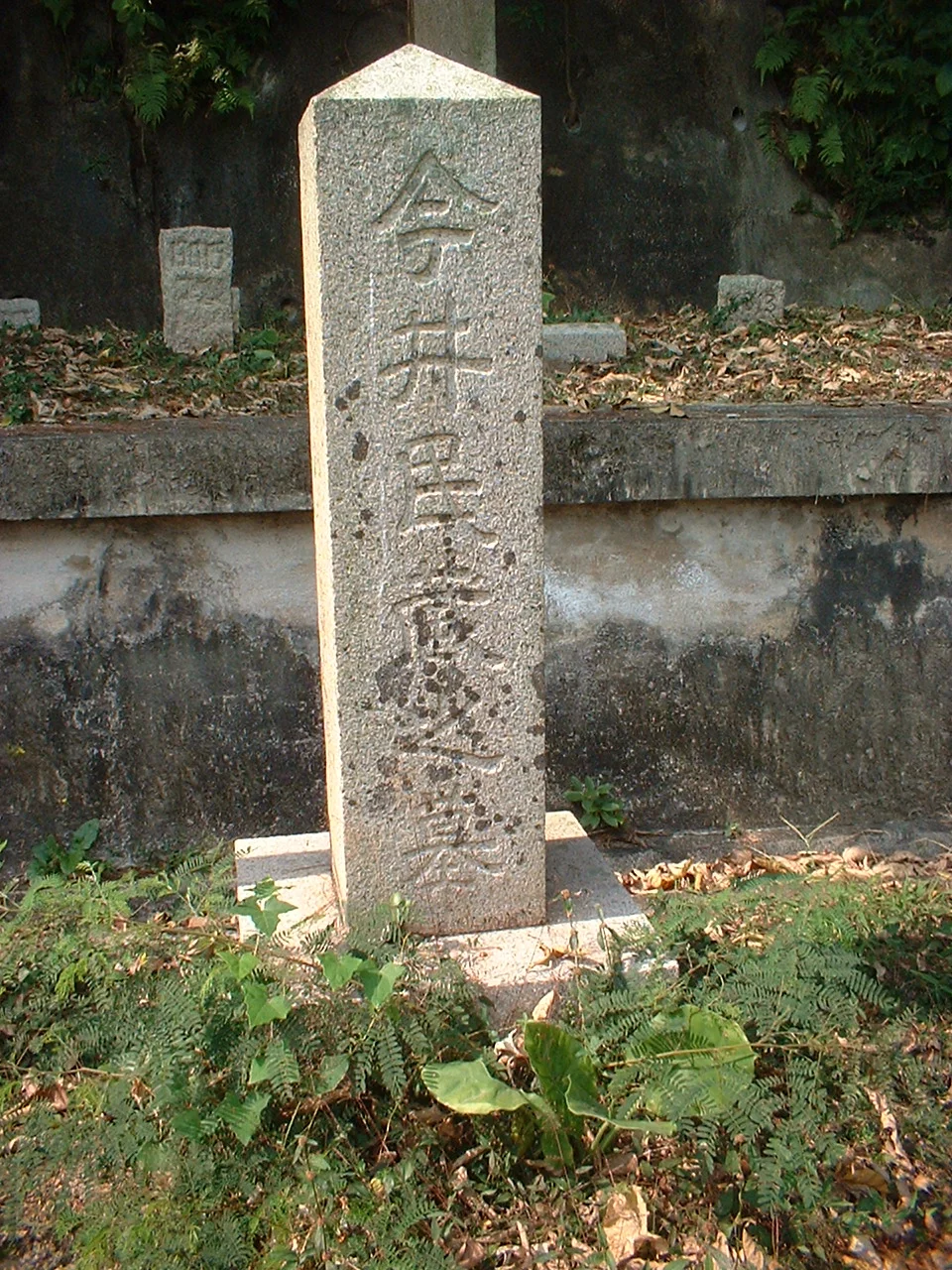

Hong Kong Cemetery
The terraces climb the hillside in stages, and the logic of the cemetery is geological: the older graves rest at the bottom, where the ground levels off near the racecourse, and the newer ones from the 1930s and 1940s have been pushed higher up the slope, as if history keeps arriving and pressing the past further up the hill. Hong Kong Cemetery has been here since 1845, four years after the colony itself was founded. It has been called the Hong Kong Colonial Cemetery, and the Hong Kong (Happy Valley) Cemetery, and is now simply the Hong Kong Cemetery — each name a small revision of how the place understood itself. What hasn't changed is the company: the Jewish Cemetery, Hindu Cemetery, Parsee Cemetery, St. Michael's Catholic Cemetery, and the Muslim Cemetery all stand nearby, a row of faiths beside the racetrack, which is its own kind of religion in this city.
The First Casualties
The earliest British soldiers buried here did not die in battle. They died of the climate. At the beginning of the colonial era, the garrison force faced the same problem that plagued British military deployments across tropical Asia: soldiers from temperate England arriving in subtropical Hong Kong, where the summer heat and humidity, combined with poor sanitation and limited medical knowledge, killed men efficiently. Those who survived the heat could still fall during the Boxer Rebellion — the cemetery holds graves from 1900, when British forces were part of the multinational intervention in China. About 100 military graves from World War I are scattered across the grounds, 79 of them maintained by the Commonwealth War Graves Commission. Most of those men died in the Hong Kong and Kowloon Military Hospital, which treated the sick and wounded evacuated from the German-leased territory of Qingdao, on the Shandong peninsula in northeast China. Evidence in the records suggests most of them were naval personnel.
December 1941
The Second World War left a sharper mark. Before the Japanese invasion of Hong Kong in December 1941, Britain had sent two battalions — from the Royal Scots and the Middlesex Regiment — to reinforce the garrison. The cemetery holds 62 military graves of Commonwealth service personnel from World War II, the majority from that year. These are men who died during or just after the Battle of Hong Kong, which lasted eighteen days before the British surrendered on Christmas Day 1941. The graves of Royal Scots soldiers here are among the few physical reminders of those two battalions' presence. The Commonwealth War Graves Commission maintains these graves today, keeping the headstones level and the records accurate, doing the long, unglamorous work of not forgetting.
Lives That Crossed Borders
The civilian graves tell a different kind of story — less martial, more improbable. Walter Fong (1866–1906) was a Chinese-American educator who founded the first technical college in Hong Kong. Josephine Bracken (1876–1902), who died at only 25, was the common-law wife of Philippine nationalist José Rizal, one of the figures whose execution by the Spanish colonial authorities in 1896 catalyzed Philippine independence. Wong Tape (1875–1967) lived to 92, a Chinese merchant who had built a life in Dunedin, New Zealand, and returned to serve on the Urban Council in Hong Kong. Samuel Cornell Plant (1866–1921) commanded the first merchant steamer on the Upper Yangtze River and became the First Senior River Inspector for that stretch of water. These are not names most people know. But each one represents a life that crossed the colonial geography in unexpected directions — the kind of lives Hong Kong in the nineteenth and early twentieth centuries kept producing, because the city was itself a kind of intersection.
A Place in the Imagination
The cemetery has made its way into fiction and music. John le Carré set a scene in his 1977 novel The Honourable Schoolboy partly at the nearby Happy Valley Racecourse and partly here — the cemetery as backdrop for the Cold War's murky transactions in Asia. The grounds are still used as a filming location for Hong Kong productions. The British folk musician Johnny Flynn wrote a song about the cemetery in 2008, included on his debut album A Larum. Something about the place — its quietness beside the noise of the racetrack, its terraced hillside at the edge of one of the world's most compressed cities — makes it available to the imagination in ways that more celebrated sites are not. You can stand on the upper terraces and hear the city below without seeing much of it. The graves from the 1840s are right there at the bottom of the hill. The distance between then and now is not very far.
What the Hillside Holds
The Protestant Cemetery, managed by the Food and Environmental Hygiene Department, is organized by section: army, navy, Hong Kong Police each had their territories on the terraces. When road developments have required disturbing graves, the remains have been moved to an ossuary with niches providing basic information on each individual — a quiet archival solution to the pressure that a growing city inevitably puts on its dead. Driver Joseph Hughes, who won the George Cross for warning fellow soldiers about bombs during World War II, is buried here. Sir Robert Ho Tung and his first wife Margaret Mak Sau Ying rest here too — Ho Tung was one of the wealthiest and most influential figures in colonial Hong Kong, a Eurasian businessman whose life bridged the Chinese and British communities of the city through the late nineteenth and early twentieth centuries. The hillside does not organize these people by importance. It organizes them by time.
From the Air
Hong Kong Cemetery is located at approximately 22.270°N, 114.182°E in Happy Valley, on the southern side of Hong Kong Island's northern urban strip. From the air, Happy Valley's oval racecourse is one of the most recognizable features in Hong Kong — a green oval surrounded by dense residential towers, about 2km southeast of the Central Business District waterfront. The cemetery occupies the hillside immediately adjacent to the racecourse's southern edge. Victoria Peak (552m) rises to the northwest. Hong Kong International Airport (VHHH) is approximately 36km to the west on Lantau Island. At lower altitudes, the Happy Valley bowl is clearly visible as one of the few open spaces in the urban fabric.
Nearby Stories
- Lok Ma Chau Loop 2.3 km away
- Portas do Cerco 2.3 km away
- Kweilin Incident 17 km away
- Wanshan Archipelago Campaign 34 km away
- Nanxiong Formation 115 km away
- Battle of Nanpeng Island 148 km away
- Heyuan 169 km away
- Cape Maobitou 632 km away