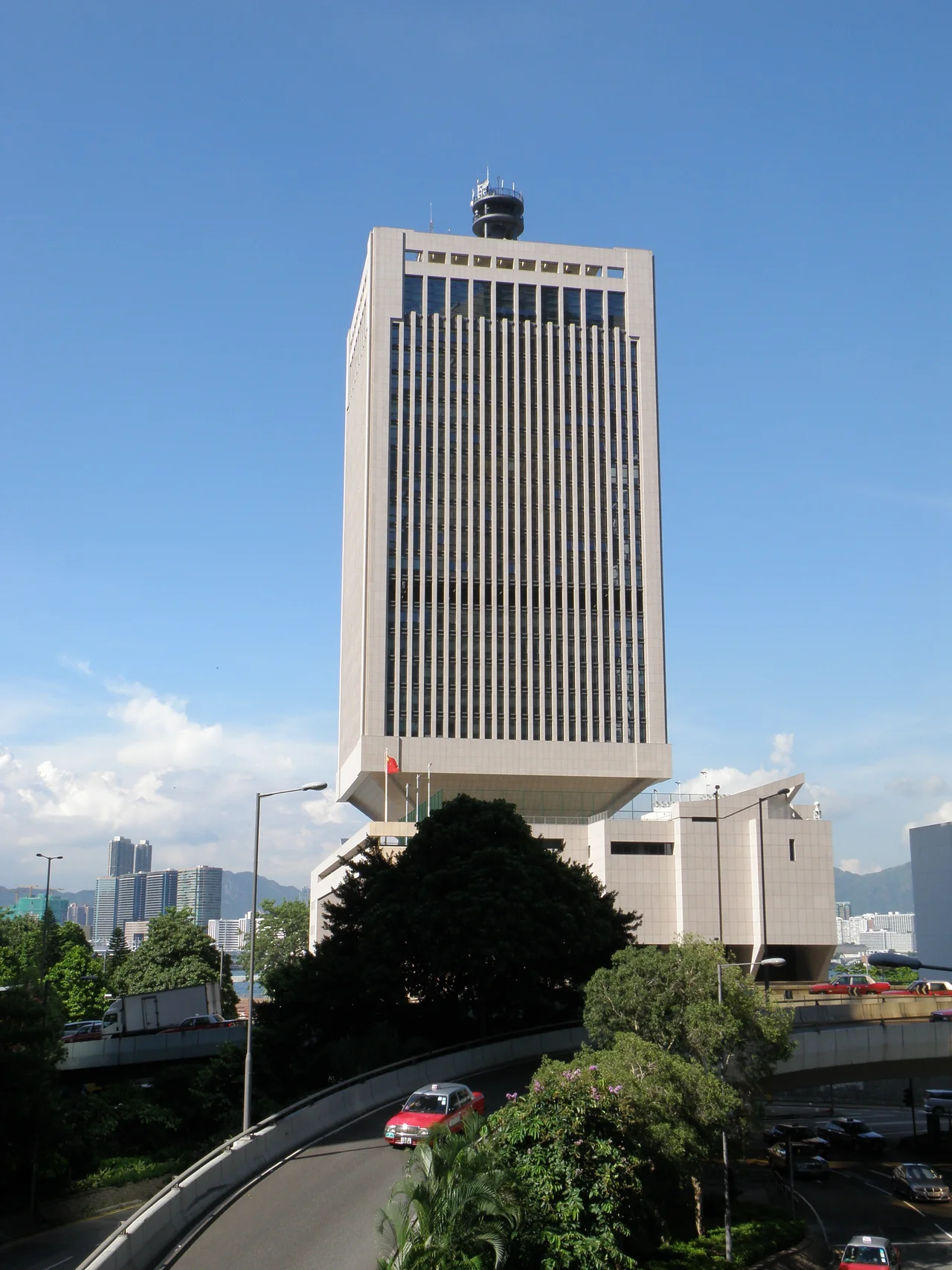

Hong Kong Garrison
At midnight on 1 July 1997, the garrison that had defended Hong Kong for a century and a half quietly departed, and a new one arrived. The British Forces Overseas Hong Kong — the last overseas garrison of the empire — marched out of barracks that bore names like HMS Tamar, Osborn, and Gallipoli. Within hours, People's Liberation Army troops were moving in. The handover had been choreographed to the minute. But the deeper continuity was striking: the same strategic geography, the same chokepoints and harbours, the same hillside positions — now defended by a different flag.
The Symbolic and the Combat-Ready
From the beginning, the PLA Hong Kong Garrison occupied an ambiguous position. Beijing described it as a defence force operating within the framework of the Basic Law's 'one country, two systems' principle: military forces would not interfere in local civilian affairs, and the Hong Kong government would remain responsible for public order. Analysts have long characterised the garrison as primarily symbolic of Beijing's sovereignty, a visible reminder that the Special Administrative Region is part of China. Yet the garrison has also been consistently described as a combat-ready force, not a ceremonial posting. Its approximately 10,000 to 12,000 personnel — drawn from the PLA Ground Force, the PLA Navy, and the PLA Air Force, alongside elements of the People's Armed Police — represent a combined-arms capability that goes well beyond ceremonial function. Annual open house events invite Hong Kong residents to observe the garrison's equipment and training. Troop rotations happen on a regular schedule.
Barracks Built by Another Army
The garrison's footprint across Hong Kong is largely inherited from the British military. Nineteen sites are occupied, and their names preserve layers of imperial history. Central Barracks occupies what was HMS Tamar, the Royal Navy shore establishment that for decades served as the symbolic heart of British naval presence in Hong Kong. Kowloon East Barracks was formerly Osborn Barracks. Stanley Barracks, home to the garrison's rapid-response unit, was Stanley Fort. Shek Kong Airfield, where the PLA Air Force maintains a helicopter squadron, was originally a British military airbase. Even the garrison commander's residence is telling: Headquarters House at 11 Barker Road, on Victoria Peak, the address that commands the highest views over the city. A Reuters investigation found that many of these sites are run down and underutilised, with a significant portion of the PLA's approximately 2,750 hectares of managed land dominated by the Tsing Shan firing range.
The Secret on the Mountain
In 2014, observers noticed something on the summit of Tai Mo Shan, Hong Kong's highest peak. Three spherical radar installations had appeared — one belonging to the Hong Kong Observatory, one to the Civil Aviation Department, and one whose owner was not publicly stated. Eventually it became clear it was a PLA radar facility. This was a problem: the Garrison Law, the PRC legislation governing the garrison's conduct in Hong Kong, requires the PLA to inform the public before establishing new facilities. The radar station had been built quietly, without public disclosure. The Hong Kong government did not publicly acknowledge it until 2021. It was a small episode, but a clarifying one — a reminder that the legal framework governing the garrison and the practice of the garrison are not always the same thing.
Right-Hand Drive and the ZG Plates
The garrison adapted in some visible ways to Hong Kong's distinctive environment. Unlike their mainland counterparts, PLA vehicles in Hong Kong are right-hand drive, matching Hong Kong's road rules inherited from the British era. Military vehicles carry number plates beginning with ZG, an abbreviation of *zhùgǎng* — the Chinese characters for 'stationed in Hong Kong.' Until 2007, garrison personnel also wore uniforms that differed from standard PLA dress, reflecting the recognition that Hong Kong operated under different conditions. These are small details, but they matter: they mark the garrison as an institution that has, at least in surface presentation, engaged with the particularities of the place it defends.
Command, Commissars, and Continuity
The garrison reports simultaneously to two authorities: the Southern Theater Command, responsible for military operations across southern China, and the Central Military Commission in Beijing, which holds ultimate authority over the PLA. This dual-reporting structure reflects the garrison's unique political position — it is both a regional military unit and a direct instrument of central government policy. Since 1997, eight commanders have cycled through the post, each serving roughly four to five years. Political commissars, responsible for ideological work and discipline within the garrison, serve alongside them. The command structure remains opaque to most Hong Kong residents. The garrison has no obligation to brief the Hong Kong government in advance on its actions — only to inform it. In a city that spent 156 years under one sovereign, the garrison represents not an ending but a transition, still unfolding.
From the Air
The PLA Hong Kong Garrison's headquarters is located at approximately 22.282°N, 114.164°E in Central, Hong Kong, inside the Chinese People's Liberation Army Forces Hong Kong Building. Key garrison sites visible from the air include the former HMS Tamar compound near the Central waterfront, Stanley Fort on the southern tip of Hong Kong Island, and Shek Kong Airfield (VHSK) in the New Territories. The garrison also maintains a presence at Hong Kong International Airport (VHHH, ICAO). Victoria Peak, where the garrison commander's residence sits at 11 Barker Road, rises prominently behind the Central skyline. Best viewed at 3,000–8,000 feet on approach from the east.
Nearby Stories
- Lok Ma Chau Loop 2.3 km away
- Portas do Cerco 2.3 km away
- Kweilin Incident 17 km away
- Wanshan Archipelago Campaign 34 km away
- Nanxiong Formation 115 km away
- Battle of Nanpeng Island 148 km away
- Heyuan 169 km away
- Cape Maobitou 632 km away