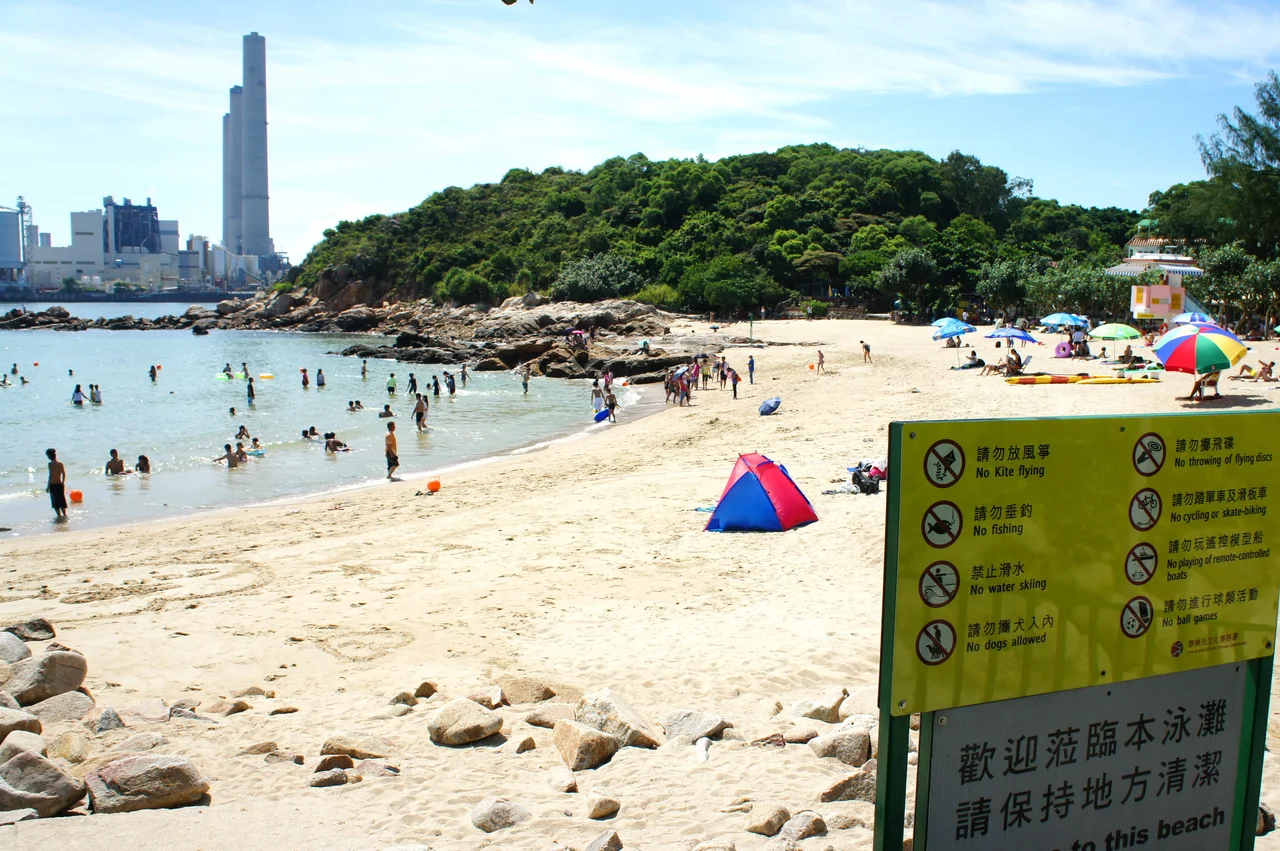

Hong Kong/Lamma
The ferry from Central takes about half an hour to reach Lamma, but the distance it covers is hard to measure in minutes. Hong Kong Island recedes behind you with its towers and tunnels and urgent pace, and what comes into view is a green island of granite hills, fishing boats, and a seafront lined with outdoor restaurants where crabs and prawns sit in tanks waiting their turn. No cars. Buildings capped at 700 square feet per floor. The third-largest island in Hong Kong, and it moves like a village.
Three Villages, One Island
Lamma organizes itself around three communities, each with its own character. Yung Shue Wan in the north is the main town — the ferry landing, the bars, the western cafes, the shops where you can buy beach supplies or browse local art. It is where most of the island's population lives, and on weekends, when the ferries disgorge visitors from the city, its narrow main street fills quickly. Sok Kwu Wan in the south is essentially a single lane of seafood restaurants facing the harbour, connected by ferry to Aberdeen on Hong Kong Island. The set meals — fried clams, lobster, crab, prawns, rice, drinks — run around HK$100–150 a head. Between them, tucked to the east, Mo Tat Wan is the quietest of the three: a handful of houses, a couple of restaurants, a ferry stop that gives you an excuse to linger after lunch before heading back.
The Rule of No Cars
There are no cars on Lamma. This is not a slogan or a marketing point — it is simply the reality of the island, and it changes everything about how you move through it. Walking is the default. The footpaths between villages cut across the granite hills, and the views from the ridgelines take in both sides of the island at once: the East Lamma Channel facing Hong Kong's southern shore on one side, the South China Sea dropping away into the distance on the other. Sea kayak tours run from Sok Kwu Wan in two directions — south toward remote beaches and the turtle nesting ground at Sham Wan, or north past the East Lamma Channel with its surreal contrast between uninhabited coastline and the apartment towers of Hong Kong Island just across the water.
The Alternative Expatriate
Lamma has long attracted a particular kind of resident: people who wanted to live near Hong Kong without living inside it. The expatriate community here is deliberately unlike the one in Discovery Bay on Lantau, which is described — by Lamma residents, to be clear — as sterile. Lamma people tend to have made a choice. The island offers art and craft shops in Yung Shue Wan, a small HSBC branch, bars with plastic chairs on the waterfront, and 4G mobile service throughout. The internet runs slowly on landlines but adequately on phones. What it does not offer is a 24-hour city with infinite options, which is precisely the point for the people who have made it home.
Eating on the Water
The seafood restaurants of Sok Kwu Wan are the reason most day-trippers come to Lamma. Tables spill onto the pier. The South China Sea is right there. You point at the tanks and then you wait while the kitchen works. The steamed fish, priced by weight, is the thing to order — a whole fish, lightly flavoured, the flesh clean and firm. Dried fish is sold from shops in Sok Kwu Wan to take away, and peanut candy is a local specialty worth picking up. Yung Shue Wan has a wider range: seafood restaurants, yes, but also cafes serving Western breakfasts, bars that stay open late, and the general stores that supply the island with everything from snacks to children's toys.
From the Air
Lamma Island sits at approximately 22.20°N, 114.117°E, southwest of Hong Kong Island and southeast of Lantau. From the air, the island is clearly distinct — elongated roughly north-south, rising to granite ridges in the centre, with the three villages tucked into small bays on either side. Hong Kong International Airport (VHHH) lies about 20 kilometres to the northwest. At 3,000–4,000 feet, the contrast between the green interior and the grey urban density of Hong Kong Island to the northeast is striking. The East Lamma Channel running between Lamma and the southern shore of Hong Kong Island is a major shipping lane and visible as a corridor of vessel traffic.
Nearby Stories
- Lok Ma Chau Loop 2.3 km away
- Portas do Cerco 2.3 km away
- Kweilin Incident 17 km away
- Wanshan Archipelago Campaign 34 km away
- Nanxiong Formation 115 km away
- Battle of Nanpeng Island 148 km away
- Heyuan 169 km away
- Cape Maobitou 632 km away