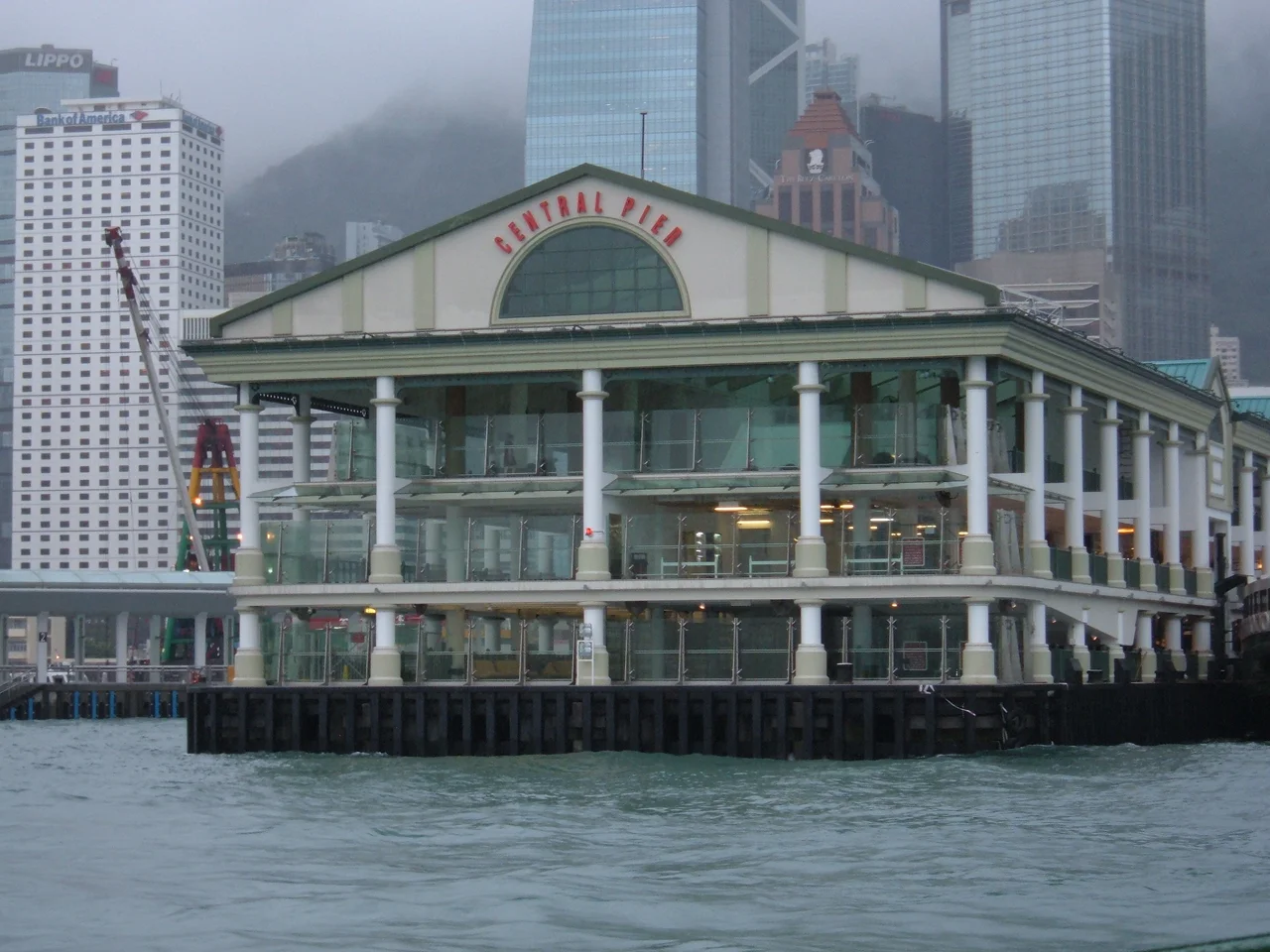

Hong Kong Maritime Museum
In 1810, the Viceroy of the Two Guangs sent an imperial fleet to clear the South China Sea of pirates. The campaign targeted Cheung Po Tsai, Hong Kong's most famous pirate, who commanded fleets that at their peak numbered in the hundreds of ships. A 19th-century ink scroll — Pacifying the South China Sea — recorded what happened. Two centuries later, that scroll hangs in the Hong Kong Maritime Museum, in a purpose-built gallery called the Sea Bandits Gallery, a few metres from a cannon captured from a Chinese imperial fort in 1841 during the First Opium War. The museum is not shy about the violence in its subject matter.
A Building with Its Own History
Central Pier 8 had other lives before the museum moved in. For years it was a Star Ferry terminal, handling the route to Hung Hom; later the eastern side served non-scheduled ferry services. By 2007 it had been taken out of ferry service and designated for restaurants and kiosks. The proposal to convert it into a maritime museum arrived in October 2007 and was accepted by the government. The renovation — a HK$115 million project partly financed by the Hong Kong government — expanded the space to fifteen gallery spaces, more than five times the size of the museum's first home. The final design came from P&T Architects and Engineers, with gallery and interior fit-out by Haley Sharpe Designs and Kingsmen.
From Murray House to Pier 8
The museum did not start at the pier. It opened in 2005 at Murray House in Stanley, one of Hong Kong's colonial landmarks — a 19th-century building that had been dismantled stone by stone and stored in a rural site for over a decade before being reassembled overlooking Stanley Bay. The original collection held more than 500 items and averaged 35,000 visitors a year. The first museum director, Stephen Davies, built the founding collection and negotiated the eventual relocation. By the time the museum reopened at Pier 8 in February 2013, the collection had grown from around 700 items to over 2,000, and the library from 15 books to more than 1,500.
What the Galleries Hold
The fifteen galleries span China's maritime heritage, the Canton Trade system, piracy along the South China coast, Hong Kong's harbour, the evolution of modern shipping, naval warfare, navigation, marine art, and the sounds of the sea. One of the oldest objects is a 2,000-year-old ceramic model ship from the Han dynasty. One of the most recently acquired is the windsurfing sailboard used by Hong Kong's Hayley Chan Hei Man at the 2012 Olympic Games. In between: the Gentiloni Paintings, four works painted in Macau in the late 18th century depicting Macau, Whampoa, Guangzhou, and Zhaoqing, which were acquired by the museum in 2010 after sitting in a Brazilian family's possession for two centuries. The 'General' Cannon, captured at Humen during the First Opium War and later kept at the Tower of London and used as a garden ornament, came to the museum in 2010 by donation.
The Scroll and the Cannon
Two objects anchor the museum's identity. The painted scroll Pacifying the South China Sea chronicles Viceroy Bailing's anti-piracy campaign of 1809–1810, including the Battle of Lantau, in which the imperial navy engaged Cheung Po Tsai's forces. The scroll is considered one of the museum's highlights and is displayed prominently in the Sea Bandits Gallery alongside a digitized version visitors can examine in detail. The 'General' Cannon sits nearby — a large naval artillery piece whose journey from a fort at Humen to the Tower of London to a garden and finally to this gallery is a compressed history of empire and its aftermath. Together, the two objects make the same point in different registers: this harbour has been contested, defended, and fought over for a very long time.
The Rifleman's Bolt
Not every exhibit is about war or trade. The Rifleman's Bolt is a copper spike and a granite plaque, unremarkable to look at. The plaque records the surveying activities of HM Rifleman in 1866, when the vessel used the spike to mark a datum point 17 feet and 10 inches above the surrounding terrain while charting Hong Kong harbour. The exhibit was donated by the Surveying and Mapping Office Training School of the Hong Kong Lands Department. The museum also contains the first modern map of the island of Hong Kong — not identified as such until museum staff recognized it in 2007 — and one of the earliest modern marine chronometers. The collection ranges from the monumental to the technical, from piracy to navigation: all of it, one way or another, about the sea that made Hong Kong possible.
From the Air
The Hong Kong Maritime Museum sits at approximately 22.286°N, 114.162°E at Central Pier 8, on the northern waterfront of Hong Kong Island. From the air, the Central Piers form a distinctive series of terminals along the harbour edge, with the Star Ferry piers among the most recognizable. Hong Kong International Airport (VHHH) lies approximately 30 kilometres to the west-northwest. At 2,000–3,000 feet, the museum's pier location is directly visible as part of the Central waterfront, between the International Finance Centre towers and the Star Ferry terminal. Victoria Harbour, one of the world's great natural deep-water anchorages, extends to the north toward Kowloon.
Nearby Stories
- Lok Ma Chau Loop 2.3 km away
- Portas do Cerco 2.3 km away
- Kweilin Incident 17 km away
- Wanshan Archipelago Campaign 34 km away
- Nanxiong Formation 115 km away
- Battle of Nanpeng Island 148 km away
- Heyuan 169 km away
- Cape Maobitou 632 km away