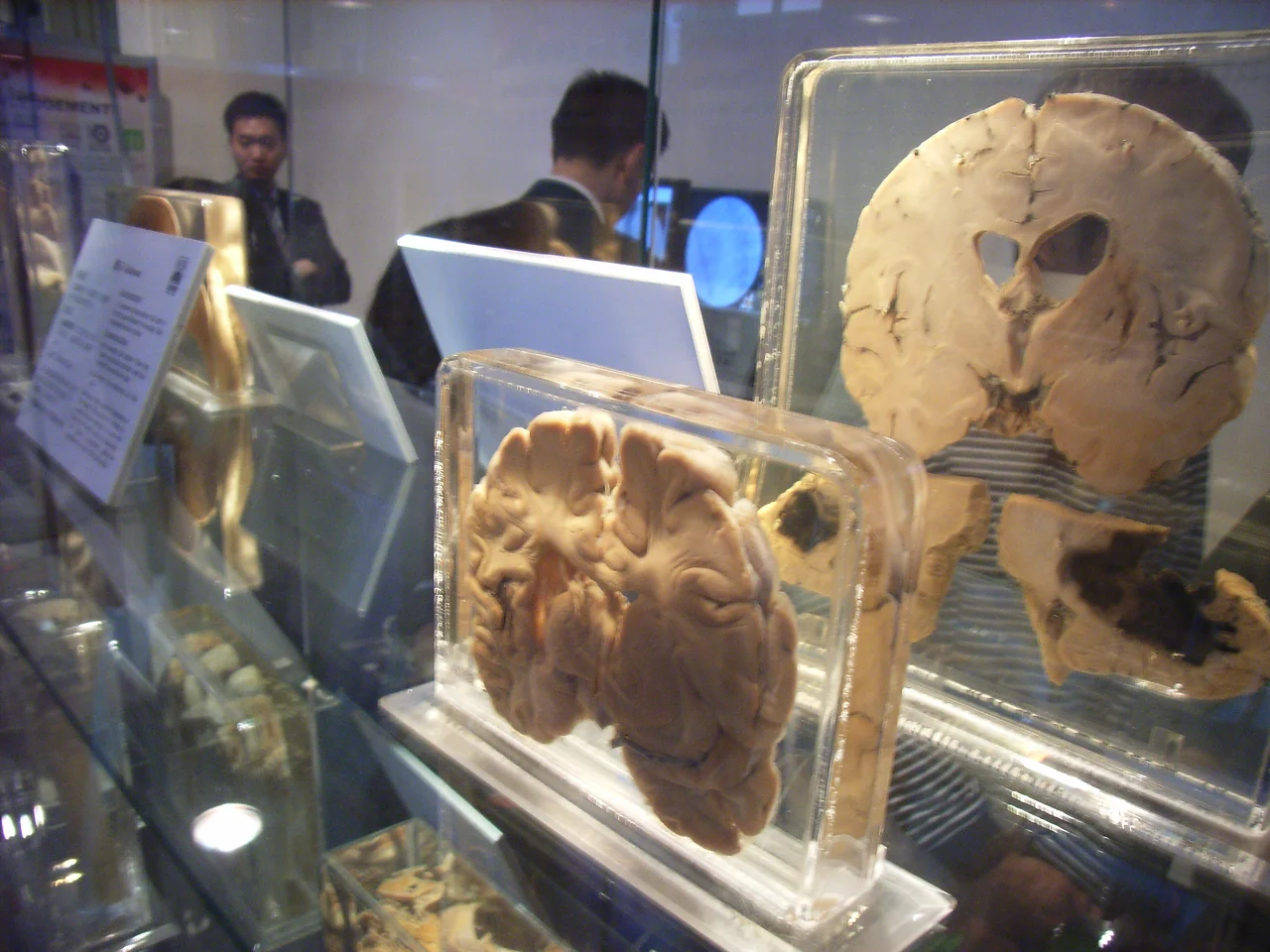

Hong Kong Museum of Medical Sciences
In 1894, bubonic plague swept through Hong Kong, killing roughly 2,500 people in a single year. The colony's response was to build a bacteriological laboratory — the first of its kind in the territory — and the red-brick building that rose on a hillside in Sheung Wan in 1906 was the direct result of that crisis. Today, that same building houses the Hong Kong Museum of Medical Sciences. The plague is long gone, but the building still carries the memory of the city's determination to understand and defeat invisible enemies.
A Building Born from Epidemic
The architects Leigh & Orange designed the Bacteriological Institute in the Edwardian style — red brick, symmetrical facades, the confident solidity of colonial public architecture at its most earnest. It opened in 1906 as Hong Kong's primary site for studying infectious disease. The building comprised three blocks: a main two-storey structure with a basement for laboratory work, a dormitory block for staff, and a third block for keeping the animals used in research. After World War II the institute was renamed the Pathological Institute, reflecting the broader scope its work had taken on. In 1972, as Hong Kong's medical infrastructure expanded, the institute relocated to Victoria Road, and the building on Caine Lane became a storeroom. For nearly two decades it sat quietly, repurposed but not forgotten.
Monument, Then Museum
In 1990 the Hong Kong government declared the building a monument — recognition that its architectural and historical significance outweighed its utility as storage. Five years later, in 1995, it was handed over to the Hong Kong Museum of Medical Sciences Society. After conversion, it opened to the public on 16 March 1996, giving the Edwardian laboratory a third life as a public museum. The transformation preserved the original structure while repurposing the casemates and laboratories into 11 exhibition galleries. A herbal garden was established outside, connecting the building's medical heritage to the Chinese traditional medicine practices that have always run parallel to Western clinical care in Hong Kong.
What Eleven Galleries Hold
The museum occupies 10,000 square feet across three tiers, and its galleries cover the full arc of Hong Kong's medical history. The Lui Hac Minh Gallery addresses the territory's deep familiarity with tuberculosis, which shaped public health policy for most of the 20th century. The Hong Kong College of Radiologists Gallery traces the development of diagnostic imaging. A gallery devoted to the Tung Wah Group of Hospitals tells the story of the charitable medical network that served the Chinese community from the 1870s onward, often in tension with the colonial government's own health agenda. An exhibit on bound feet confronts one of the more painful intersections of tradition and bodily harm, presented without flinching. A game room and the Gordon King Lecture Theatre round out the facilities. Entry is charged at 20 Hong Kong Dollars per person.
Sheung Wan's Hillside Setting
The museum sits at 2 Caine Lane in Sheung Wan, one of Hong Kong Island's older neighbourhoods, where the streets climb steeply away from the harbour toward the Mid-Levels. The building's location on a hillside was not accidental: colonial-era public health thinking placed bacteriological facilities away from dense residential areas, where the risk of contamination could be managed. Today the neighbourhood has layered different histories over each other: dried seafood shops and herbal medicine traders coexist with boutique hotels and art galleries. The red-brick building with its herbal garden stands as one of the most legible remnants of early colonial Hong Kong's institutional landscape. It is a short walk southwest from Sheung Wan MTR station.
From the Air
The Hong Kong Museum of Medical Sciences is located at 22.283°N, 114.149°E on the lower slopes of Hong Kong Island, in the Sheung Wan district west of Central. From the air, the hillside terrain of Hong Kong Island rises sharply from the harbour — the museum sits roughly 400 m inland from the waterfront. Hong Kong International Airport (VHHH) lies approximately 30 km to the west. Recommended viewing altitude: 2,000–4,000 ft approaching from the west along the northern shore of Hong Kong Island. The Victoria Harbour waterfront and the IFC towers in Central provide clear visual orientation.
Nearby Stories
- Lok Ma Chau Loop 2.3 km away
- Portas do Cerco 2.3 km away
- Kweilin Incident 17 km away
- Wanshan Archipelago Campaign 34 km away
- Nanxiong Formation 115 km away
- Battle of Nanpeng Island 148 km away
- Heyuan 169 km away
- Cape Maobitou 632 km away