
Hong Kong Palace Museum
In September 2015, at a gathering in Beijing, a conversation began that would reshape Hong Kong's cultural skyline. Then-Chief Secretary Carrie Lam floated an idea: a museum in Hong Kong displaying treasures from the Palace Museum — the institution that guards the imperial collections of the Forbidden City. Within fourteen months, a HK$3.5 billion donation from the Hong Kong Jockey Club Charities Trust had been secured, a cooperation agreement signed, and the announcement made public. The city found out on 23 December 2016. No one had been asked.
A Building Shaped Like an Offering
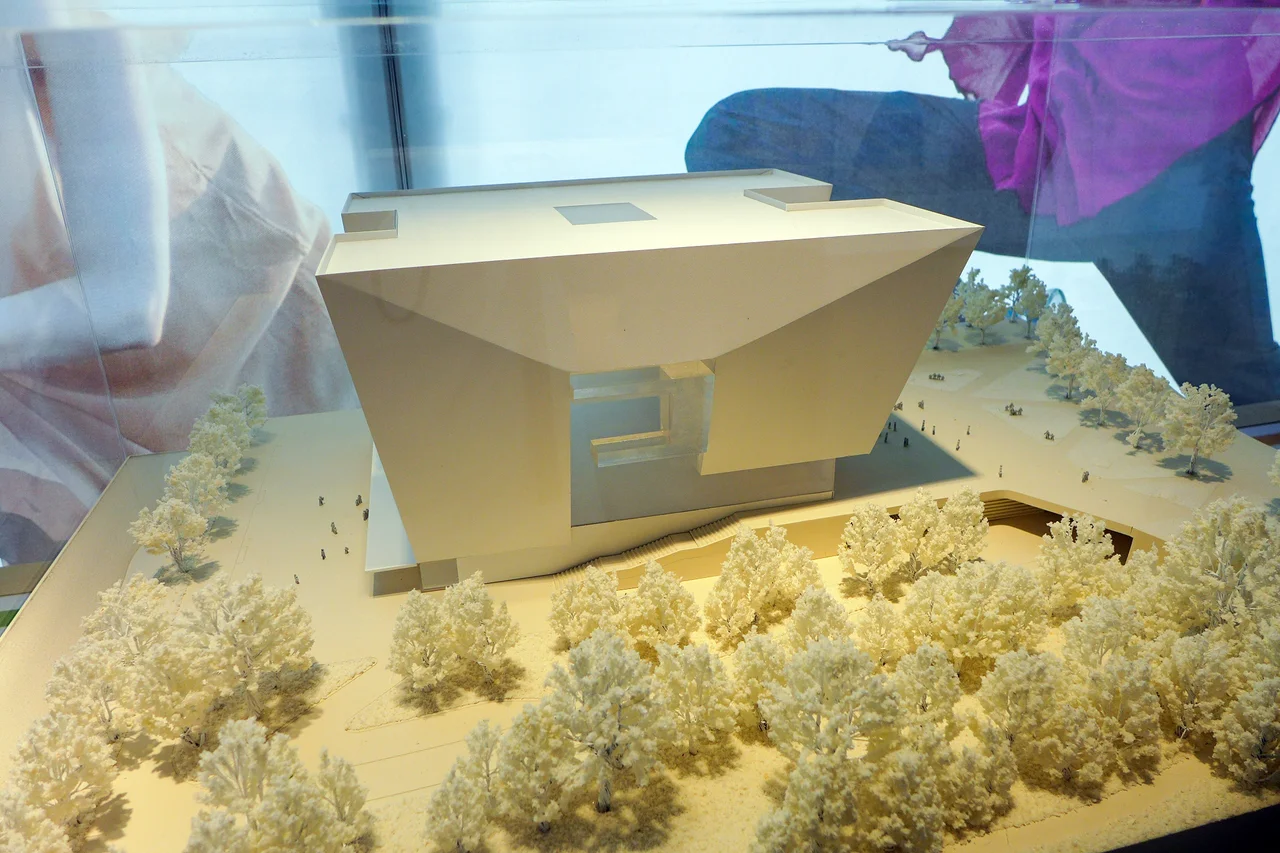
The Hong Kong Palace Museum sits at the western edge of the West Kowloon Cultural District, where reclaimed land meets Victoria Harbour. Rocco Design Architects gave it a form unlike anything in the city's glassy skyline: a tiered tower whose silhouette is drawn from Chinese bronze ding cauldrons — the ritual vessels once used at imperial ceremonies — and from sycee, the boat-shaped silver ingots that circulated as currency through dynastic China. The building's shape is both archaic and futuristic, deliberately unlike its parent institution in Beijing. At 328,000 square feet, it rises with a wide base that steps inward as it climbs, catching light differently at different hours of the day.
What the Walls Hold
The museum exhibits artifacts on loan from the Palace Museum in Beijing — the same collection that fills the Forbidden City, one of the largest repositories of Chinese imperial art in the world. Paintings, ceramics, bronzes, calligraphy, jade, lacquerware: the objects that moved through dynastic courts for centuries now travel south to be displayed within sight of Victoria Harbour. The museum opened on 2 July 2022, timed to the 25th anniversary of Hong Kong's handover to China. Digital immersive exhibitions run alongside the physical galleries, wrapping visitors in projections drawn from imperial paintings.
The Argument That Wouldn't Quiet
Few cultural institutions have opened in Hong Kong amid such sustained debate. The announcement in December 2016 drew immediate criticism — not over the museum's content, but over the process. There had been no public consultation on whether the project should proceed at all. The six-week consultation the government subsequently launched only invited views on design and operation, not on the fundamental question of whether to build. Legislator James To called the opacity "absolutely inappropriate." Critics argued the museum was a political act — an effort to deepen Beijing's cultural presence in Hong Kong, to use imperial heritage as a vehicle for patriotism. Others simply resented being excluded from a decision of this scale. The museum opened anyway, and draws steady crowds.
Context Across the Water
Sitting at the Kowloon waterfront, the Hong Kong Palace Museum faces Hong Kong Island across the harbour. The financial towers of Central are visible on clear days, and the Peak rises behind them. The West Kowloon Cultural District that surrounds the museum is still taking shape — a long-planned arts precinct built on reclaimed land, designed to position Hong Kong as a regional cultural hub. The Palace Museum occupies its western terminus, bookending a district that also includes the M+ contemporary art museum, which opened in 2021. Together they represent an assertion: that Hong Kong remains a place where world-class culture is made and displayed.
From the Air
The Hong Kong Palace Museum is located at 22.3021°N, 114.1556°E in the West Kowloon Cultural District, at sea level on reclaimed land at the western edge of Victoria Harbour. From the air at 3,000 feet, the distinctive tiered building is visible on the Kowloon waterfront, west of the densely packed towers of Tsim Sha Tsui. The nearest airport is Hong Kong International (VHHH), approximately 25 nautical miles to the southwest on Lantau Island. Victoria Harbour and the glittering skyline of Central on Hong Kong Island form the backdrop to the east.
Nearby Stories
- Lok Ma Chau Loop 2.3 km away
- Portas do Cerco 2.3 km away
- Kweilin Incident 17 km away
- Wanshan Archipelago Campaign 34 km away
- Nanxiong Formation 115 km away
- Battle of Nanpeng Island 148 km away
- Heyuan 169 km away
- Cape Maobitou 632 km away