
Hong Kong Space Museum
In 1974, the Urban Services Department of Hong Kong signed a contract with the Carl Zeiss Company for HK$3,050,000 worth of planetarium equipment. The agreement was a statement of ambition: Hong Kong, then still a British colonial city focused on trade and manufacturing, would build a world-class astronomy museum on the Tsim Sha Tsui waterfront. Construction began in 1977. The building that emerged — a white, egg-shaped dome rising beside the harbor — became one of the most recognizable silhouettes on the Kowloon peninsula.
The World's First Computerized Planetarium
When the Hong Kong Space Museum opened on 8 October 1980, it contained what was then the world's first computerized planetarium. The Stanley Ho Space Theatre, housed in the museum's distinctive dome, could project 8,000 stars onto its hemispherical screen using a star imager that operated on optical principles. For a city better known for its harbor and its markets, it was an unlikely distinction. The idea had originated nearly two decades earlier, in 1961, when the Urban Council first proposed a planetarium. A working group studied overseas models in the early 1970s. The government appointed Joseph Liu as Planetarium Advisor. Slowly, methodically, Hong Kong built something genuinely new. In the 2008–2009 financial year, the museum received approximately 590,000 visits.
The Dome's Second Life
In November 2008, the museum spent HK$34 million on the first major overhaul of its planetarium since opening. The centerpiece of the renovation was a digital projection system manufactured by American company Sky-Skan Inc, boasting a resolution of over 53 million pixels — a specification matched globally, at the time, only by the Beijing Planetarium. The 300 seats were replaced with reclining chairs equipped with multilingual interactive headsets: viewers could send messages to each other, play real-time games, and survey the simulated sky not just from Earth's surface but from the surfaces of other planets. The system could also recreate celestial scenes from any point in the past. The renovation closed the planetarium from November 2008 to July 2009. Another renovation followed in 2015–2018, refurbishing the exhibition halls at a cost of HK$32 million. By May 2020, even the dome projection screen had been replaced to improve image quality.
From Meteorites to Minor Planets
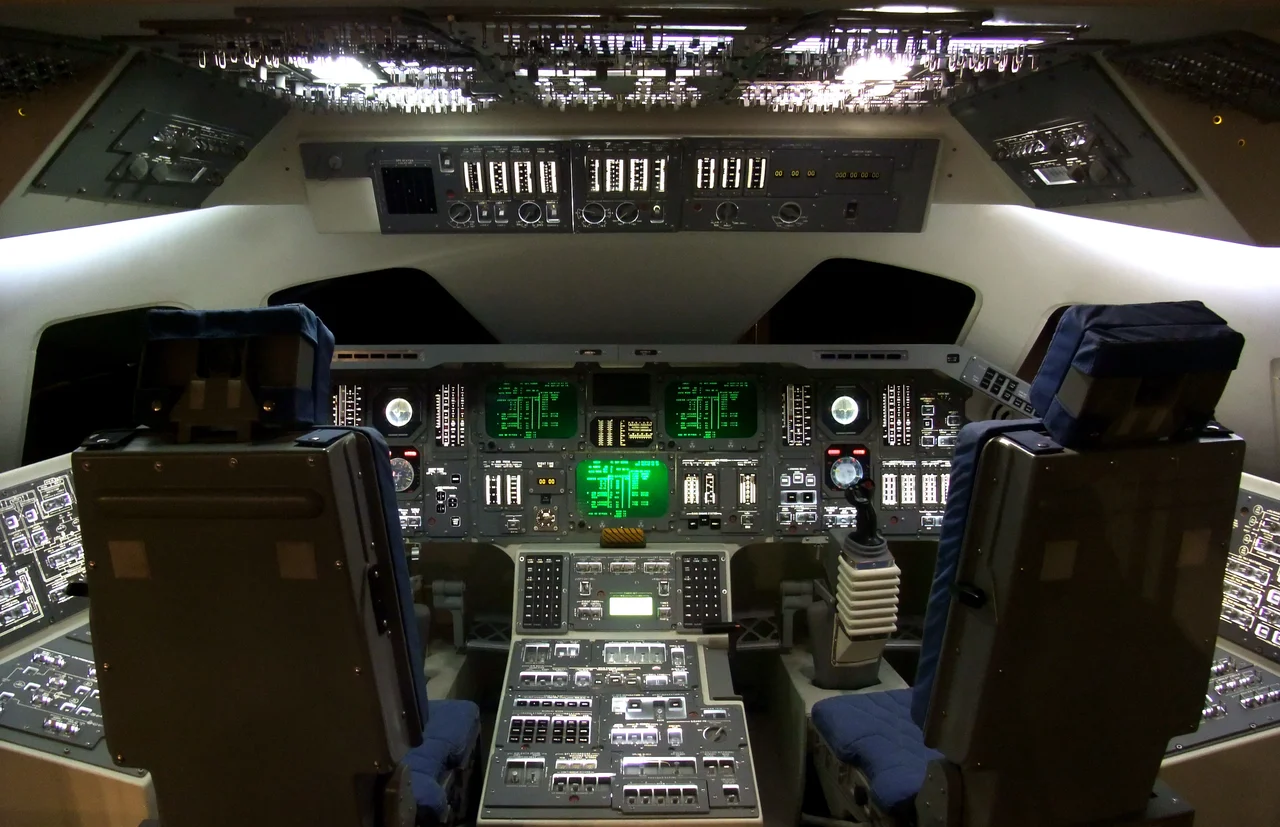
Beyond the planetarium, the museum's collection has grown in unexpected directions. From 1981 onward, it acquired meteorites — iron meteorites, pallasites, and tektites — that visitors can examine up close. In 1983, the museum obtained an Indian astrolabe, a medieval astronomical instrument used for measuring the altitude of celestial bodies. In May 2000, a Hong Kong flag that had traveled inside Shenzhou 1 — China's first unmanned Shenzhou spacecraft — was placed on display. That July, the museum added the certificate designating Minor Planet 3297 as 'Hong Kong.' A 1:1 scale mock-up of the nose and cockpit section of a Space Shuttle orbiter was also on display for years, though it was removed during the 2015 renovation. The collection traces a particular arc: from ancient navigational tools to the leading edge of Chinese space exploration.
A Night of Laser Pointers
On 6 August 2019, Keith Fong Chung-yin, then president of Hong Kong Baptist University's student union, was arrested by undercover police in the Sham Shui Po neighborhood. He had been buying laser pointers. The police argued that the pointers, which had a power output of 100 milliwatts, could qualify as weapons; Fong said he wanted them for stargazing. The following evening, thousands of people gathered outside the Space Museum to protest what they called an arbitrary arrest. They shone their laser pointers at the walls of the Stanley Ho Space Theatre and the trees in front of it, turning the protest into an impromptu stargazing event. They sang songs and called the museum — home to telescopes and dark skies — a natural venue for exactly the kind of activity for which Fong had been detained. It was among the more surreal nights in the museum's four-decade history, and part of the wider 2019–2020 protests that changed Hong Kong's political landscape permanently.
Criticisms and Continuity
The museum has not been without its troubles. A 2006 satisfaction survey among visitors to the seven museums managed by the Leisure and Cultural Services Department ranked the Space Museum last, at 76.1% for general satisfaction. In 2014, an inspection found that a 1990s satellite program was described as a future endeavor, and Pluto — reclassified from planet to dwarf planet in 2006 — remained on the Solar System model as a full planet. Four months after the 2018 renovation reopened, another inspection found that 64% of the new interactive exhibits had already needed repair, despite HK$400,000 having been spent on maintenance. The museum sits in a remarkable location — adjacent to the Hong Kong Cultural Centre, the Museum of Art, and the historic Tsim Sha Tsui Clock Tower, within walking distance of both the Tsim Sha Tsui MTR station and the Star Ferry Pier. Whatever its operational frustrations, the dome on the waterfront remains one of Hong Kong's most distinctive structures.
From the Air
The Hong Kong Space Museum sits at 22.2944°N, 114.172°E on the Kowloon peninsula's southern tip in Tsim Sha Tsui. From the air approaching VHHH (Hong Kong International Airport) from the northeast, the egg-shaped white dome is visible along the Salisbury Road waterfront, flanked by the rectangular Hong Kong Cultural Centre and the adjacent Clock Tower. Best observed below 3,000 feet on approach from the northeast over Victoria Harbour. The museum's distinctive hemispherical profile distinguishes it clearly from surrounding rectangular buildings.
Nearby Stories
- Lok Ma Chau Loop 2.3 km away
- Portas do Cerco 2.3 km away
- Kweilin Incident 17 km away
- Wanshan Archipelago Campaign 34 km away
- Nanxiong Formation 115 km away
- Battle of Nanpeng Island 148 km away
- Heyuan 169 km away
- Cape Maobitou 632 km away