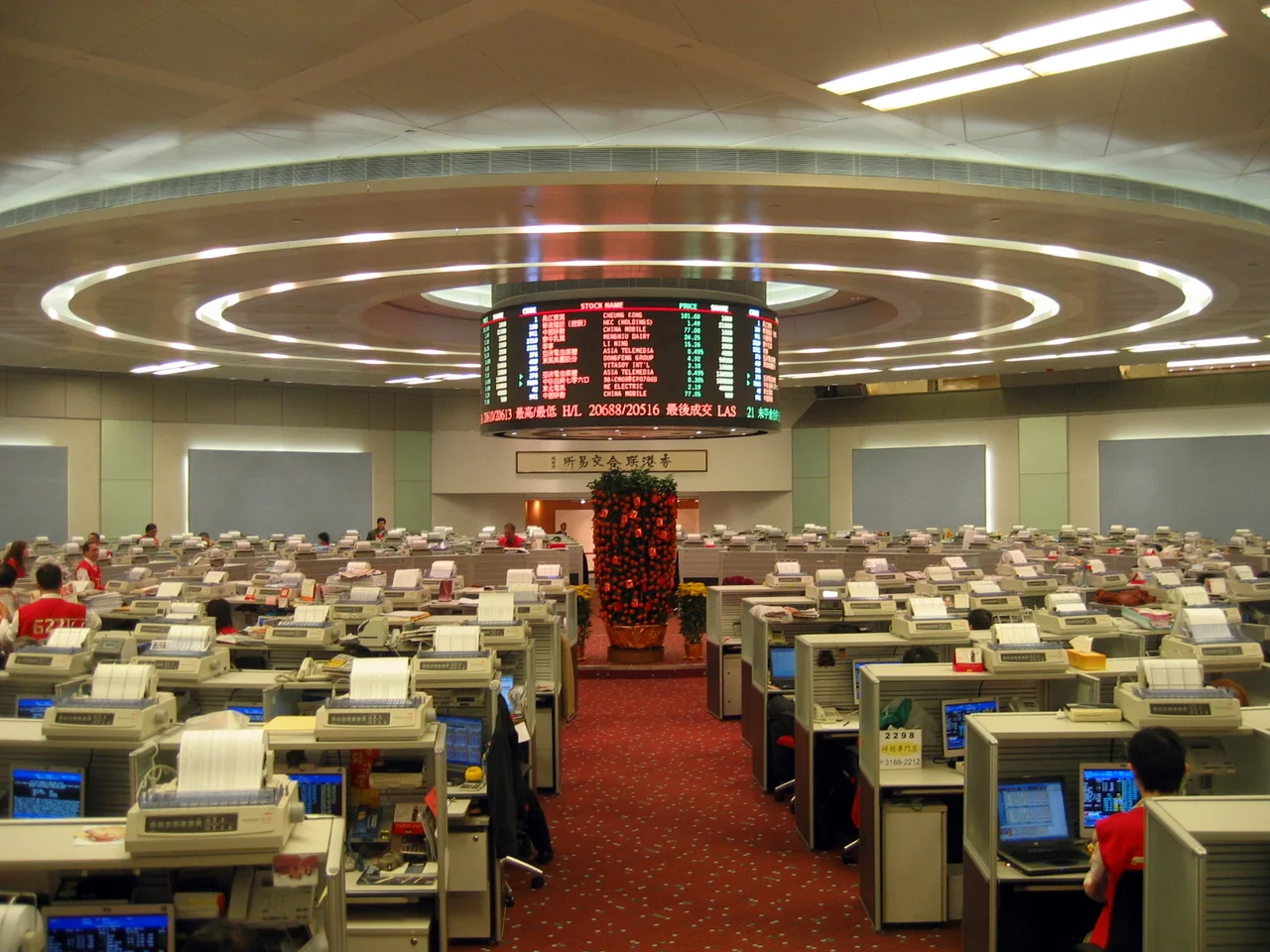

Hong Kong Stock Exchange
At 9:00 every weekday morning, a pre-opening auction session begins at the Hong Kong Stock Exchange. Prices discover themselves in the nineteen minutes before the opening bell. By 9:30 the main session is running. The process is unremarkable — until you consider that it has been running, in some form, since 1891, when a group of brokers in a colonial port city decided that Asia needed a formal market. They were right.
From Colonial Counting House to Global Exchange
The Hong Kong Stock Exchange was established in 1891, making it one of the oldest in Asia. It grew through Hong Kong's transformation from a trading entrepôt into a regional financial center, survived the Japanese occupation during the Second World War, and expanded dramatically in the decades following the establishment of the People's Republic of China on the mainland — precisely because Hong Kong offered a market where capital could move with relative freedom. By the late 20th century, the exchange had consolidated several competing markets into a single operator. In 2000, the Hong Kong Exchanges and Clearing company (HKEX) was formed through the merger of the Stock Exchange of Hong Kong, the Hong Kong Futures Exchange, and their joint clearing houses. HKEX listed on its own exchange the same year. It has since grown into one of the largest exchange operators in the world by market capitalization.
The Two-Hour Lunch
For most of its modern history, the exchange maintained a two-hour midday break between its morning and afternoon trading sessions. This was the longest lunch break among the world's twenty major stock exchanges — a fact that became, over time, both a quirk and a source of genuine controversy. In 2003, a proposal to shorten it failed due to opposition from brokers. By 2010, the exchange was trying again, partly to align trading hours with the mainland Chinese markets. Reactions from brokers were mixed. Reactions from the restaurant industry, which had built its weekday lunch business around the break, were even more so. On 7 March 2011, the exchange shortened the break in two phases. The morning session ran from 9:30 am to noon. The afternoon session began at 1:30 pm. A second phase on 5 March 2012 cut the break to sixty minutes, with the afternoon session starting at 1:00 pm. The two-hour lunch was gone.
Electronic Trading and the End of the Floor
The exchange introduced its first computer-assisted trading system on 2 April 1986. In 1993, it launched the Automatic Order Matching and Execution System (AMS), which was replaced by the third-generation system, AMS/3, in October 2000. Floor trading — the physical trading hall where brokers stood, shouted, and gestured — ended in October 2017. Traders gathered to mark the occasion, a ritual farewell to a way of doing business that had defined the exchange's character for generations. The trading hall was subsequently renovated and reopened in February 2018 as the Connect Hall: a gleaming space used for ceremonies, listings, and investor events rather than the execution of trades. The exchange now operates entirely electronically, its data processed in a purpose-built data center in Tseung Kwan O that opened in January 2013.
The Giants of the Hang Seng
The companies listed on the exchange reflect the particular character of Hong Kong's position between East and West. As of 2018 data, the largest stock by market capitalization was Tencent Holdings at approximately HK$4.1 trillion. Behind it stood the great Chinese state banks — Industrial and Commercial Bank of China, China Construction Bank, Bank of China — alongside PetroChina and HSBC Holdings, the Hong Kong-founded bank that has operated since 1865. The Hang Seng Index, which tracks the exchange's largest companies, is the most widely followed measure of Hong Kong's market health. The index's composition tells the story of how Chinese enterprise came to dominate what was once a predominantly British colonial financial system. HKEX has also served as the primary offshore listing venue for Chinese companies seeking international capital — an arrangement that made the exchange indispensable to China's economic integration with the world.
The Regulatory Question
The exchange has long faced a structural tension between its commercial interests and its regulatory role. David Webb, an independent non-executive director of the exchange from 2003 to 2008, argued publicly and persistently for a separate super-regulatory authority to take over the exchange's oversight functions, noting that the inherent conflict between running a profit-driven exchange and regulating its own members was unlikely to be resolved internally. The argument was not unique to Hong Kong — exchanges worldwide have faced the same question as demutualization and commercialization changed their character. In 2007, the board of directors voted to cut minimum trading spreads for certain equities and warrants. Smaller brokers erupted. The board reversed the decision. Webb criticized the reversal as capitulation to vested interests. The tension between market efficiency and broker protection remains a recurring theme in the exchange's governance. At its heart, the Hong Kong Stock Exchange is what it has always been: a marketplace where trust, regulation, and self-interest negotiate terms.
From the Air
The Hong Kong Stock Exchange's trading infrastructure is centered at Exchange Square in Central, Hong Kong Island, at approximately 22.284°N, 114.158°E. The Exchange Square complex — three cylindrical towers of grey and pink granite rising above the waterfront — is visible on approach to VHHH (Hong Kong International Airport) from the northeast. Passing over Central at 3,000–5,000 feet, the towers are distinguishable by their circular footprints and harbor-facing position. The financial district occupies the western edge of Hong Kong Island's north shore between Sheung Wan and Wan Chai.
Nearby Stories
- Lok Ma Chau Loop 2.3 km away
- Portas do Cerco 2.3 km away
- Kweilin Incident 17 km away
- Wanshan Archipelago Campaign 34 km away
- Nanxiong Formation 115 km away
- Battle of Nanpeng Island 148 km away
- Heyuan 169 km away
- Cape Maobitou 632 km away