.jpg)
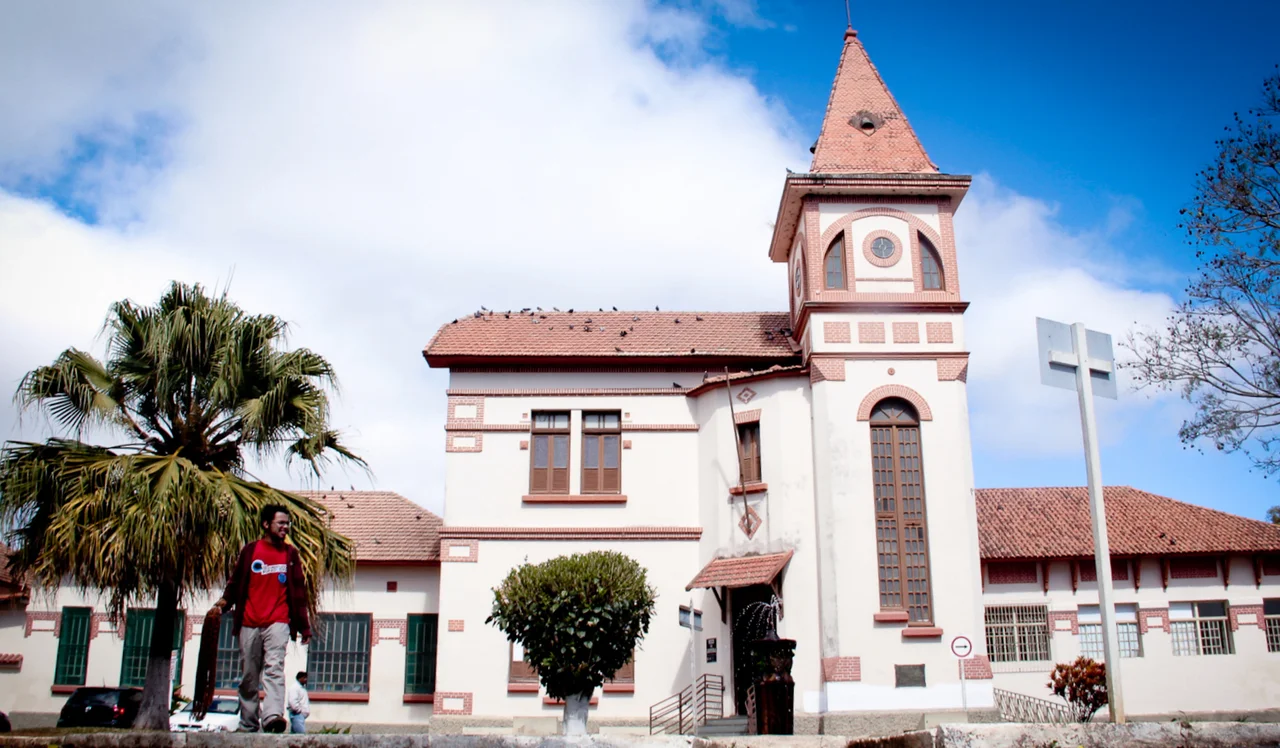
Hospital Colônia de Barbacena
The journalist Daniela Arbex spent four years interviewing survivors, reading institutional records, and walking the grounds of Hospital Colônia de Barbacena before publishing O Holocausto Brasileiro in 2013. Her book put names back onto what had been lost as statistics. Sixty thousand people died at the Colônia between 1903 and 1980. Most of them were never mentally ill. They were homeless men, epileptic children, women whose families wanted them hidden, Black Brazilians whom the local elite found inconvenient, gay people, shy people, women who had been raped and were thus deemed unmarriageable. They were sent by train to the small city of Barbacena in the Mantiqueira Mountains, and most of them never came back. The Italian psychiatrist Franco Basaglia visited in the 1970s and compared what he saw to a Nazi concentration camp. The comparison was contested at the time. Then Arbex's book arrived, and the survivors spoke, and the comparison became harder to reject.
The Crazy Train
Barbacena is 164 kilometers from Belo Horizonte by road. In the first decades of the 20th century it was reachable mainly by rail, and the trains that brought patients to the Colônia ran often enough that a regional expression entered Minas Gerais Portuguese: trem de doido, the crazy train. In 1972 the musician Lô Borges wrote a song of that title for Clube da Esquina, the landmark album he made with Milton Nascimento, and the song's title explicitly referenced the Barbacena trains. Families put relatives on these trains, sometimes unwillingly. Police put homeless men on them. Husbands put unfaithful wives on them. The sending was often a one-way transaction. Once someone arrived at the Colônia's capacity-of-200 wards — capacity that would swell to 5,000 at the institution's worst — the institutional machinery that could send them home rarely engaged.
Who the Patients Actually Were
Daniela Arbex's research, along with earlier institutional studies, found that more than 70% of the people confined at the Colônia had never been diagnosed with any mental illness. They were there because someone wanted them there. The institutional records catalog the reasons: alcoholism, epilepsy, homosexuality, homelessness, unwanted pregnancy, lost virginity, political inconvenience, simple shyness in men, perceived assertiveness in women. A significant proportion of the patients were of African ancestry, which was not an accident in a city and state where the racial politics of the early 20th century were particularly harsh. The records also show children: epileptic children who had been rejected by families who did not understand the condition, orphaned children, children born out of wedlock whose mothers lacked the resources to keep them. These were the people who filled the wards. Most of them knew, once they understood where they were, that they had been delivered to a place they would not leave.
What the Wards Contained
By 1960 the Colônia was operating at 25 times its design capacity. Patients who the hospital was meant to house with clothing and beds and meals were instead naked or nearly naked, sleeping on cold concrete floors, drinking from troughs. At least 16 people died every day from a combination of preventable causes: untreated illness, starvation, hypothermia from cold-water bathing used as treatment, cardiac arrest during electroconvulsive therapy administered without consent or adequate medical oversight, and in many documented cases, deliberate killing. The staff sold some bodies to medical schools as cadavers; others were dissolved in acid in onsite pits, or buried on the grounds. These facts are not folklore. They come from institutional records, survivor testimony compiled by Arbex, and the work of investigative journalists and psychiatric reformers who forced the hospital's closure in the late 1970s.
The People Who Got Out
Arbex's book centers on survivors — the people who lived through the Colônia and came out to tell what had happened. Some had been children when they arrived. A woman named Sueli was sent to the hospital as an infant; by the time the anti-asylum movement extracted the survivors in 1980, she had spent her entire conscious life inside its walls. A man named Eli — whose face became one of the most reproduced photographs of the Colônia — stared out from Arbex's book pages with the flat, unmistakable expression of someone who had survived something most humans do not survive. The Brazilian anti-asylum movement, inspired partly by Basaglia's reform work in Italy, pushed through the legal changes that closed the institution. Indemnification was paid to some survivors. It arrived decades too late, for far too few, and in amounts that could not restore any of what had been taken. The acknowledgment mattered anyway. It was the first time the state said, in writing, that what had happened was wrong.
Museum of Madness
In 1996 the remaining hospital buildings became the Museu da Loucura, the Museum of Madness, a Brazilian psychiatric museum run now as a site of memory. Visitors can see wards where people died, photographs taken during the institution's operation, objects used by patients, and the testimony archives Arbex and her colleagues assembled. The museum exists for the reason Holocaust memorials exist: because forgetting is easier than remembering, and because the descendants and neighbors of the people who died deserve a place to go and a record to find. Brazilian popular culture has continued to return to the Colônia story. A documentary also titled O Holocausto Brasileiro appeared in 2016. A drama series called Colônia ran on Canal Brasil and Globoplay, following a young pregnant woman forced into the institution during the military regime. The Joker anthology from DC Comics featured a Brazilian-written chapter in which the Joker visits an Arkham franchise called Arkham Colonia and meets a barber who has worked at the real one. The fictionalization is a form of witness. The real site stays open. The 60,000 remain.
From the Air
Located at 21.20°S, 43.79°W on a hillside in Barbacena, Minas Gerais, in the Serra da Mantiqueira at roughly 1,160 m elevation. The nearest commercial airports are Juiz de Fora (SBJF) about 100 km southeast and Belo Horizonte's Confins International (SBCF) about 165 km north. From cruising altitude the region appears as rolling green mountains. Barbacena sits along the BR-040 highway between Rio de Janeiro and Belo Horizonte. The former hospital complex, now the Museu da Loucura, can be identified by its large institutional footprint on the city's north side.
Nearby Stories
- Santos Dumont, Minas Gerais 23 km away
- Ubá 32 km away
- Viçosa, Minas Gerais 42 km away
- Crucilandia 60 km away
- Leopoldina, Minas Gerais 63 km away
- Inconfidência Mineira 64 km away
- Our Lady of the Rosary Church, Lavras 73 km away
- Visconde de Mauá, Resende 102 km away