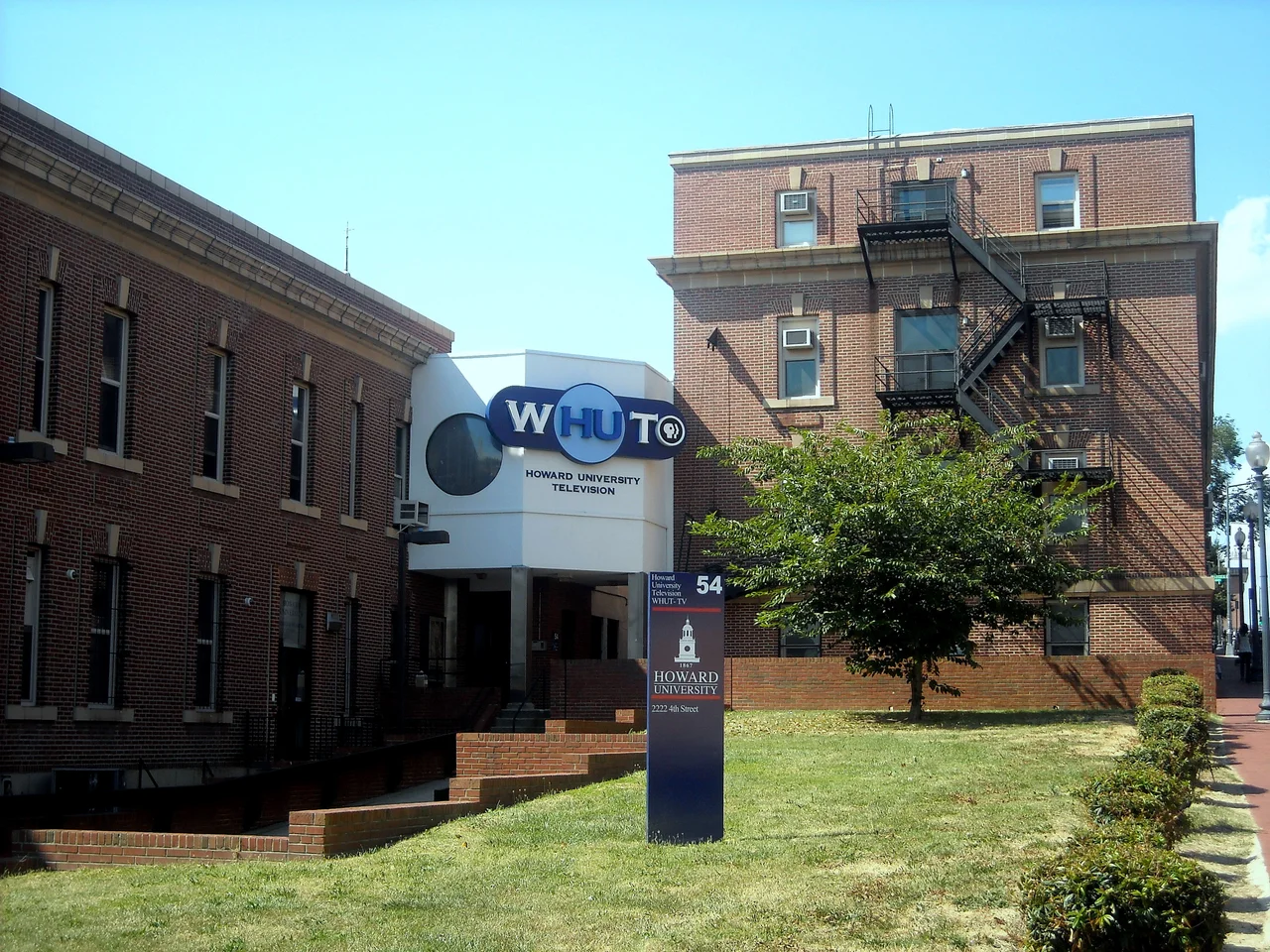

Howard University
Toni Morrison studied here. So did Thurgood Marshall, Vernon Jordan, Stokely Carmichael, Ta-Nehisi Coates, Kamala Harris, and Zora Neale Hurston. The Howard University campus on Georgia Avenue NW in Washington, the institution alumni and students call simply the Mecca, has produced more Black American doctors, lawyers, and Ph.D. holders than any other single institution in the country over the past 160 years. Howard was federally chartered in March 1867, just two months after the founding of the Freedmen's Bureau hospital that became its medical center, and one year after a Civil War-era Congregational meeting decided that the recently emancipated Black population of the United States needed access to higher education. The university that grew up around that decision is now the only historically Black college or university classified by the Carnegie Foundation as an R1 doctoral research institution.
From Freedmen's Bureau
Howard's founding emerged directly from Reconstruction. A group of Congregationalist ministers in Washington proposed in 1866 to establish a theological seminary to train Black ministers. By the time the charter was drafted and submitted to Congress, the proposal had grown into a fully fledged university with departments in theology, law, medicine, and the liberal arts. Major General Oliver Otis Howard, the head of the Freedmen's Bureau and a hero of the Civil War, was a founding trustee. The university was named for him. Congress chartered the school on March 2, 1867. The first classes met that same year. Within a decade Howard had established the medical school (1868), the law school (1868), and an academic college producing graduates for teaching, ministry, and the professions. The federal charter allowed the school to receive direct annual appropriations from Congress, an unusual status that it has maintained ever since. Howard is the largest single private recipient of federal funds among American universities.
Mordecai Johnson and the Modern University
By the 1920s Howard had stalled. It was still a respectable institution but had not kept pace with the growing demands placed on Black higher education by the migration of African Americans to cities and by the rise of professional licensing requirements. In 1926 Howard's board hired Mordecai Wyatt Johnson, a thirty-six-year-old Baptist minister from West Virginia, as the first Black president of the institution. Johnson held the position for thirty-four years, until 1960. He restructured the schools, rebuilt the faculty, modernized the curriculum, and recruited a generation of Black scholars whose research dominated American academia: Carter G. Woodson in history, Charles Hamilton Houston in law, E. Franklin Frazier in sociology, Alain Locke in philosophy (the first Black Rhodes Scholar), Charles Drew in medicine (who developed the blood-banking techniques used by the Allied medical services in World War II), Mercer Cook in language and literature. Howard under Johnson became the intellectual center of Black America.
The Strategy for Brown
Charles Hamilton Houston came to Howard's law school as vice dean in 1929 and took it from a part-time night program to a fully accredited institution with the explicit mission of training a Black bar capable of dismantling segregation. Houston taught Thurgood Marshall, Spottswood Robinson III, Oliver Hill, James Nabrit Jr., and dozens of other lawyers who would litigate the civil rights cases of the 1940s, 1950s, and 1960s. The litigation strategy that prevailed in Brown v. Board of Education (1954) was Houston's strategy. Marshall, the lead attorney, was Houston's student. The Howard law faculty drafted briefs, ran mock arguments, taught the case in classrooms, and watched as their work transformed American constitutional law. Howard medical students treated Marcus Garvey. Howard nursing students staffed the National Negro Health Movement clinics. The intellectual labor that powered the long civil rights revolution was, to a significant extent, performed on the Howard University campus.
Stokely and Toni
By the 1960s Howard had become a center of the Black student movement that would help reshape American politics. Stokely Carmichael graduated in 1964 and immediately joined the Student Nonviolent Coordinating Committee, where he served as chairman during the period when SNCC made the historic transition from nonviolent integrationism toward Black Power. His Howard contemporaries and successors included Kwame Ture (the same person under a later name), Bob Moses, and many of the SNCC field organizers who registered voters in Mississippi and Alabama. Howard students protested the Vietnam War, demanded curriculum reforms, and in March 1968 occupied the administration building for several days in what became the model for similar takeovers at HBCUs across the South. Toni Morrison, who graduated from Howard in 1953 and later taught there, used the campus as a setting and a touchstone in her novels. Ta-Nehisi Coates, who studied at Howard in the 1990s and called it the Mecca in his book Between the World and Me, has done more than any contemporary writer to introduce the Howard ethos to a national readership.
Today
Howard now enrolls about ten thousand students from across the United States and from more than a hundred countries. The university operates twelve schools and colleges including medicine, dentistry, law, business, divinity, communications, engineering, and pharmacy. The Howard University Hospital remains the only Level I trauma center in the inner city of Washington, the direct descendant of the Freedmen's Bureau Hospital that predated the university itself. The 256-acre main campus in the Shaw and LeDroit Park neighborhoods of northwest Washington is a National Historic District. Vice President Kamala Harris (A.B. 1986) is among the most prominent recent graduates; she earned her law degree from UC Hastings College of the Law. Howard's federal annual appropriation supports about a third of the operating budget. The endowment, while small for an R1 university, has grown rapidly in the past decade. The Mecca is still the Mecca.
From the Air
Howard University is at 38.9223 degrees north, 77.0193 degrees west, in northwest Washington, just north of the Shaw neighborhood and east of Columbia Heights. Best viewed at 1,500 to 2,500 feet AGL with Georgia Avenue running north-south through campus. Reagan National (KDCA) is five nautical miles south. The site sits inside the P-56 prohibited area; viewing is from authorized riverside approaches.
Nearby Stories
- Gunston Hall 1.1 km away
- 2023 Baltimore Shooting 4.9 km away
- Battle of Middleburg 6.6 km away
- Crownsville Hospital Center 10 km away
- Battle of Loudoun Heights 13 km away
- First Battle of Rappahannock Station 20 km away
- Howard County, Maryland 21 km away
- Harriet Tubman Underground Railroad 50 km away