
Ilias Lalaounis Jewelry Museum
Ilias Lalaounis came from a family of goldsmiths who traced their craft back to Delphi, four generations deep. But the techniques the ancient Greeks had used to make gold shimmer, granulation, filigree, the hammered surfaces that catch light like water, had largely been forgotten. So in the 1950s, in a postwar Athens still picking itself up, Lalaounis spent countless hours studying museum artifacts until he and his craftsmen could reproduce what they saw. The museum that now bears his name occupies the very building where that work happened, two adjoining houses tucked into the southern slope of the Acropolis, holding more than three thousand of the pieces he designed.
The Building Was the Workshop
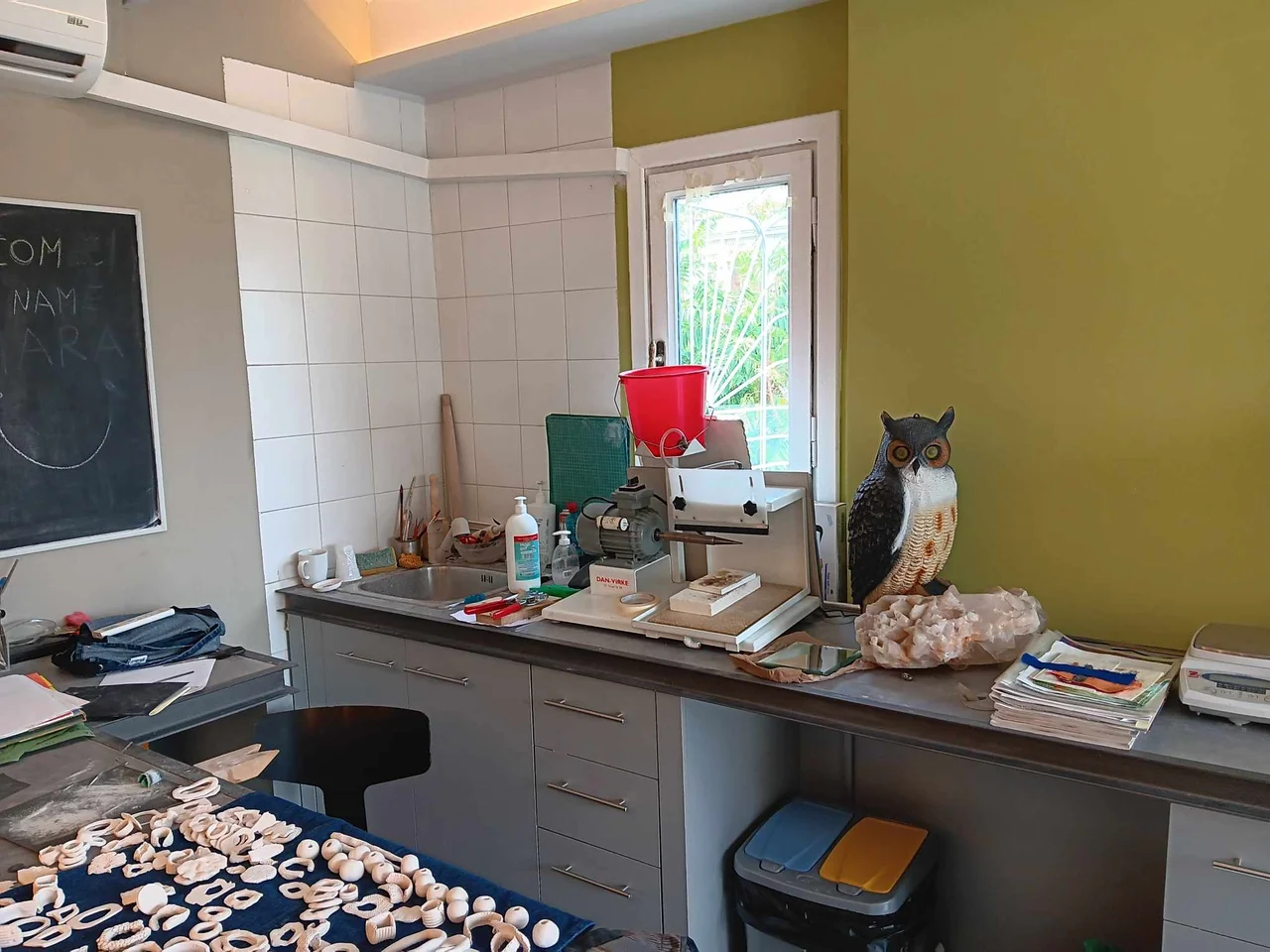
The museum lives in two connected buildings near the corner of Karyatidon and Kallisperi streets. The larger one, at 12 Kallisperi Street, belongs to the Athenian modernist movement of the 1930s, and from 1968 until the museum opened it held the workshops of Ilias Lalaounis Greek Gold, the first modern jewelry workshops in Greece. The benches where artisans once bent over flames and gold wire now hold display cases. The smaller building facing Karyatidon Street, an Art Deco house from the 1920s, was Lalaounis's own home before it became the museum's offices and research library. The whole complex was renovated in 2003 and 2004, working from plans by the French architect Bernard Zehrfuss.
Reviving a Lost Art
Lalaounis, born in Athens in 1920, studied economics and law before committing his life to the family trade. His ambition was unusual: not to imitate antiquity with cheap reproductions, but to revive its genuine methods. After analyzing collections across Greece's museums, he and his team mastered hammered gold, granulation, repoussé, and filigree, then paired those ancient skills with modern tools. In 1957 he unveiled his first Archaeological Collection, drawing on Classical, Hellenistic, and Minoan-Mycenaean art. In 1990 the Académie des Beaux-Arts in Paris inducted him as a member, the first and only jeweler ever to receive the honor. He died in 2013, at ninety-three.
Fifty Collections in Gold
The permanent exhibition gathers more than four thousand jewelry pieces and micro-sculptures from fifty collections, all designed by Lalaounis between 1940 and 2002. Some draw on prehistoric art, others on Ancient Greece or the architecture of Byzantium. Fifteen world cultures appear among the designs, alongside collections inspired by nature and even by technology. There are special commissions too, an Olympic torch, ceremonial swords, objects made for a single occasion. Walking the two levels of the exhibition is less a tour of a jewelry shop than a tour of how one obsessive craftsman saw human history, retold entirely in gold.
A Museum Meant to Teach
Lalaounis insisted the museum's first mission be education, not display. It runs programs for schoolchildren from preschool through high school, for adults, and for special-interest and special-needs groups, along with lectures, seminars, and hands-on workshops in jewelry and the decorative arts. University students can apply for internships. The research library holds more than five thousand volumes, some of them rare, covering jewelry, art history, folk art, design, photography, and architecture, and it opens to the public by appointment. Fittingly for a place built around craft for everyone, it was also the first museum in Greece designed to be fully accessible to visitors with disabilities.
From the Air
The Ilias Lalaounis Jewelry Museum sits at 37.9691 N, 23.7267 E on the southern slope of the Acropolis in central Athens, at the corner of Karyatidon and Kallisperi streets, only a short walk from the Acropolis Museum. From the air it lies in the dense Makrygianni neighborhood directly south of the Acropolis rock, which is the unmistakable navigational landmark for the whole district. Nearest airport is Athens International (LGAV), roughly 33 km east. The pedestrianized archaeological promenade and the green slopes below the Acropolis help distinguish this quarter from the surrounding city grid; Athenian summer skies are typically clear.
Nearby Stories
- Great Sand Beach 5 km away
- Battle of Delium 7.7 km away
- Tower of Aliartos 9 km away
- HMHS Britannic 10 km away
- Saronic Gulf 15 km away
- Sousaki Volcano 17 km away
- Sanctuary of Apollo Maleatas 24 km away
- Skyros 66 km away