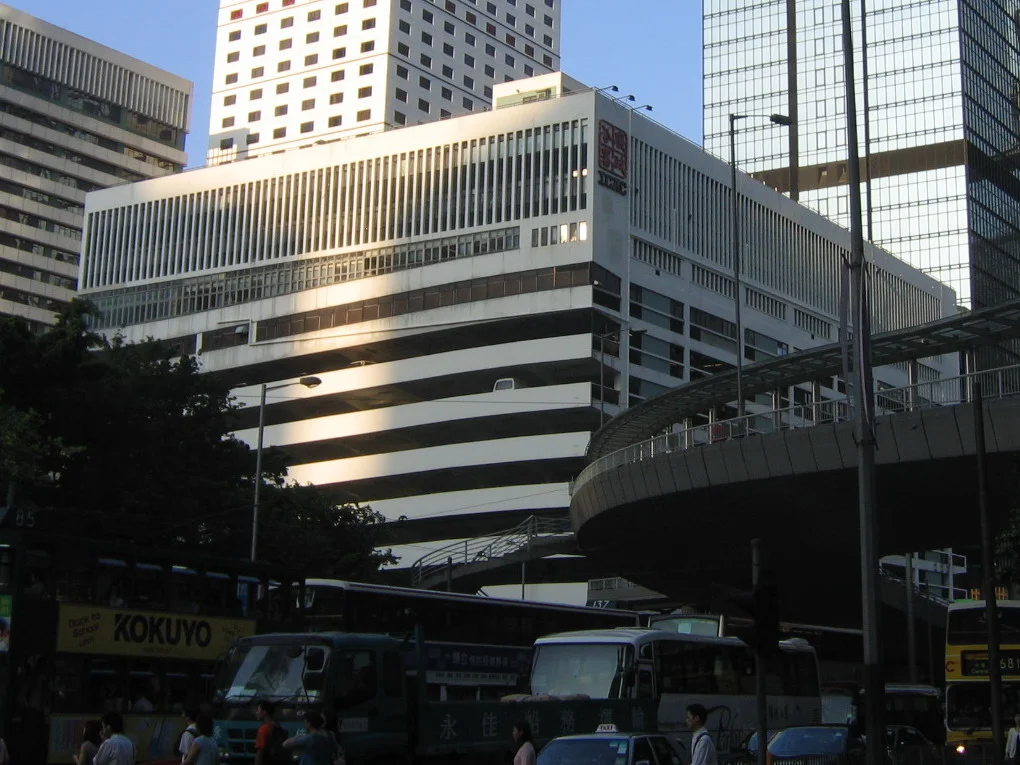

Independent Commission Against Corruption (Hong Kong)
In Hong Kong Cantonese, an invitation for coffee carries a specific meaning. "Being invited to have coffee" is a well-understood euphemism for being brought in by the ICAC — the Independent Commission Against Corruption — for questioning. The practice of offering a cup of coffee to the person under investigation, so they can concentrate during interrogation, gave the phrase its edge. That such a figure of speech exists at all, embedded in everyday language, says something about how thoroughly the ICAC embedded itself in Hong Kong life after its founding in 1974.
The City That Bribery Built
Before the ICAC, corruption in Hong Kong was not a scandal — it was infrastructure. Police officers ran protection rackets openly. Bribes were paid for hospital beds, for school admissions, for the privilege of operating a business without being harassed. In the 1970s, eight out of every ten graft complaints received by authorities were against public officers. The old police Anti-Corruption Branch, tasked with investigating corruption, was itself too embedded in corrupt networks to be effective. Governor Murray MacLehose established the ICAC in 1974 as a separate body answerable directly to him, staffed partly with sergeants recruited from British police forces and empowered with broad investigative authority — to arrest, search, and seize property without the ordinary procedural constraints that applied to regular police. Their tactics were aggressive, sometimes uncomfortably so: they would arrive at a police station and take an entire shift in for questioning as a fishing exercise.
The Confrontation
The ICAC's early years were a collision course. Officers who had grown accustomed to easy money found themselves facing investigators who would not be bought and could not be intimidated through the usual channels. In the early days, there were running fistfights between ICAC officers and angry policemen who stormed the commission's offices in the Central District. The standoff ended only when the government announced a partial amnesty for minor corruption committed before 1977 — a pragmatic concession that critics called lenient and supporters called necessary. Urban Council member Elsie Elliot was among the critics, charging that the amnesty punished only the "small flies" while senior corrupt officials escaped accountability. In early 1978, 119 officers and one customs official were asked to leave under a colonial regulation that required no stated cause, 24 officers faced conspiracy charges, and 36 received amnesty. The mass purge shook the force. It also worked.
The Transformation
What followed was one of the more dramatic institutional turnarounds in modern urban history. Over the decades after 1974, Hong Kong moved from one of the most corrupt territories in Asia to one of the least corrupt places in the world — a transformation recognized by the World Bank, Transparency International, and the Heritage Foundation. Complaints against police officers dropped 70 percent between 1974 and 2007, from 1,443 to 446. By the 2000s, only three in ten corruption complaints involved public servants; private sector cases had become the larger share. The ICAC's three-pronged approach — investigation, prevention, and community education — proved more durable than pure enforcement. Prevention officers advised companies on building systems resistant to corruption. Education campaigns worked to shift a culture that had once treated bribery as a normal transaction into one where most people understood it as a crime worth reporting.
The Limits of Integrity
The ICAC was never entirely free of the compromises it set out to fight. In the late 1980s, Charles Warwick Reid, an Acting Crown Prosecutor, was convicted of taking bribes to throw trials — a case that wound through New Zealand courts and reached the Privy Council in 1993. In 1993, Governor Chris Patten sacked deputy director Alex Tsui Ka-kit, stating he had "lost confidence" in him — political language that signaled something more serious. Tsui did not go quietly, making counter-allegations about misconduct within the commission itself. In 2013, former Commissioner Timothy Tong was found to have authorized excessive entertainment expenses and gifts for mainland officials during his five-year tenure, raising pointed questions about whether close relationships with Beijing officials had compromised the commission's impartiality. The concerns only deepened after 1997, as appointments to senior ICAC positions began tracking more closely with political alignment to Beijing. Observers noted that the agency's independence — always its most critical structural asset — was increasingly difficult to assess from the outside.
Coffee and Culture
Despite the controversies, the ICAC's place in Hong Kong culture remains singular. Films like The First Shot (1993) and I Corrupt All Cops (2009) dramatized the commission's founding battles. A family of television miniseries, ICAC Investigators, drew on actual cases and was made with the commission's full cooperation. In 2024, a café named "1974" — marking the year of the ICAC's establishment — opened in Hong Kong, the founding year itself having become a kind of brand. There is a particular Hong Kong pride attached to the commission's legacy: the idea that a city that was once entirely corrupt chose, collectively, to become something else. Whether that story remains fully intact is a question Hong Kong is still answering.
From the Air
The ICAC's headquarters is located in North Point on Hong Kong Island, at approximately 22.29°N, 114.21°E. Flying along Hong Kong Island's northern coastline at 2,000 feet, the dense urban development of North Point and Fortress Hill is visible, separated from Kowloon by Victoria Harbour. Hong Kong International Airport (VHHH) lies to the west on Lantau Island. The government buildings of Central and Admiralty — where the ICAC's former offices operated from 1978 to 2007 — are visible further west along the harbor, identifiable by the density of high-rise commercial towers.
Nearby Stories
- Lok Ma Chau Loop 2.3 km away
- Portas do Cerco 2.3 km away
- Kweilin Incident 17 km away
- Wanshan Archipelago Campaign 34 km away
- Nanxiong Formation 115 km away
- Battle of Nanpeng Island 148 km away
- Heyuan 169 km away
- Cape Maobitou 632 km away