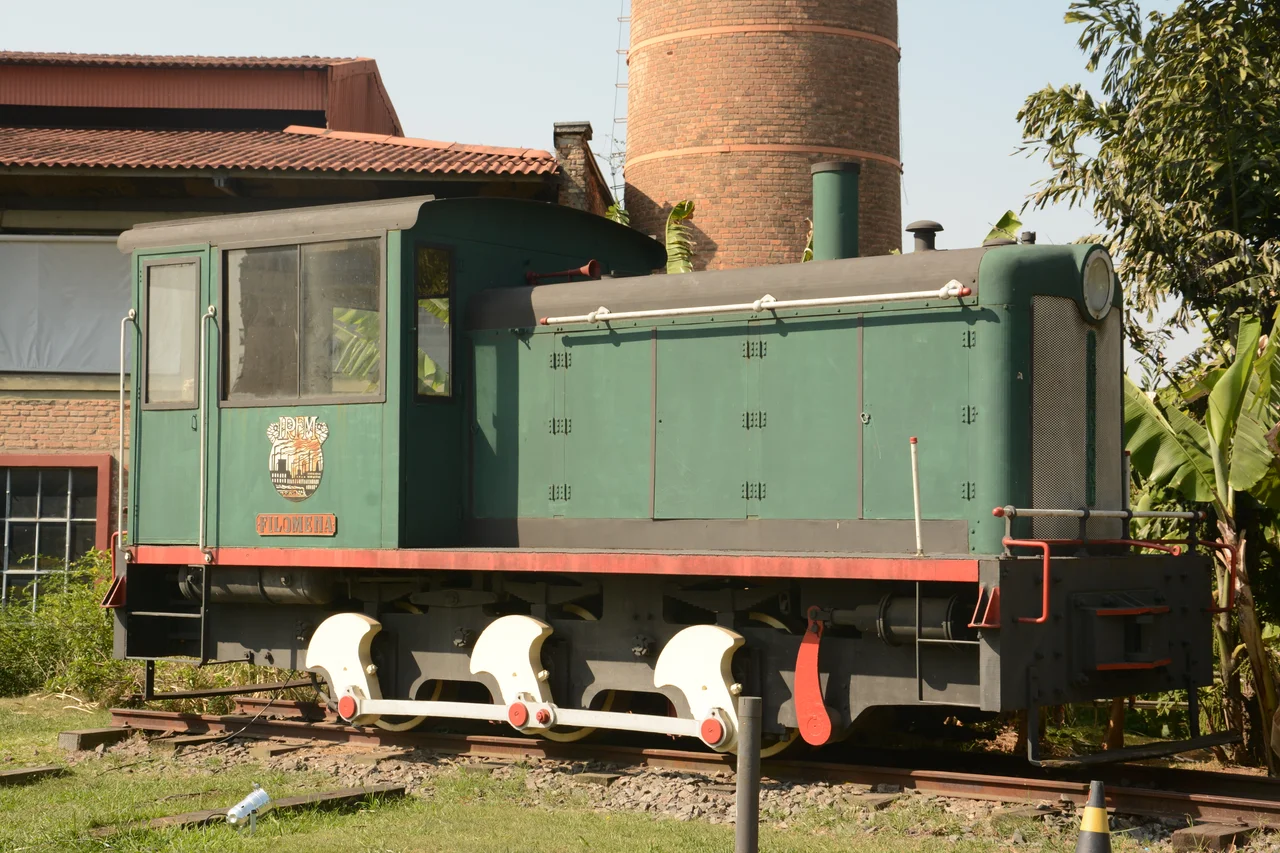

Industrias Reunidas Fabricas Matarazzo
Francesco Matarazzo arrived in Brazil in 1881 with one asset: a ton of lard he planned to sell. An accident during unloading sent the entire shipment to the bottom of the harbor. The young Italian immigrant, fresh off the boat from Castellabate and fleeing the Italian agricultural crisis of the late 1870s, had nothing left. He was 26 years old. By the time he died fifty-six years later, in 1937, he had the fifth-largest fortune in the world, an empire of more than 350 companies, and a name that Brazilians still use as shorthand for industrial scale.
The Mule, the Pigs, the Lard
After the lard disappeared into the water, Matarazzo scraped together resources and in 1883 opened the Casa Matarazzo in Sorocaba, a warehouse that sold basic goods. What he actually did for money was travel. He rode a mule from town to town through the interior of Sao Paulo state, buying pigs at small farms and processing them into lard, which he then sold back in the cities. Lard was the cooking fat of colonial Brazil, used in every kitchen from the country estates to the urban boarding houses. Whoever could supply it reliably could make money. Matarazzo supplied it reliably. By 1890 he had enough capital to move to the city of Sao Paulo, and in 1891 he founded Matarazzo S.A. with his brothers Giuseppe and Luigi and 41 minority shareholders, most of them fellow Italians. The firm imported American wheat flour and cotton. The peddler with the drowned lard was now an importer.
Industrias Reunidas: The Consolidation
In 1911, the various activities Matarazzo had accumulated across two decades were formally consolidated into a single joint-stock entity, Industrias Reunidas Fabricas Matarazzo, IRFM. The motto was Fides, Honor, Labor. The operating principle was Matarazzo's own: a good deal is made in the purchase, not in the sale. The purchase side meant buying cheap: raw materials, distressed factories, land parcels that would one day be valuable. The sale side mostly took care of itself, because IRFM products were everywhere. By the 1930s, the group's revenue was smaller only than that of the federal government itself, the National Coffee Department, and the state government of Sao Paulo. Six percent of the working population of the city of Sao Paulo drew a Matarazzo paycheck.
The Water Branca Colossus
In 1920, Matarazzo opened the Agua Branca industrial complex in the west zone of Sao Paulo on a site of 100,000 square meters, the first industrial park in the city built with a verticalized conception of production. Everything happened on one site: sawmills, refineries, distilleries, slaughterhouses, carts, soap, perfume, fertilizer, insecticide, candles, nails, liquor. The power came from the complex's own generating station. The workers lived on site too, in company housing. The brick chimneys were visible from hundreds of meters away, and the skyline they made became one of the defining industrial silhouettes of early twentieth-century Sao Paulo. Today only two buildings survive: the Casa do Eletricista and the Casa das Caldeiras. The rest has been demolished or converted. The Casa das Caldeiras, the boiler house that generated the power for everything else, now operates as a cultural and event space, its giant brick chimneys kept as heritage.
The Other Factories Across Brazil
In 1937, the year Francesco Matarazzo died, IRFM broke ground on a new industrial complex in the municipality of Marilia in the interior of Sao Paulo state. The Marilia plant processed cotton and rice, eventually employing 400 workers at peak, and had its own spur off the regional rail line. IRFM's presence helped turn Marilia into what locals called the capital of Alta Paulista. By the 1960s, the group was opening factories in perlon synthetic fibers, plastic laminates, and soluble coffee. But decline had started. The family was large, the succession was contested, and the competitive landscape of mid-century Brazilian industry was changing faster than Matarazzo heirs could adapt to. In 1975, the Marilia plant was completely deactivated. Parts of the complex were preserved as protected heritage by CONDEPHAAT in 1992.
Maria Pia and the Endgame
By 1981, the textile division had been sold to Ciane. Maria Pia Matarazzo, Francesco's granddaughter, took the leadership of what remained and tried to manage a contraction that the family was already fighting among itself about. A power struggle with her brothers occupied much of the early 1980s, just as the Brazilian economy was producing one inflationary shock after another. Revenue dropped, then dropped again. At the end of the 1980s, IRFM filed for bankruptcy. The only survivor from the old industrial empire was the soap brand Francis, sold first to the Bertin group and then to JBS, which still holds it through its subsidiary Flora Higiene e Limpeza. The other fragment of what remains is land: IRFM's successor entities still own properties and lease paper, sugar, and alcohol mills across Brazil. The rest is heritage, or ruin.
A Coordinate in Marilia
This article is filed at coordinates in the Marilia region of central Sao Paulo state, where the Matarazzo complex once stood. What remains at that exact spot are the protected ruins of the Industrias Reunidas Francesco Matarazzo plant at Iguape, listed heritage since 1992. The main Agua Branca complex is in the city of Sao Paulo, about 500 kilometers east. The two Casa das Caldeiras chimneys still rise there, alongside the Casa do Eletricista, cultural monuments from the age when one immigrant family produced nearly everything a Brazilian household used.
From the Air
Coordinates: 22.21 degrees south, 49.95 degrees west. The coordinates place this article near Marilia in the interior of Sao Paulo state, site of the Matarazzo rice-and-cotton plant active 1937-1975. Recommended viewing altitude 4,000 to 6,500 feet above the plateau. The main Marilia field is Frank Miloye Milenkowichi Airport (MII / SBML) southwest of the city. The original Agua Branca complex, where most of the Matarazzo brick chimneys stood, is in the west zone of the city of Sao Paulo, about 500 km east of this coordinate, near Sao Paulo's Congonhas Airport (CGH / SBSP).
Nearby Stories
- Adamantina Formation 41 km away
- Bauru Station (NOB) 52 km away
- Presidente Prudente 80 km away
- São José do Rio Preto 130 km away
- Lagoa São Paulo Reserve 141 km away
- Captaincy of São Paulo 172 km away
- Atlantic Forest Biosphere Reserve 283 km away
- Guaira Falls 413 km away