.jpg)
Ingrian War
Russia in 1610 had no functional government. Tsar Vasily IV had been deposed by his own boyars. The Polish king's son was being installed in the Kremlin. False Dmitry II - one of several pretenders claiming to be a murdered prince long thought dead - was raising armies in the south. The state was disintegrating into what Russian historians call the Time of Troubles. Into this vacuum walked the Swedes. Their king had been invited as an ally against the Poles, but the Swedish commander Jacob De la Gardie soon discovered that with no central Russian authority left to negotiate with, he could simply take territory. He took Novgorod in July 1611. He compelled the Novgorodians to accept a Swedish prince as their tsar. The Ingrian War, which ran from 1610 to 1617, was the strange interlude when Sweden almost ruled Russia.
An Alliance of Desperation
Vasily IV signed the Vyborg Treatise in 1609 because he had no other option. The Polish-Lithuanian Commonwealth was invading from the west. False Dmitry II had built a shadow court at Tushino outside Moscow. Vasily promised the Swedish king Charles IX military access to northwest Russia and the cession of the Korela Fortress in exchange for soldiers. Russia also formally renounced any claim to the Baltic coast - a humiliation Vasily must have signed in despair. Jacob De la Gardie, the Swedish commander, joined forces with the able Russian general Mikhail Skopin-Shuisky, and the combined army marched on Moscow. They cleared much of the country of pretenders and invaders. Skopin-Shuisky relieved the besieged capital in March 1610. He was twenty-three years old, brilliant, and dead within weeks - poisoned, contemporaries believed, by jealous boyars at a banquet. With him went Russia's last competent military leadership.
Klushino and Its Aftermath
The Polish hetman Stanislaw Zolkiewski caught the combined Russo-Swedish army at Klushino in July 1610. The Swedish mercenaries broke first - some defected outright to the Poles. The Russian center collapsed. De la Gardie negotiated a separate peace and withdrew his remaining forces. The catastrophe was total. The boyars in Moscow deposed Vasily IV within weeks. The Polish army occupied the Moscow Kremlin and crowned the Polish prince Wladyslaw as Russian tsar. The Russian state effectively ceased to exist. De la Gardie, no longer constrained by any treaty, marched north and took Novgorod by storm in July 1611. He compelled the Novgorod boyars to acknowledge the Swedish king as their patron and to choose one of his sons - either Carl Filip or the young Gustavus Adolphus - as their monarch. For a few years, Sweden controlled most of northwest Russia and held a credible claim to the Russian throne itself.
Romanov Recovery
Russia was saved from outside the formal political system. A volunteer militia, raised in Nizhny Novgorod by the merchant Kuzma Minin and led by Prince Dmitry Pozharsky, marched on Moscow in 1612 and expelled the Polish garrison. A Zemsky Sobor - an emergency assembly of estates - met in 1613 and elected the sixteen-year-old Mikhail Romanov as tsar, founding the dynasty that would rule Russia until 1917. Gustavus Adolphus had ascended the Swedish throne after his brother's death and decided to pursue his family's claim to Russia anyway. He besieged Pskov for three months in 1615 and failed. Both sides were exhausted. Both sides wanted out. The English ambassador John Merrick mediated, and the Treaty of Stolbovo was concluded in February 1617.
The Treaty of Stolbovo
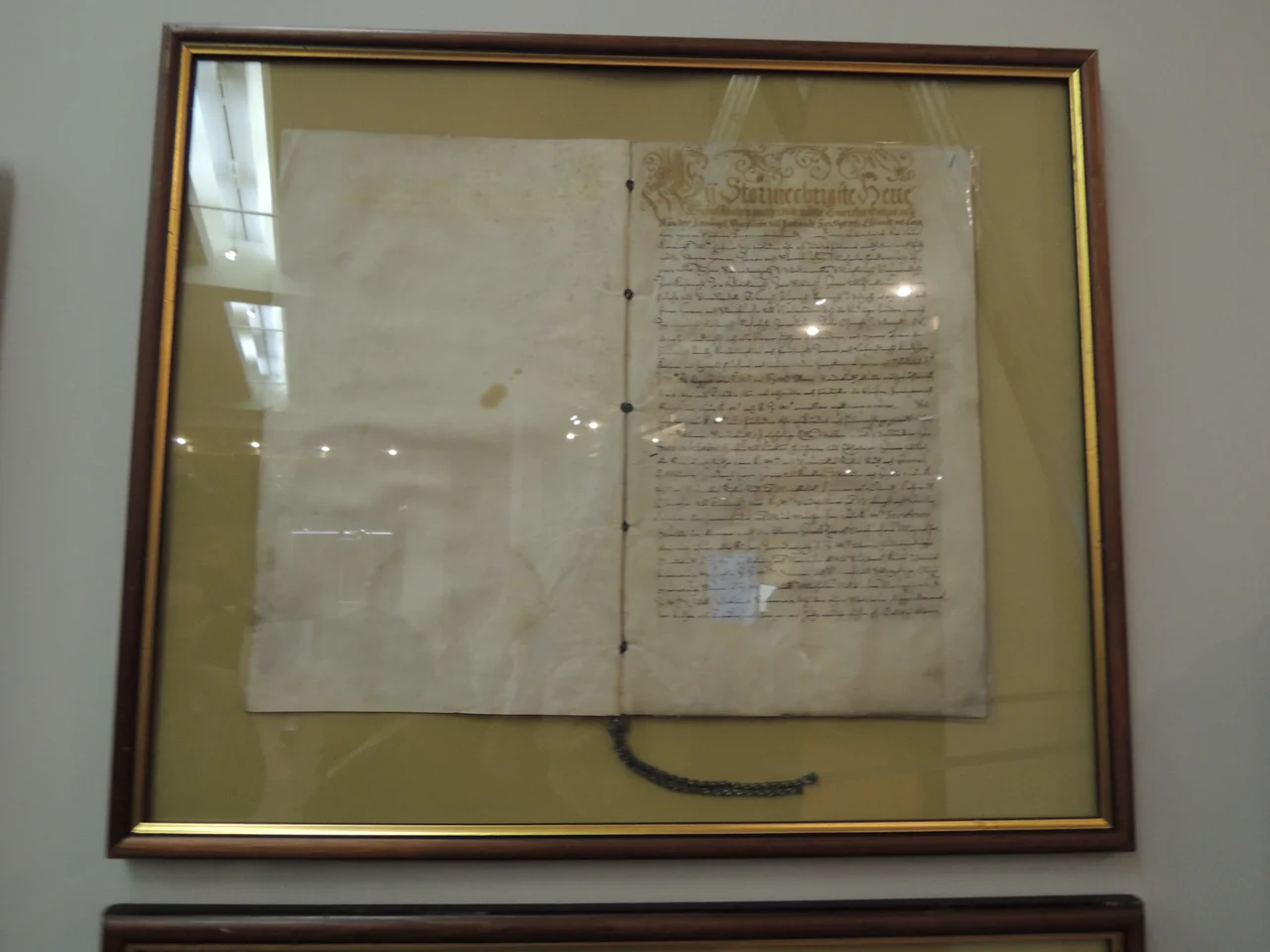
Sweden gave back Novgorod and Gdov, which it had been occupying for years. In exchange, Sweden took permanent possession of Ingria - the territory along the Gulf of Finland from Narva to the Neva delta - including the towns of Ivangorod, Yam, Koporye, and Noteborg. Sweden also took Kexholm in Karelia. Russia paid twenty thousand rubles in war reparations and renounced any claim to Estonia or Livonia. Sweden formally recognized Mikhail Romanov as the rightful tsar. The territorial loss was geographically small but strategically devastating. Russia was cut off from the Baltic Sea for nearly a century. Trade with Western Europe had to go through the White Sea port of Arkhangelsk - a route that froze for half the year and was twice the distance from Moscow as the Baltic ports. The economic cost to Russia was enormous. Sweden's gain laid the foundation for what Swedish historians call the Age of Greatness, the half-century when Sweden was a Baltic superpower.
The Displaced
The Ingrian Finns - the Lutheran Finnish-speaking peasantry who lived in the territory Sweden took - became the long shadow of this war. Sweden encouraged Finnish migration into Ingria over the next century, and the Ingrian Finns became a distinct ethnic group, Finnic in language and Lutheran in religion in a region surrounded by Orthodox Russians. They survived as a community until the twentieth century. Stalin deported tens of thousands of them to Siberia in 1936 and again during the Second World War. By the post-Soviet era only fragments of the community remained. The peasants displaced by border shifts in 1617 lived through three centuries of subsequent border shifts. The Treaty of Stolbovo's lines disappeared when Peter the Great retook Ingria in the Great Northern War a century later, founded Saint Petersburg on the Neva delta in 1703, and made the territory Russian again. But the Ingrian Finns remained. The community is now mostly gone. The territory is now part of Leningrad Oblast and the Saint Petersburg metropolitan area, and the war that created the original Swedish Ingria is largely forgotten outside of specialist Russian and Swedish history.
From the Air
The Ingrian War's central battleground was northwest Russia and the eastern Baltic coast - a triangle bounded by Novgorod, Pskov, and the Gulf of Finland. The decisive locations - Ivangorod, Koporye, Noteborg (now Shlisselburg), Korela Fortress (now Priozersk) - lie within roughly 200 km of modern Saint Petersburg. The treaty was signed at Stolbovo, a village on the Tikhvinka River about 175 km east of Saint Petersburg at approximately 59.63°N, 29.30°E. Pulkovo Airport (ULLI) is the nearest major airport. From cruising altitude over the region today, the layered border history is visible in the surviving fortresses and the modern Russia-Estonia frontier on the Narva River.
Nearby Stories
- Yam Fortress 14 km away
- Battle of Kronstadt 16 km away
- Constantine Palace 22 km away
- Levashovo Memorial Cemetery 24 km away
- Battle for Narva Bridgehead 48 km away
- Ivangorod Fortress 65 km away
- Battle of Suursaari 103 km away
- Siege of Novgorod (1170) 125 km away