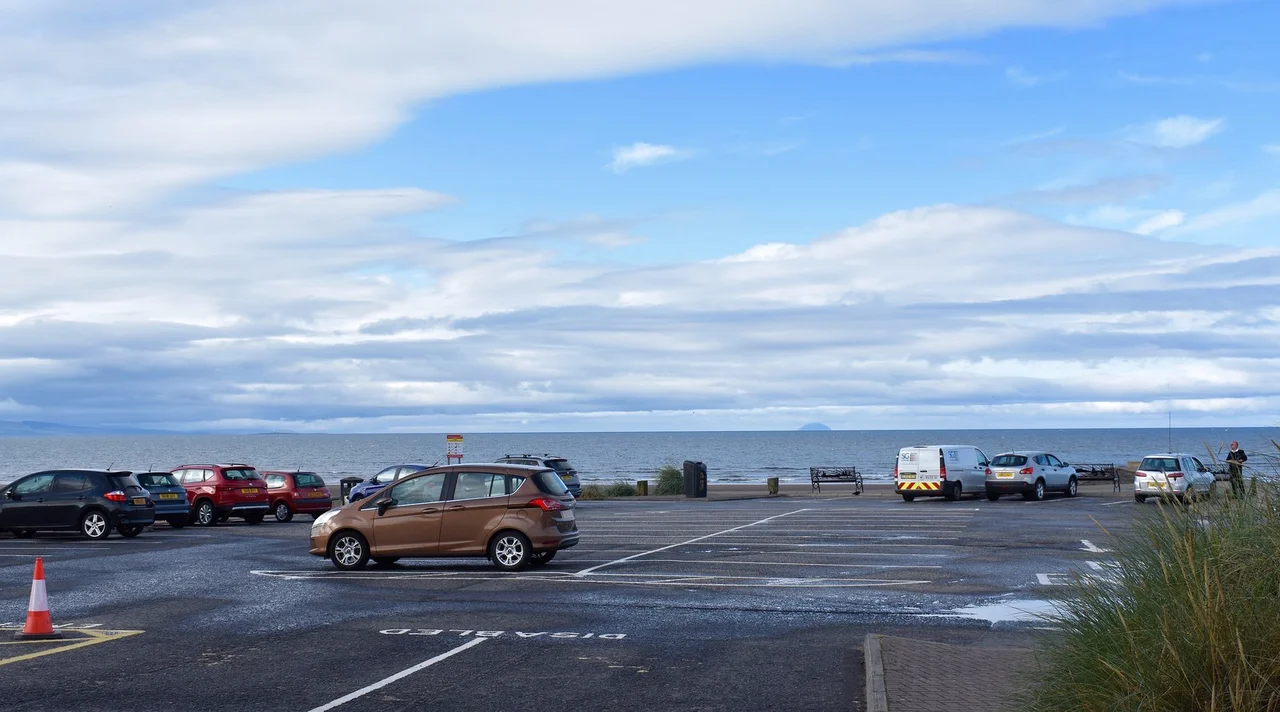

Irvine Lifeboat Station
On 29 December 1894, in a hurricane blowing from the north-west, the Irvine lifeboat *Busbie* could not get out of her own harbour. So her crew set the sails and ran her out to sea anyway. They reached the Norwegian ship *Frey*, in distress near Lady Isle off Troon, in thirty minutes. Sixteen of the *Frey*'s crew jumped into the water. The lifeboat crew hauled them in one by one. Trying to land at Troon, the *Busbie* was overwhelmed by waves, and the coxswain and three or four others were swept overboard. The boat self-righted - that was the whole point of the design - and all but one Norwegian regained the deck. Coxswain David Sinclair was 71 years old. The RNLI awarded him its Silver Medal. It was, by some distance, the most dramatic moment in the station's 80-year history.
Eighty Years of Service
Irvine had a lifeboat from 1834, operated by the Irvine Harbour Commissioners. Management transferred to the Royal National Lifeboat Institution in 1860. At the RNLI committee meeting on 1 November 1860, after a report from the Inspector of Lifeboats and the Harbour Commissioners' acceptance of help with running costs, the decision was made to place a new lifeboat and carriage at Irvine. The first RNLI boat - a 30-foot self-righting pulling and sailing lifeboat with six oars, costing £157 - arrived in May 1861. The railway companies transported it free of charge from England. The donor was Miss Pringle Kidd of Lasswade Bank, Edinburgh, a sister of the late David Kidd of Leyton in Essex - a wholesale stationer on Fleet Street and the inventor of the modern gummed envelope. Her £180 donation funded the boat, which was named *Pringle Kidd* in her honour. The station closed eventually in 1914, after 80 years of service. The site of the boathouse, next to the Irvine Beach breakwater, is now Irvine Beach car park - nothing of the building remains.
Three Boats, Three Donors
In 1874 the *Pringle Kidd* was retired as unfit for service. The RNLI built a new boathouse next to the Irvine beach breakwater at a cost of £307-9s, and sent a 33-foot self-righting lifeboat at £286-8s. On 17 October 1874 the new boat and carriage were paraded through Irvine drawn by eight horses, and formally named *Isabella Frew*. The cost was met by William Sommerville, a paper-mill owner from Penicuik and Bitton, the son-in-law of William Frew of Irvine - he asked that the boat carry his wife's maiden name. The *Isabella Frew* recorded only two services. On 6 October 1876 she rescued four from the schooner *Lady Mary*, driven ashore at the harbour entrance. On 20 December 1882 she saved another four from the steam tug *Irvine*, grounded on the Irvine Bar. The third boat was the 34-foot *Busbie* (ON 168), placed in 1887 and funded from the legacy of Henry Ritchie Cooper Wallace of Busbie and Cloncaird. The *Busbie* recorded 33 lives saved in just four services between 1887 and 1898. She was replaced in 1898 by a 37-foot lifeboat built by Thames Ironworks of Blackwall in London, paid for from the bequest of George Pike Nicholls of Southgate, Middlesex, and named *Jane Anne* (ON 417) in memory of his mother.
Coxswain David Sinclair and the Frey
The *Busbie* earned her place in lifeboat history on that hurricane night in December 1894. With the wind north-west and the seas too high to launch normally from the harbour, the crew committed to a sailing approach - hard, fast, and out into the open Firth. They reached the *Frey* near Lady Isle in half an hour. Sixteen Norwegian sailors jumped, and the lifeboat crew pulled each man aboard from the cold water. Heading for Troon harbour to land the rescued men, the boat was caught by a series of huge waves close to the beach. The coxswain and three or four others were swept overboard. The boat self-righted in seconds, the men climbed back aboard - all except one of the Norwegian crew, who was lost. David Sinclair was seventy-one years old. He had been at sea for most of his life. The RNLI Silver Medal he received that year recognised not just one night's courage but a lifetime of it. Captain Thomas Peebles of the *Earl of Errol* had won the same medal in 1850 for the rescue of four from the Belfast schooner *Margaret Young*, aground in Irvine Bay. Gallantry on this stretch of the Firth has rarely gone unrecognised.
The Jane Anne, Found in Somerset
Irvine Lifeboat Station closed on 2 April 1914. With lifeboats still at neighbouring stations, the RNLI committee accepted the recommendation of the Deputy Chief Inspector of Lifeboats and shut the station after 80 years. The *Jane Anne* (ON 417) went to the relief fleet, then served briefly at another station before being sold out of service in September 1928 to E. F. Cooper for £35. She vanished from the records. Then in the 1980s, a rotting hull was found in a field in Somerset - the *Jane Anne*. The Scottish Maritime Museum at Irvine acquired her, and she remains on display as found - weathered, broken, unmistakable. The lifeboat service boards from Irvine are preserved at the Wellwood Burns Center and Museum in the town. A small plaque, perhaps. But a long history of names: Pringle Kidd, Isabella Frew, Busbie, Jane Anne. Each one carrying the name of a real person who paid for a boat that saved real lives in a real, dangerous sea.
From the Air
Coordinates 55.6047°N, 4.6946°W. The former Irvine Lifeboat Station stood next to the Irvine Beach breakwater at the mouth of the River Irvine, on the Firth of Clyde. Today the site is Irvine Beach car park, with the Scottish Maritime Museum nearby and the *Jane Anne* on display. Recommended viewing altitude 1,000 to 2,000 feet AGL to take in the river mouth, the harbour, the beach, and the Firth of Clyde stretching west toward Arran. Nearest ICAO airports: Glasgow Prestwick (EGPK) about 8 nm to the south, Glasgow International (EGPF) about 22 nm north-east. The Firth of Clyde is exposed to Atlantic weather - rapid changes in cloud and visibility are common.
Nearby Stories
- Battle of Drumclog 2.2 km away
- Culzean Castle 3.3 km away
- Greenock 5.9 km away
- Lochranza 7.9 km away
- Battle of Kilsyth 16 km away
- Loch Fyne 19 km away
- Dunaverty Castle 25 km away
- Moniaive 27 km away