_Colorful_fishing_harbor_(27423133653).jpg)
Şile
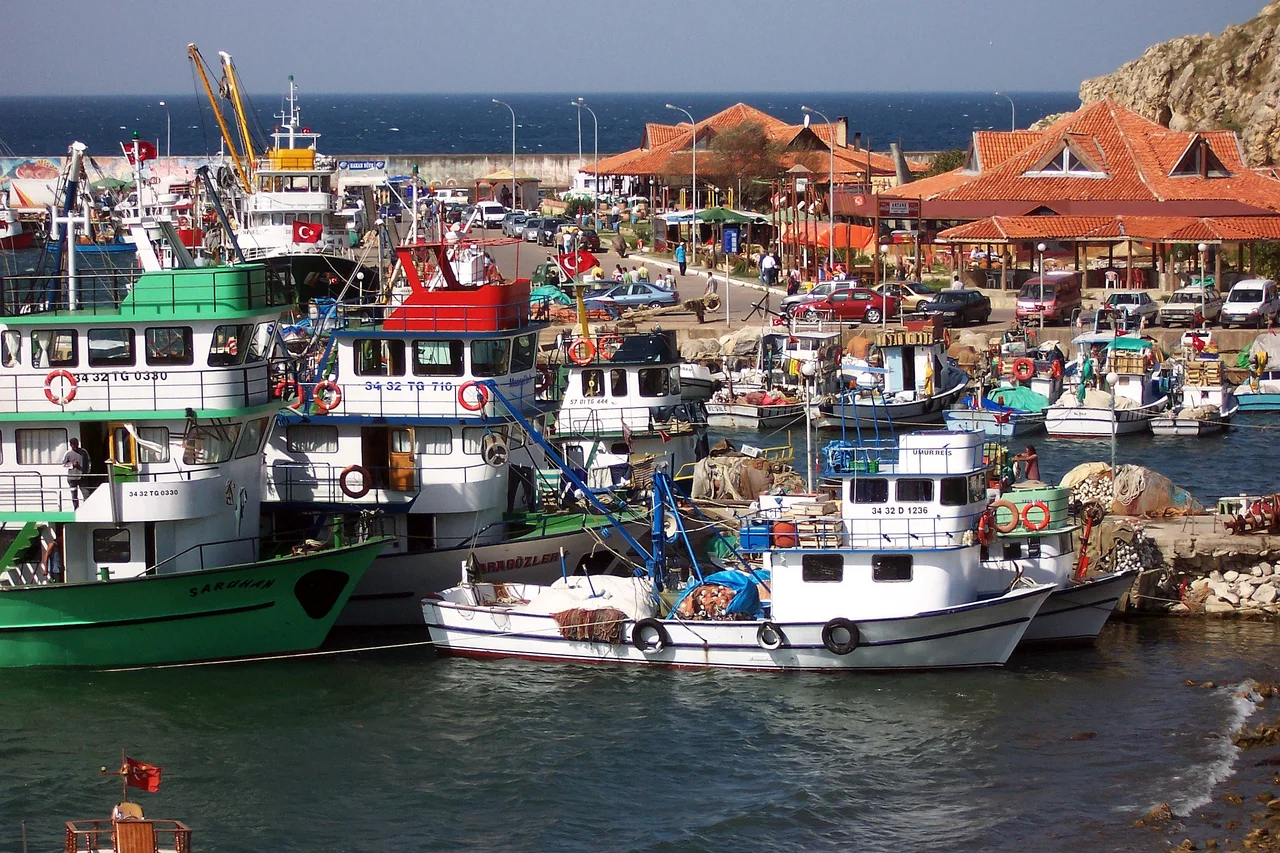
Most of Istanbul's coastline belongs to the Bosphorus and the Marmara — crowded, urban, salt-sprayed by tankers. The Black Sea coast is different. Şile sits where the city finally runs out of city: sandy beaches rather than ferry piers, cooling breezes off open water, a lighthouse blinking over the dark sea. It is where Istanbulites go when they need to remember what quiet sounds like. The town takes its name from the Turkish word for marjoram, the herb that grows on the hills above the shore, and there is something appropriate in that — something aromatic and medicinal about the place, as though the coast itself prescribes the remedy.
From Hilea to Summer Capital
Settlements here predate the current name by a considerable margin. The Stone Age left traces in the region, and by the Hellenistic period the site had cohered into a city called Hilea — a name that suggested woodland, and the hills behind Şile still carry that character. In Byzantine times Şile fell within the broader Chalcedon administrative region, valued for its position on the Black Sea coast and its proximity to Constantinople. The Ottomans, who absorbed the region in the fourteenth century, eventually built the lighthouse that now defines the town's silhouette: a tower of black and white horizontal bands, constructed in the nineteenth century to guide ships through waters that had swallowed too many of them. Over the following century, the lighthouse's light became less important for navigation than for atmosphere — today it is the image Şile exports to the rest of the world, the reason photographs of the town all look the same and all look beautiful.
The Island Castle and Its Complicated History
Just offshore, within easy sight of the beach, a small island holds the ruins of Şile Castle — also called Ocaklı Ada Kalesi, the fortress on Ocaklı Island. The Genoese are credited with building it, probably around a thousand years ago, as a watchtower commanding the approaches to the harbor. An alternative tradition attributes it to the Byzantine Empire, with Ottoman use afterward, and indeed the Ottomans conquered it in 1396 when Sultan Yıldırım Bayezid brought the fortress under his control. The castle has been repaired at least twice in its long history. Its most recent restoration, in 2015, generated unexpected controversy when critics observed that the freshly rebuilt walls bore an unfortunate resemblance to the cartoon character SpongeBob SquarePants — a comparison that spread quickly online and became something of a cautionary tale about overzealous historical renovation. The castle endures, complicated reputation and all.
Şile Cloth: The Fabric of Coast Summers
Şile produces a textile specific to this stretch of coast: a loose-weave cotton cloth, hand-loomed, naturally airy, designed for the humid warmth of Black Sea summers. Called Şile bezi — Şile cloth — it has been made here for generations and is closely associated with the district's identity. The fabric is functional before it is decorative: its open weave allows air to circulate, making it genuinely cooler to wear than most alternatives in July heat. Traditionally woven on hand looms, the cloth is still produced in workshops in and around Şile, sold in shops along Üsküdar and Cumhuriyet streets. Şile cloth reaches markets far beyond the town; it is one of those regional products that has become a minor point of national pride, the kind of thing that gets given as a gift rather than bought for oneself. Coming home from Şile without a piece of the cloth is, for many visitors, simply not done.
Where the Coves Are
Beyond the main beach, Şile's coastline folds into quieter corners. The coves of Akçakese and Kabakoz offer smaller, less crowded stretches of sand accessible to those willing to walk a little further. The district's forests come down close to the shore in places, shading the approaches to the water. In season, outdoor activity here runs the full range: camping, trekking through the wooded hills, surfing on the open Black Sea swell, beach volleyball on the main strand. The Şile International Culture and Art Festival and a traditional wrestling tournament bring a different kind of crowd at specific times of year — locals and visitors mixing in town squares rather than on the sand. But the beaches are the draw, and the beaches deliver: long, sandy, and genuinely clean in a way that the Marmara coast rarely manages.
Arriving and Staying
Getting to Şile from central Istanbul takes roughly two hours by road, via the D020 motorway with its connection to the O-7 highway. IETT buses run the route regularly from Üsküdar — the 139 to Şile, the 139A extending further east to Ağva. For a city the size of Istanbul, the distance feels significant, which is part of the point. Şile's accommodation runs from daily bungalow rentals to hotels to camping grounds; the town is well set up for people arriving without a plan. The municipal free WiFi in the town center, the teashops — kıraathane, lokal, the ubiquitous çaycı — and the döner carts on the main streets create a particular atmosphere that is comfortable rather than glamorous. Şile is not trying to be a luxury destination. It is trying to be the best version of what it already is: a working Black Sea resort town with history behind it and good sand in front.
From the Air
Şile sits at 41.17°N, 29.61°E on the Black Sea coast of Istanbul Province, visible from 3,000 feet as the white lighthouse tower on the cliff above the harbor. The small island of Ocaklı Ada and its castle ruins are clearly visible just offshore. From 5,000–8,000 feet, the full Şile coast opens up — the main beach, the wooded hills behind town, and the Black Sea stretching north toward the horizon. Ağva is approximately 38 km to the east along the coastline. Nearest major airport: LTFJ (Sabiha Gökçen International), approximately 65 km to the southwest. The lighthouse makes a reliable visual landmark at lower altitudes; approach from the north or northeast for the best coastal perspective. Morning fog is possible but usually clears by mid-morning.
Nearby Stories
- Kefken Island 2.3 km away
- Rumelifeneri, Istanbul 5.5 km away
- Halki Theological School Gardens 11 km away
- Hereke 20 km away
- Optimatoi 27 km away
- Tottenham (1802 Indiaman) 47 km away
- Battle of Constantinople (922) 64 km away
- Januarius MacGahan 76 km away