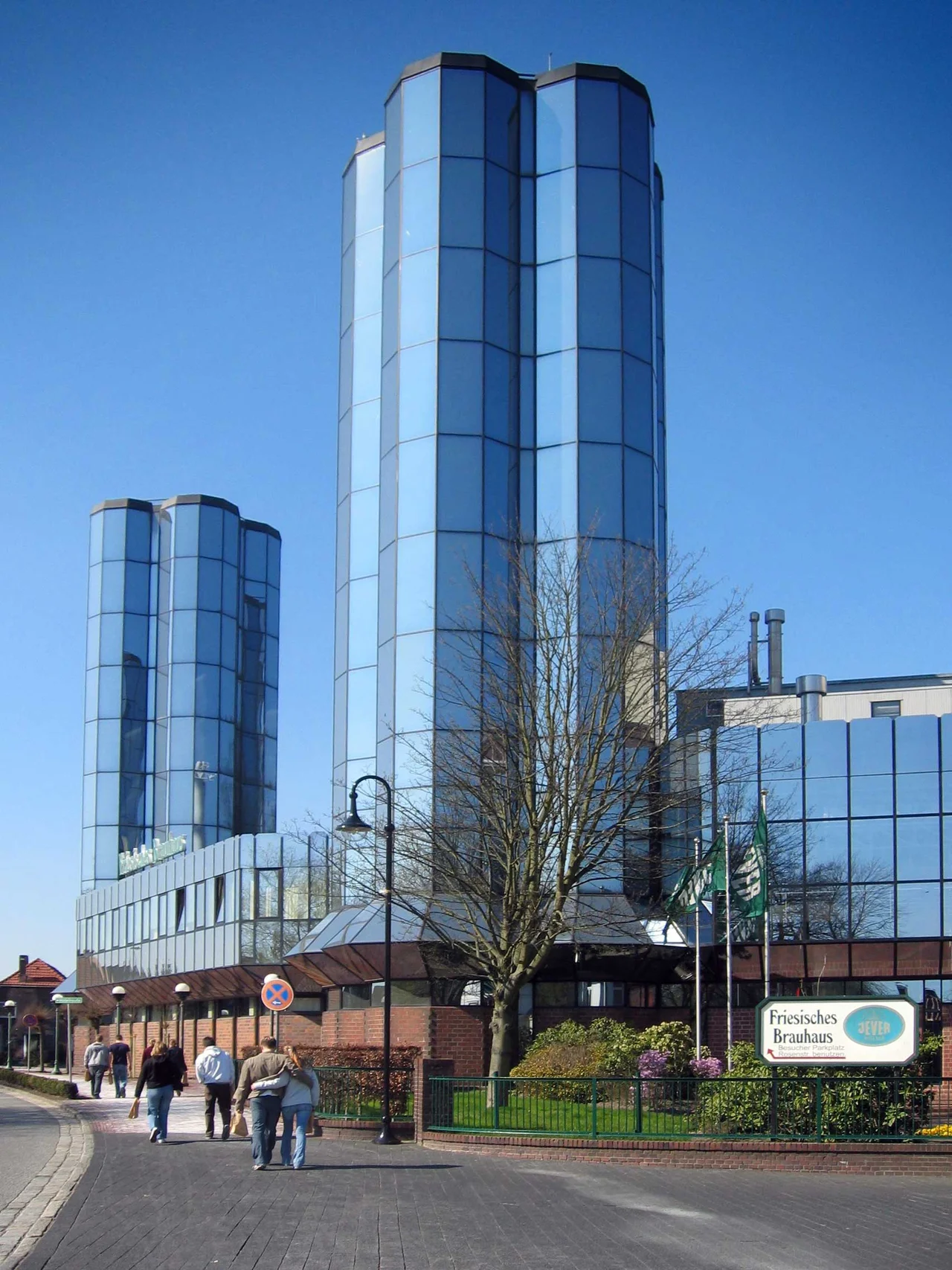

Jever Brewery
Pour a Jever Pilsener into a slim Friesian flute and taste what the locals call die herbe Frische - the bitter freshness. It hits like the wind off the Wadden Sea: clean, mineral, and entirely unwilling to flatter you. Most German lagers court the drinker with rounded malt and a polite hop finish. Jever does the opposite. The bitterness lingers, the body stays lean, and the beer dares you not to take another sip. This is the taste that has come out of one stubborn brewery on the Elisabeth River in the Friesian town of Jever for the better part of two centuries, and it explains why a small market town in Lower Saxony lends its name to one of Germany's most recognisable bottle labels.
A Stubborn Beginning
Diedrich König founded the Friesisches Brauhaus zu Jever in 1848 - a year of revolutions across Europe and a year when his little operation was just one of several breweries jostling for trade in the marsh country. König was convinced from the start that his beer was something special. Posterity has had to take his word for the early product, because he died in 1867 and his son sold the business off. The man who bought it, Theodor Fetköter, is the one who actually turned Jever into a brand. Fetköter ran advertisements, commissioned distinctive bottles, expanded the brewery into a real industrial operation, and - in a public-spirited flourish - helped install the first municipal water supply for the town of Jever. Beer-makers need clean water more than almost anyone. Fetköter understood the arithmetic.
Surviving the Wars
The First World War nearly killed the brewery. Fetköter's son, by then running the business, was killed at the front, and the family sold up in 1923 to the Bavaria-St. Pauli Brewery in Hamburg. That ownership has passed sideways through several conglomerates since - today the brewery sits inside the Radeberger Group, itself part of the Oetker portfolio - but the Hamburg sale was the moment Jever stopped being a family business and became a corporate brand. The Second World War shook it again. Fuel was short, malt was scarce, and for months the brewery could only sell beer to customers who showed up at the gate with their own vessels. Staff went out scouring local farms for grain. The post-war reconstruction was slow, and for decades the top seller was actually Jever Export, a milder amber that survived until 1990 before the company finally retired it.
The Pilsener That Won
The beer that built the brand emerged from a German taste shift in the 1960s, when Pilsener-style lagers began muscling aside the older regional ales and exports. Jever had been selling its Pilsener under the modern name since 1934, but the 1960s and 70s turned it into a national contender. The recipe is uncompromising. Where most German Pilseners aim for balance, Jever amplifies the hops - particularly noble varieties whose bitterness is bracing rather than fruity - and finishes with the soft, mineral-low water of the Friesian coast. The result is a beer Germans either swear by or politely decline. There is little middle ground. The brewery built five enormous mirrored fermentation towers on the banks of the Elisabeth, each holding 240,000 litres of young beer, and modernised production until it could fill roughly 60,000 bottles an hour.
Glass, Football, and Foam
Drink a Jever in the right bar in northern Germany and the beer arrives in a tulip-narrow glass with a foam head so dense and persistent it looks structurally suspect. That foam is part of the calling card - good Pilsener glasses are nucleated to keep carbonation working, and Jever's hop-forward profile holds the head longer than most. The brewery has flirted with football sponsorship - it backed the Bundesliga side Borussia Mönchengladbach from 2002 to 2005 - and it offers guided tours through both the modern brewhouse and a historical museum that shows how the place looked a hundred years ago. Around 270 people work here today. They produce a beer that Friesland exports proudly and that defines the town of Jever to anyone who knows German beer at all - a small Lower Saxon market town whose name has become a verb for a particular kind of clean, brutal, refreshing bitterness.
From the Air
Located at 53.58 north, 7.90 east, on the Elisabeth River in the town of Jever, Lower Saxony. The brewery's mirrored fermentation towers and tall brick stacks are the most prominent vertical features in the otherwise flat townscape. Nearest airports: Wilhelmshaven-Mariensiel (EDWI) about 18 km east, Wittmund (ETNT) about 12 km west, Bremen (EDDW) about 80 km south. Best viewed from 2,000-3,500 ft - the brewery sits just west of the central square of Jever with Schloss Jever (Jever Castle) a few hundred metres north as a landmark. Coastal westerly winds prevail.
Nearby Stories
- Wangerooge 0.7 km away
- Aurich (district) 4.5 km away
- Rheiderland 6.4 km away
- Valentin submarine pens 6.8 km away
- Bad Zwischenahn 11 km away
- HVDC DolWin2 37 km away
- Teufelsmoor 41 km away
- Lilleø 233 km away