.jpg)
Jewish Museum of Greece
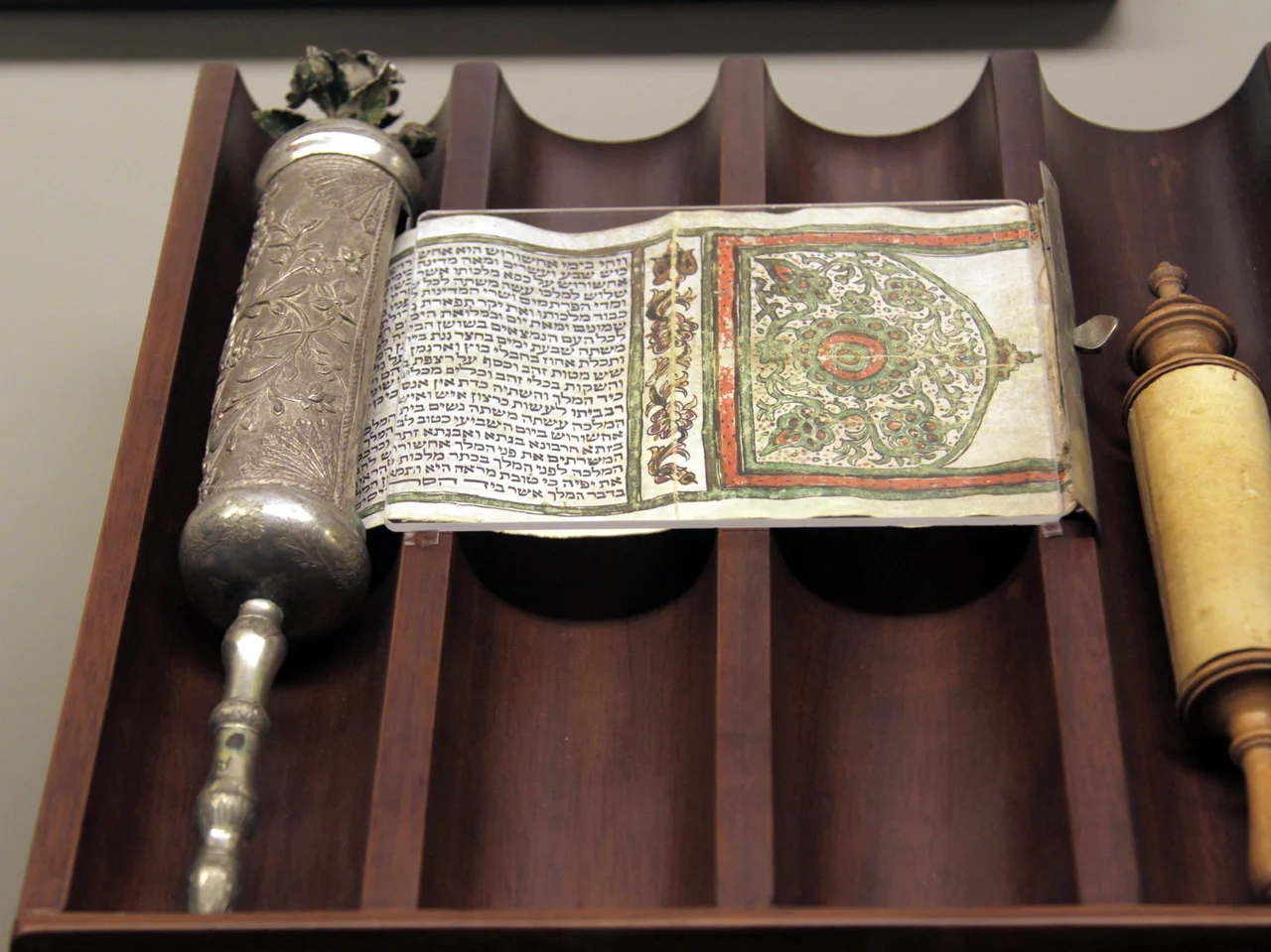
It began with the things people left behind. A silver case for an Esther scroll. A bridal dress folded away in a chest. Prayer books, photographs, ledgers, candlesticks - the ordinary belongings of families who did not come home. When the Jewish Museum of Greece opened in 1977, its first task was to gather these objects from the murdered and the missing, and to insist that they meant something. Set today in a renovated 19th-century townhouse on Nikis Street, a short walk from the Acropolis, the museum holds more than 10,000 artifacts and tells a story that runs far longer and deeper than its quiet rooms suggest.
Two Thousand Years Before the War
Jews have lived in Greek lands for some 2,300 years - long enough that one ancient community, the Romaniotes, developed their own Greek-inflected liturgy and traditions, distinct from any other Jewish group in the world. References to Jewish life on Greek soil reach back to the centuries before the common era. After 1492, Sephardic families expelled from Spain arrived in great numbers, above all in Thessaloniki, which became one of the most important Jewish cities anywhere, its port quiet on Saturdays because so much of the workforce kept the Sabbath. The museum traces all of this: not a footnote to Greek history but a thread woven through it, in commerce, language, music, and faith across more than two millennia.
What the Collection Holds
The exhibits begin in loss. The earliest core of the collection was personal valuables belonging to Greek Jewish victims of the Holocaust, displayed not as treasure but as testimony. To these were added objects with their own bitter history - property looted from the Jews of Eastern Macedonia and Thrace by the occupying forces during the Second World War, later returned by postwar Bulgarian authorities. Over the decades the museum widened its scope to embrace the whole arc of Greek Jewish life: textiles and traditional dress, ritual silver, an art gallery, a research library, photographic archives, and conservation laboratories. A reconstructed synagogue interior anchors the displays. The effect is cumulative. You move from everyday life to catastrophe and back to everyday life, and the everyday is the point.
The Weight of a Number
By 1945, roughly 86 percent of Greece's Jews had been murdered - one of the highest proportions anywhere in occupied Europe. Thessaloniki alone, home to some 56,000 Jews and about two-thirds of Greek Jewry, was all but emptied; the ancient Romaniote community of Ioannina was likewise destroyed. These are not abstractions. Each figure stands for a person with a name, a street, a family table. The museum resists letting them dissolve into statistics, which is why it begins with belongings rather than charts. A folded dress and an engraved scroll case carry a weight that numbers alone cannot.
A Soldier Remembered
Among those the museum honors is Colonel Mordechai Frizis, a Romaniote Jew born in Chalcis in 1893. In the autumn of 1940, when Italy invaded, Frizis led Greek troops on the Albanian front, captured some of the war's first prisoners, and stopped the enemy advance with a counterattack. When bombs fell and his men took cover, he stayed mounted, riding across the field shouting encouragement until he was struck down on 5 December 1940 - the first senior Greek officer killed in the war. A plaque dedicated by the Municipality of Athens keeps his memory here. His story complicates any simple telling: a Greek patriot, a Jew, a hero of a nation that, within a few short years, would see most of its Jewish citizens deported and killed.
Why the House Matters
In 1998 the museum moved into its own building, a 19th-century house whose facade was preserved while the interior was rebuilt as four storeys of galleries. The decision to keep the old face and remake the inside reads almost as a statement of purpose. Visitor numbers doubled within two years of the move. People came, and keep coming, because the museum does something rare: it refuses to let a living culture be remembered only through its near-destruction. The candlesticks were lit on real Sabbaths. The dresses were worn at real weddings. To stand among them is to be reminded that the murdered were, first and last, people who lived.
From the Air
The Jewish Museum of Greece sits at 37.973 degrees N, 23.733 degrees E, in central Athens just southeast of Syntagma Square and a few hundred meters from the Acropolis - the dominant visual landmark of the city, lit at night and unmistakable from the air. The nearest airport is Athens International (LGAV), about 30 km east-southeast. Approaches from the east cross the Mesogeia plain before the urban basin opens up beneath Mount Hymettus; the museum lies in the dense historic core between the Acropolis and Lycabettus Hill. Best viewed by day in the clear, dry light of an Attic summer.
Nearby Stories
- Great Sand Beach 5 km away
- Battle of Delium 7.7 km away
- Tower of Aliartos 9 km away
- HMHS Britannic 10 km away
- Saronic Gulf 15 km away
- Sousaki Volcano 17 km away
- Sanctuary of Apollo Maleatas 24 km away
- Skyros 66 km away